Beyond “Smooth”: A Technical Guide to Specifying Hygienic Surface Finishes
For engineers and procurement managers in hygienic industries, the selection of a surface finish for stainless steel components is a critical design decision. A frequent cause of project failure and costly rework stems from incomplete or ambiguous specifications. Vague terms like “smooth finish” are insufficient and open to interpretation, creating a gap between design intent and the final product.
This guide provides the technical framework for creating precise and enforceable surface finish specifications, ensuring your components are built to spec the first time, mitigating risk for project engineers like Eleanor and ensuring compliance for procurement managers like David.
The credentials behind this guidance:
- ISO 9001:2015 certified quality system
- Welding procedures and personnel qualified in accordance with AWS
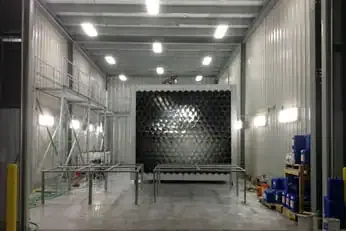
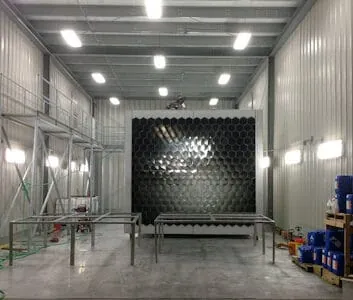
- In-house passivation to ASTM A380 standards in a 55′ L x 20′ W x 20′ H spray pickling booth
- Solving complex fabrication challenges since 1951
The Specification Gap: Why Common Designations Fail
Industry standards from ASTM and EN provide a common language for finishes like No. 2B and No. 4. However, these standards are process-based, describing how a finish is made, not its final, measurable result. This “specification gap” means two parts, both technically meeting the “No. 4 finish” standard, can have different visual and measurable characteristics, introducing risk into critical applications.
At Northern Manufacturing, our ISO 9001:2015 certified quality system is built to bridge this gap by focusing on verifiable, results-based metrics.
Crafting an Enforceable Specification: A Four-Step Approach
A robust surface specification is built in layers, moving from a general description to precise, measurable parameters.
-
Define the Baseline Finish Start by calling out the common industry finish (e.g., No. 4) as a baseline. For food and dairy processing, 3-A Sanitary Standards mandate a finish at least as smooth as a No. 4 polish on all product-contact surfaces, a standard our welders with procedures and personnel qualified in accordance with AWS are experts at achieving.
-
Quantify Surface Roughness (Ra and Rz) This is the most critical step. Average Roughness (Ra): This common metric measures the arithmetic average of the absolute values of profile height deviations from a mean line. While 3-A Standards require a maximum Ra of 0.8 µm, relying solely on Ra is a pitfall. It is an averaging parameter and can miss isolated defects like scratches or pits, prime locations for bacterial growth. Maximum Height of Profile (Rz): To catch the outliers that Ra misses, the specification must also control for Rz. This parameter measures the distance between the highest peak and lowest valley, making it highly sensitive to the exact defects that can cause part rejection and rework. For any critical application, specifying both Ra and Rz is essential.
-
Control Directionality (Lay) Lay is the direction of the predominant surface pattern. Controlling lay is crucial for visual consistency and function. Engineering drawings must use the standard symbols from ASME Y14.36M to specify the required lay direction. Our engineering team provides full Design for Manufacturing (DFM) support to ensure these details are correctly specified from the start.
-
Specify Final Treatments A complete specification must include required final treatments to maximize corrosion resistance.
- Passivation: This critical chemical treatment removes free iron left from fabrication and enhances the material’s natural passive layer. Our 55′ L x 20′ W x 20′ H spray pickling booth allows us to perform passivation to ASTM A380 standards in-house, ensuring complete quality control for your components.
- Electropolishing: For the most demanding pharmaceutical applications, the ASME Bioprocessing Equipment (BPE) standard requires electropolishing for its highest-purity finishes. This process creates a supremely clean, passive, and corrosion-resistant finish.
The two roughness parameters at a glance:
| Parameter | What It Measures | Why It Matters |
|---|---|---|
| Ra (Average Roughness) | Arithmetic average of profile height deviations from a mean line | An averaging parameter that can miss isolated defects like scratches or pits |
| Rz (Maximum Height of Profile) | Distance between the highest peak and lowest valley | Highly sensitive to the isolated defects that cause part rejection and rework |
From Ambiguous Note to Precise Callout
By combining these elements, a vague requirement transforms into an unambiguous, enforceable specification that protects your project.
Poor Specification: “FINISH: NO. 4 BRUSHED FINISH”
Robust Specification: A surface texture symbol specifying a maximum Ra of 0.8 µm, a maximum Rz value, a perpendicular lay, and a note requiring the surface to be passivated per ASTM A380.
This level of detail leaves no room for error. The fabricator knows the target, and the quality inspector has clear, measurable criteria for acceptance.
Partner with the Experts in Hygienic Fabrication
Since 1951, Northern Manufacturing has specialized in solving complex fabrication challenges. Our expertise in sanitary stainless steel fabrication for the food & beverage, water & wastewater, and chemical industries is built on a foundation of precision and quality.