Fabricating Austenitic Stainless Steel: 304, 316, and Beyond
The 300-series workhorses (304, 316, 309, 321, 347) run daily on our floor under grade-specific procedures built to prevent sensitization, distortion, and free-iron contamination.
Capacity
60 +
AWS-certified welders
5
Austenitic grades qualified
78
Welding bays
1951
Fabricating since
Grades we run daily
The full austenitic family, qualified and in production
Austenitic stainless steels are the 300-series workhorses, but "common" does not mean "simple." Each grade carries metallurgical requirements (sensitization, distortion, filler match) that decide whether a weldment performs for decades or fails in months. We hold qualified welding procedures and daily production across every grade below.
The "18-8" workhorse for most corrosion environments. Excellent all-around resistance and the most forgiving of the family to form and weld.
Molybdenum addition for chloride and chemical resistance. The default step up from 304 wherever pitting is a concern.
Higher chromium and nickel for oxidation resistance and strength at elevated service temperatures.
Titanium stabilization holds up under sustained high-temperature service where unstabilized grades sensitize along welds.
Niobium addition resists intergranular corrosion in welded assemblies held at temperature.
We qualify new procedures for grades outside our standard run. Send the spec.
Welding & Fabrication
Grade-specific procedures, not a single recipe
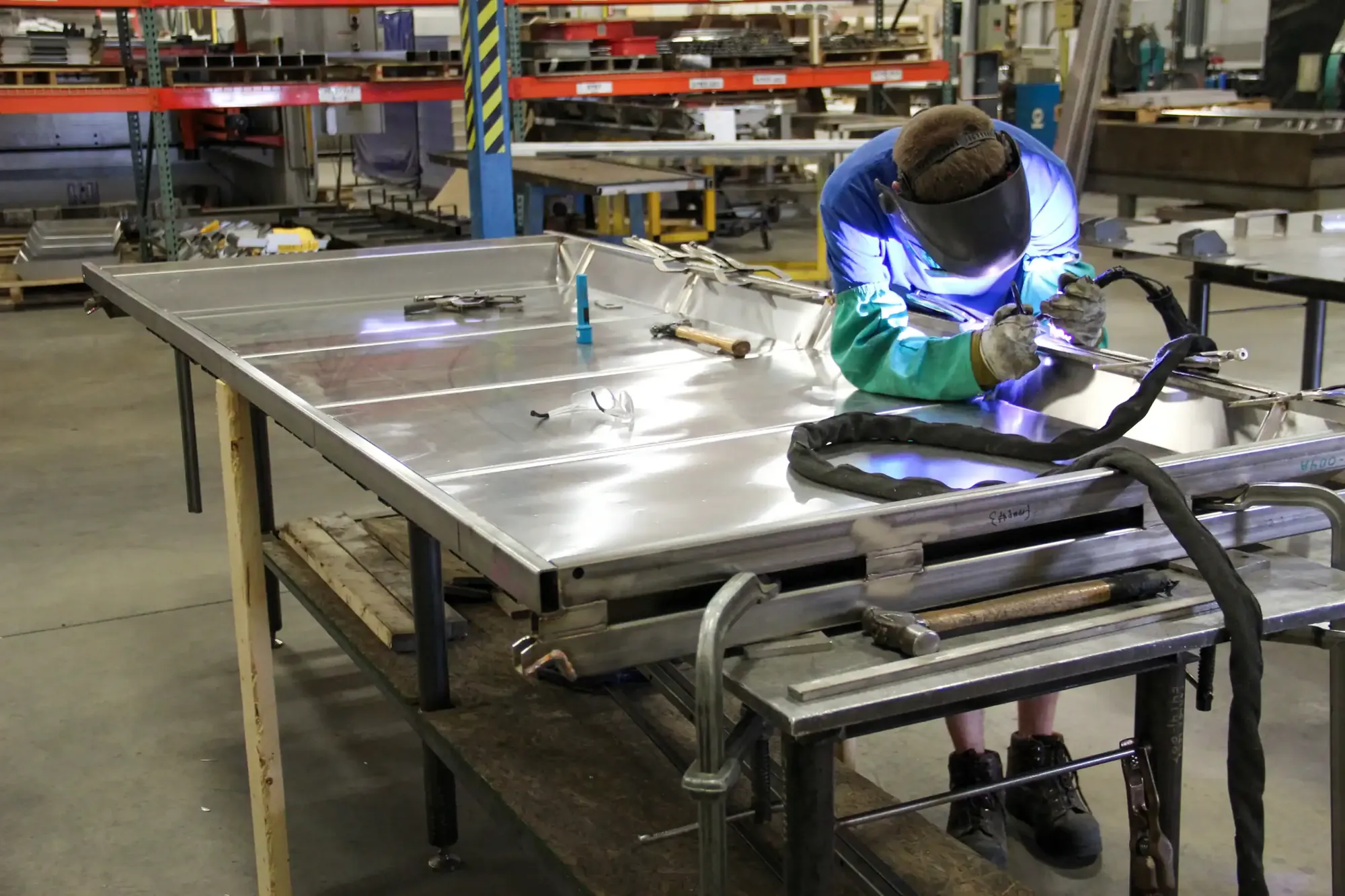
Welding austenitic stainless requires controls tuned to the metallurgy, to prevent sensitization, distortion, and contamination across every grade and section thickness.
Strict heat input control
Excess heat precipitates chromium carbides at grain boundaries, destroying corrosion resistance in the heat-affected zone. Heat input is held to the qualified WPS for every grade.
Interpass temperature management
Controlled interpass temperatures prevent the excessive thermal cycling that drives distortion and metallurgical degradation on multi-pass welds.
Qualified welding procedures
Every procedure is qualified per ASME BPVC Section IX and AWS D1.6. Each WPS/PQR pair is maintained, auditable, and available during the bid process.
Forming, Rolling & Finishing
From flat plate to finished, passivated assembly
Forming and finishing stay on stainless-dedicated tooling, so the part reaches passivation free of embedded iron.
Heavy forming & bending
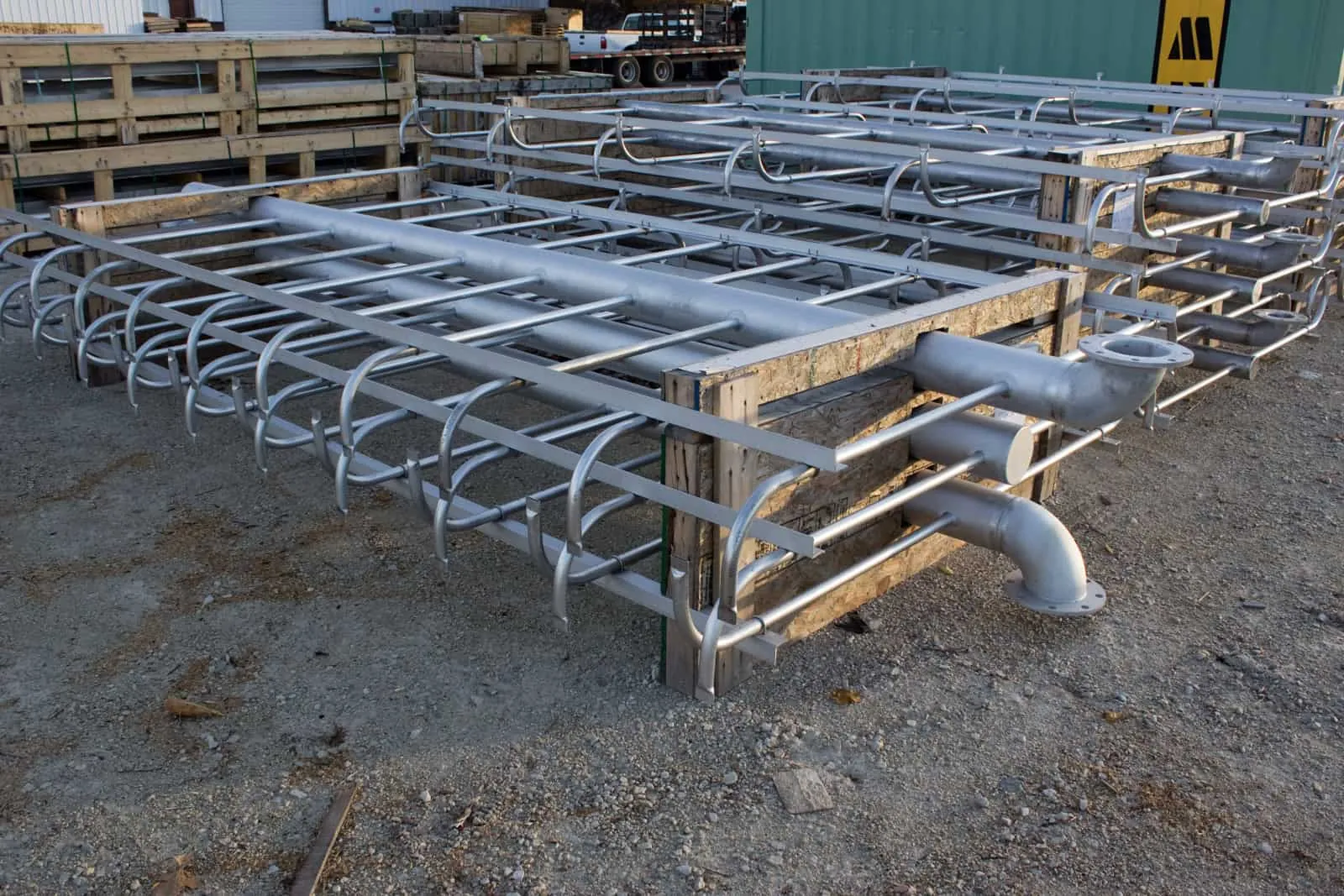
Press brake forming of plate and sheet on tooling dedicated to stainless, so no carbon-steel iron transfers onto the work.
Cylinder & shell rolling
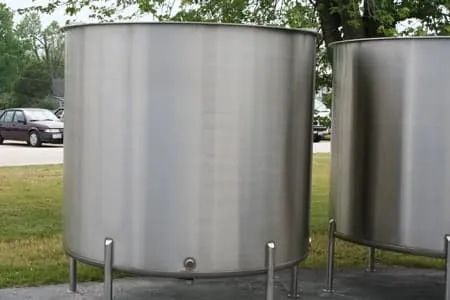
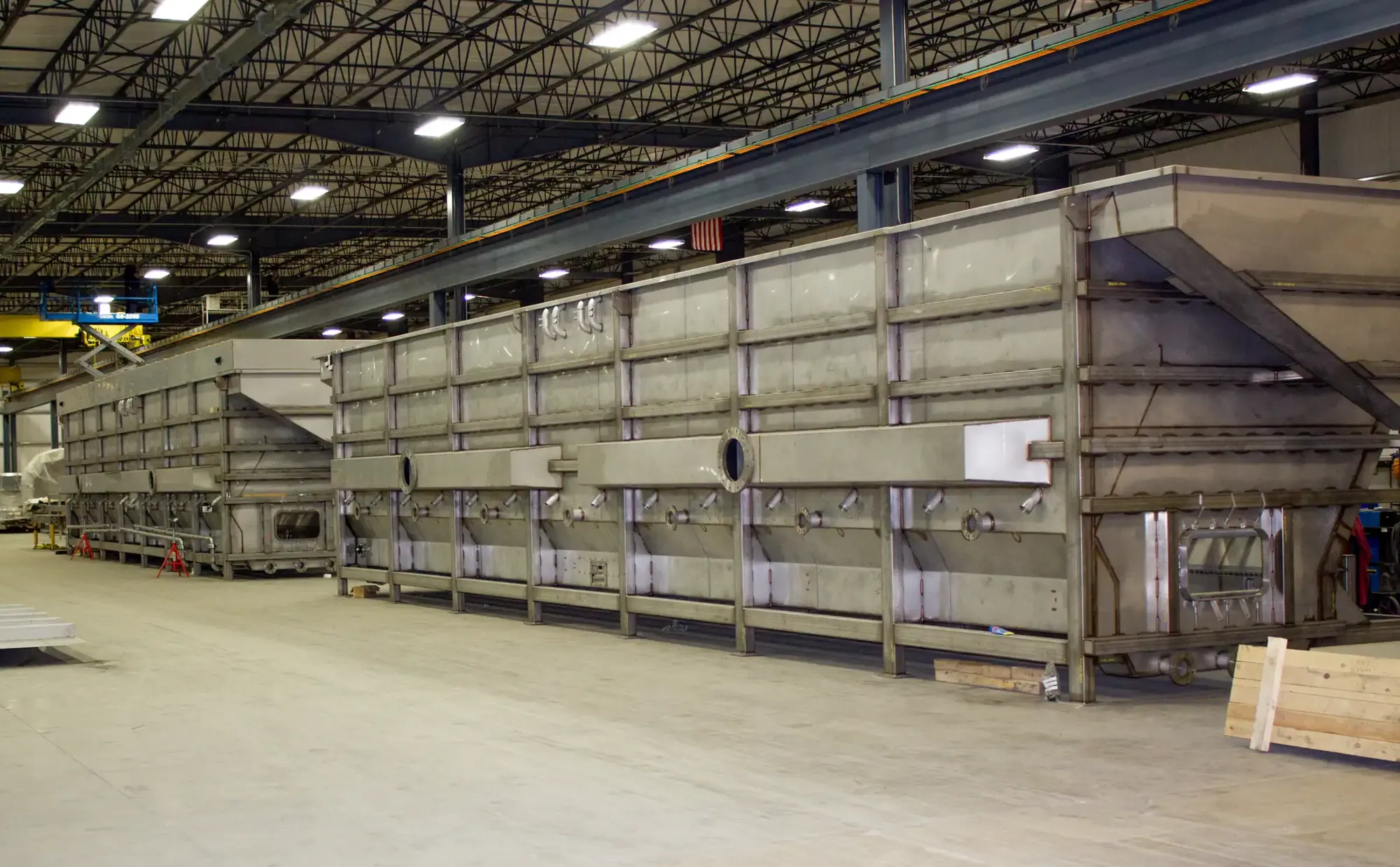
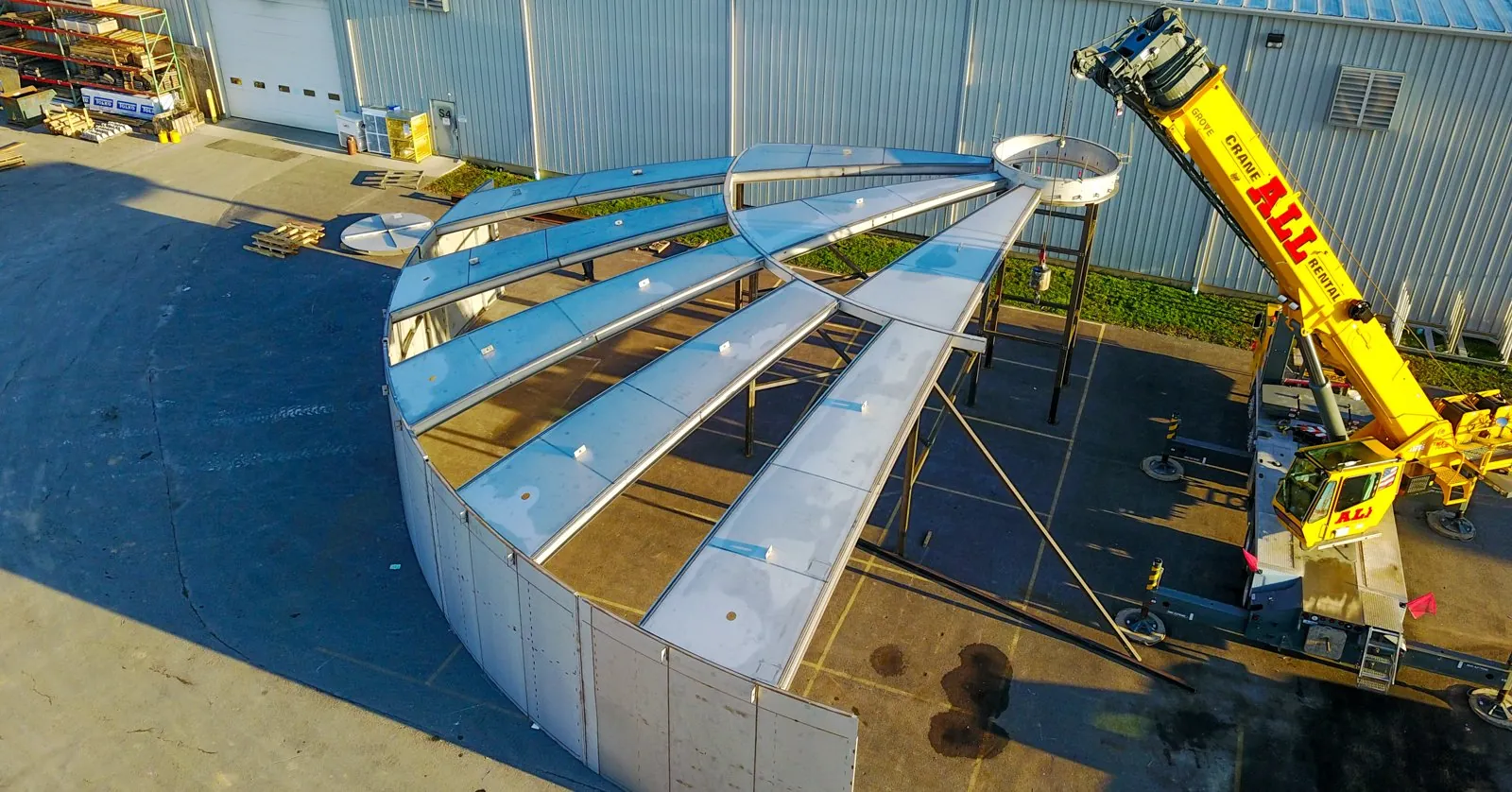
Plate rolled into cylinders and shells for vessels, tanks, and ductwork on plate rolls rated for stainless thicknesses.
Pickling & passivation
In-house [pickling and passivation](/capabilities/pickling-passivation/) per ASTM A380 / A967 restores the chromium-oxide passive layer. Our 55-foot booth handles large assemblies in one pass.
Why a Specialist
Austenitic is forgiving, but the forgiveness has limits
A shop that does not control heat input sensitizes the HAZ. Carbon-steel grinding wheels embed iron that initiates corrosion. Too much heat on thin-gauge 316L warps the part past tolerance. Three controls keep that from happening.
A roughly 40,000 sq ft dedicated stainless-only production space (no carbon), plus stainless-only tooling, grinding wheels, and work surfaces, keeps free iron off the part before it reaches passivation. Grade-specific heat-input controls prevent carbide precipitation in the heat-affected zone.
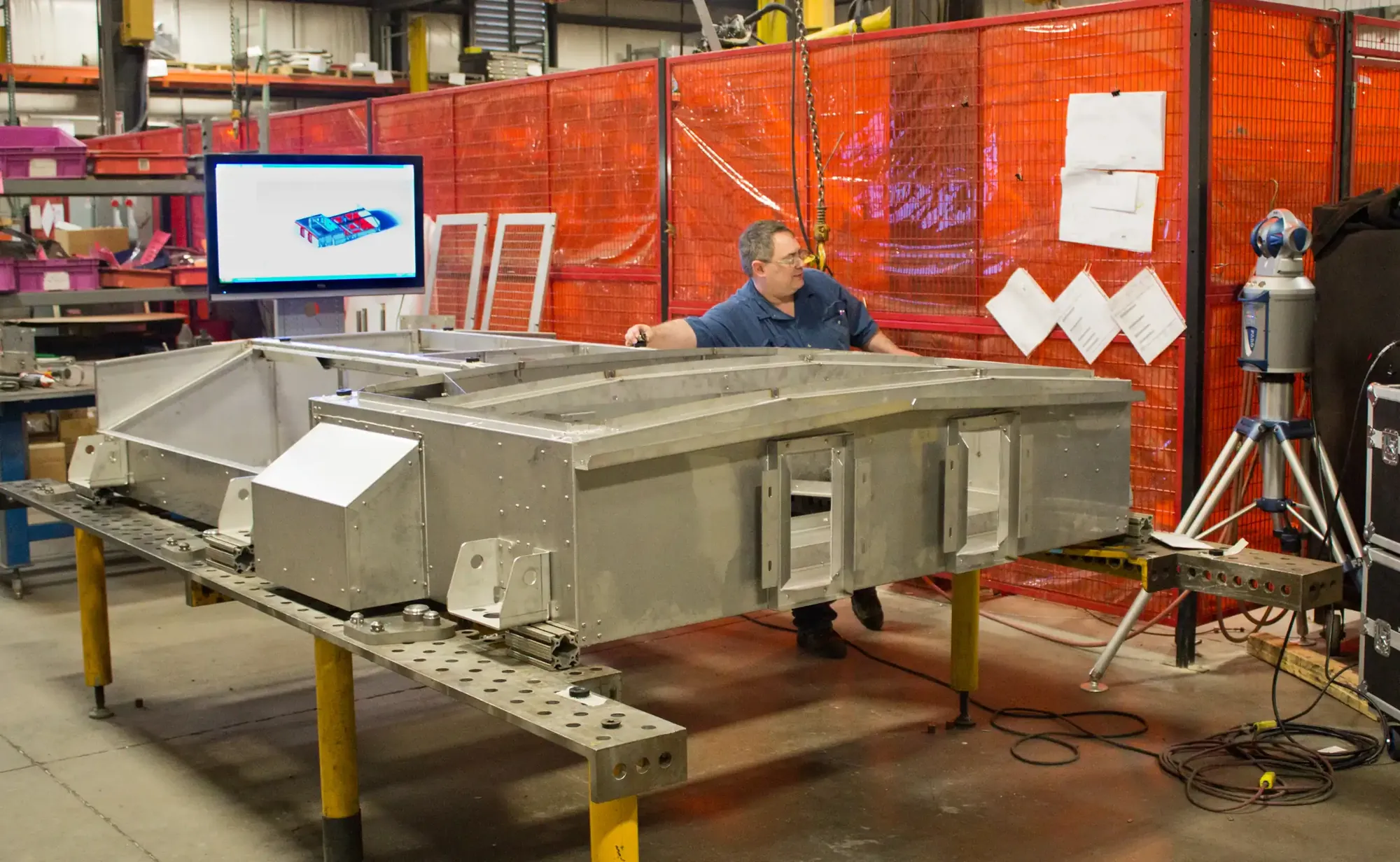
Austenitic conducts heat about 40% slower than carbon steel, so distortion is a constant. We manage it with controlled weld sequencing, balanced heat input, custom fixturing, and laser welding on heat-sensitive joints.
As an ISO 9001:2015 certified fabricator with ASME BPVC Section IX qualified procedures and a CWI on staff, we provide the documentation and traceability your quality audits require, every grade, every assembly.
Quality Assurance
Inspection built into the QMS
Where It Runs
Industries that depend on austenitic stainless
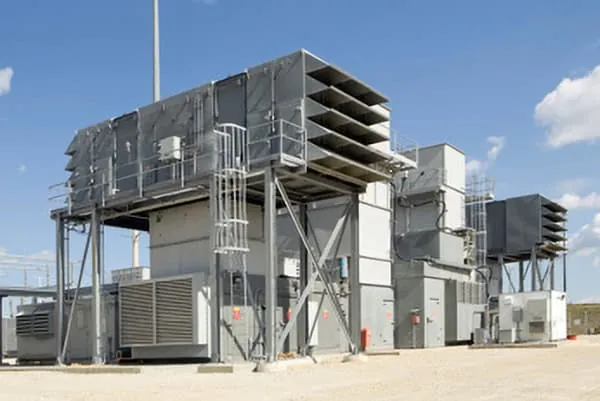
The same grades, run for the sectors where corrosion resistance and clean welds are non-negotiable.

Have an austenitic stainless project on the board?
Other Materials We Fabricate
Beyond the 300 series
Processes we run on this alloy
The in-house capabilities behind every build in this alloy, from laser cutting to final passivation.
Frequently asked questions
What engineers and procurement managers ask us about fabricating austenitic stainless steel: 304, 316, and beyond.
How do you prevent sensitization in austenitic welds?
We hold carbon low (the L grades) and control heat input and interpass temperature under qualified procedures so the heat-affected zone never dwells in the chromium-carbide precipitation range. Sensitization drops chromium at the grain boundaries and opens the door to intergranular attack; controlled heat input keeps the corrosion resistance the grade was specified for.
When should I specify 316L over 304L?
When chlorides or reducing acids are in play. The molybdenum in 316/316L raises pitting and crevice-corrosion resistance over 304/304L, which matters in coastal, food-brine, and many chemical environments. For dry or mildly corrosive service, 304L carries the load at lower cost. If your spec leaves the grade open, send the service chemistry and we will confirm the grade at quote review.
When does 321 or 347 make sense over 304 or 316?
In sustained high-temperature service. Titanium in 321 and niobium in 347 tie up carbon as stable carbides, so these stabilized grades resist sensitization where plain 304 would degrade. We match the filler and procedure to the grade rather than running one recipe across all of them.
Do you provide ferrite and material documentation?
As your specification and purchase order require. Positive Material Identification by handheld XRF confirms every incoming heat, weld ferrite is measured with calibrated instruments, and Material Test Reports, weld records, and inspection results are available on request, under an on-staff CWI and in-house ASNT SNT-TC-1A Level III oversight.