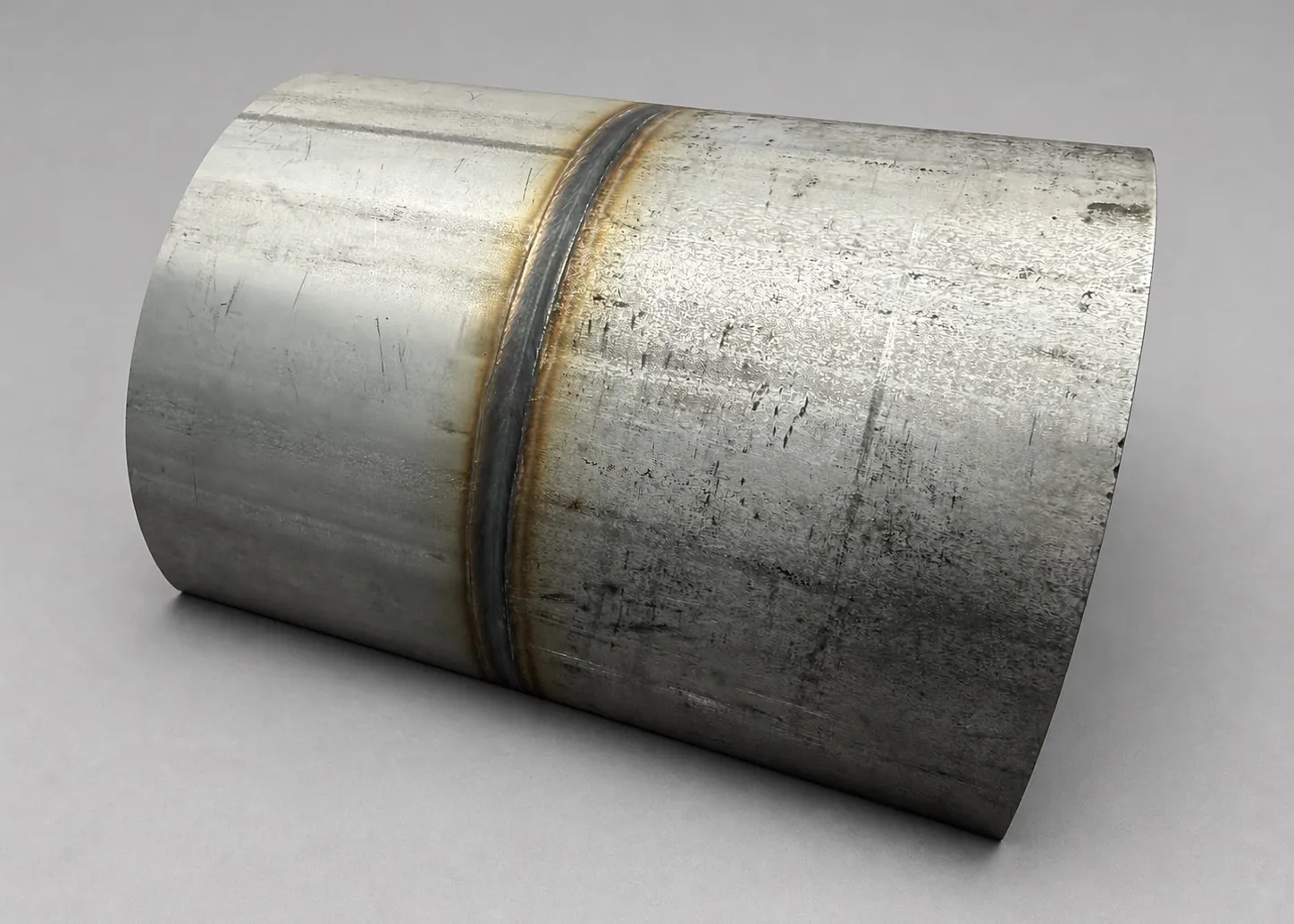
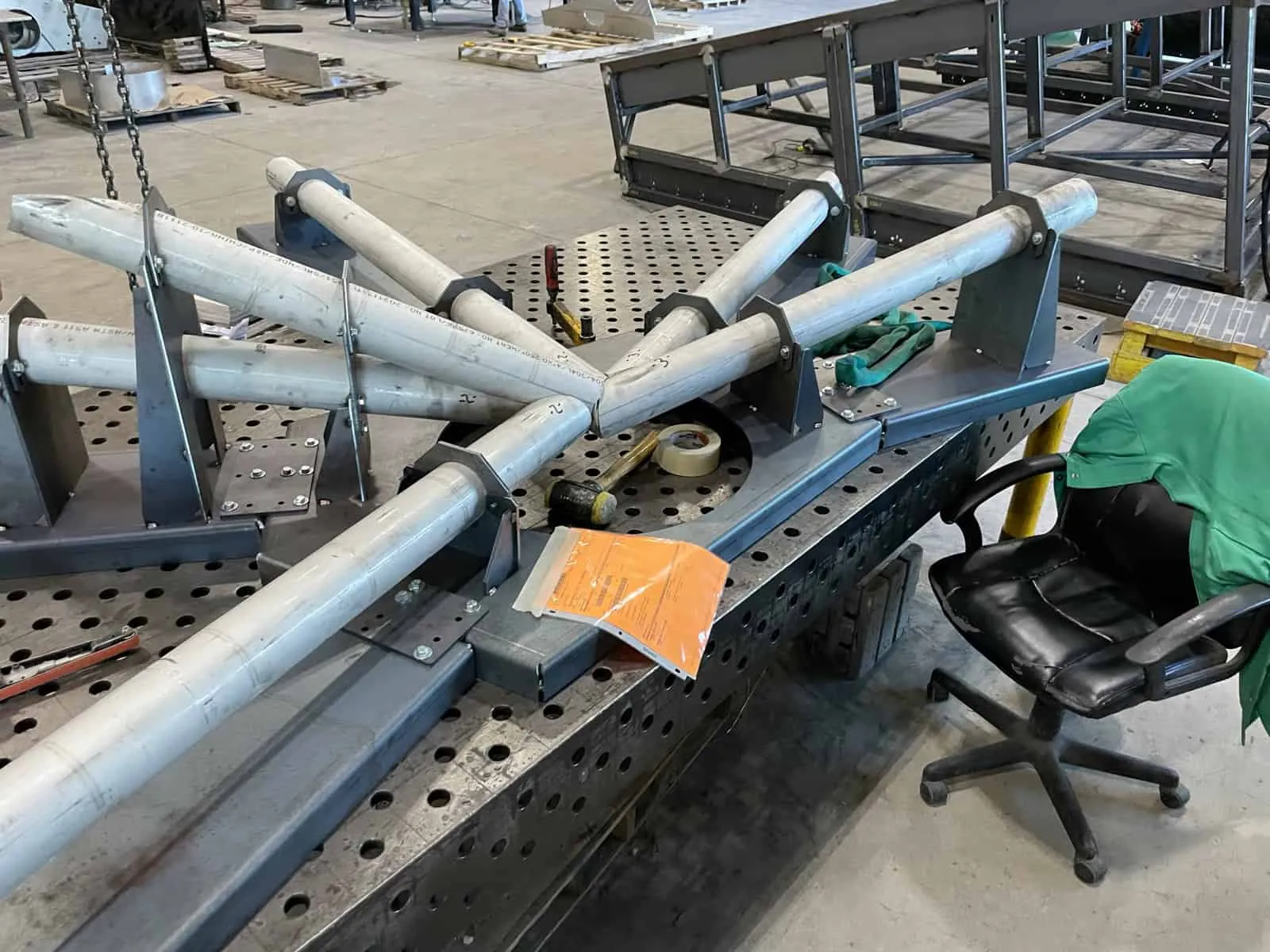
Northern Manufacturing cuts tube, pipe, and structural shapes on a Trumpf TruLaser Tube 7000 at our Oak Harbor, Ohio facility. Round, square, rectangular, and special profiles from 0.6 to 10 inches in diameter, finished parts to 19 feet 8 inches from raw tube to 30 feet, stock weights to 25 pounds per foot, and wall thickness to 5/16 inch on stainless. Copes, miters, slots, tabs, hole patterns, and etched layout lines cut in the same cycle, so parts come off the machine ready for fit-up instead of ready for layout.
ISO 9001:2015 certified by AVU Registrations (IAS-accredited, certificate #00157-4). Material Test Reports traced by heat number from raw stock through finished part. The tube laser runs alongside two flat lasers, a 5-axis 3D laser, 78 welding bays, and an in-house pickling and passivation booth, so a cut kit can move straight into welding and finishing without leaving the building.
This is contract tube cutting for manufacturers and OEMs: send a package of parts with a BOM, and a stainless cutting estimator quotes the program against your finish, tolerance, and material specs. We are set up for recurring releases and blanket orders.
Why Cut Stainless Tube Here
Stainless is what we run most, and we cut it the way it should be cut: heat-minimized settings in a dedicated stainless-only space, so parts come off the laser clean and ready for the next step. We also buy 304, 316, duplex, and specialty stainless tube and pipe in volume for our own fabrication, so the material cost on your stainless cut parts stays competitive.
Tube and flat laser cutting run on our lasers’ available capacity. That keeps cut-part pricing competitive without giving up the traceability and material control of a full stainless shop.
Tube Laser Capacity
| Parameter | Capacity |
|---|---|
| Diameter | 0.6 in to 10 in |
| Length | Finished parts to 19 ft 8 in; raw tube to 30 ft |
| Wall thickness (stainless) | 3/16 in routine; 5/16 in maximum |
| Stock weight | Up to 25 lb per ft, 500 lb max |
| Positional accuracy | ±0.01 in |
| Profiles | Round, square, rectangular, oval, structural angle and channel |
Hitting one of these limits does not end the conversation. Diameters above 10 inches, formed sections, and pre-welded assemblies route to our Prima Optimo 5-axis laser. Wall thickness beyond the tube laser’s range cuts off on the Hydmech S-23A saw. Sheet and plate parts for the same assembly nest on the flat lasers and ship with the tube kit.
Design Features That Replace Downstream Work
The cost case for tube laser cutting is not the cut. It is everything the cut eliminates. A sawed and drilled frame member needs layout, a drill press, deburring, and a fixture to hold it square during welding. A tube-lasered member arrives with its holes in position, its copes matched to the mating tube, and its tabs indexed to the slots in the next part.
Slot-and-tab joints carry the fixture inside the part. Tabs on one member drop into slots on the next, the frame squares itself, and the welder starts welding instead of measuring. On bracketed frames and equipment skids, that converts hours of fixture setup into minutes of assembly.
Copes and saddles fit the first time. Tube-to-tube intersections are cut to the mating profile, so fit-up gaps stay consistent around the full joint. Consistent gaps mean predictable weld quality; hand-ground copes mean neither. The cut edge is left square to the tube surface by default; our tube laser cutting geometry guide shows what that looks like on copes and miters, and when to call out a bevel or weld prep.
Etch lines replace the tape measure. Weld locations, alignment marks, and part numbers etch into the surface during cutting. Operators downstream position parts off the marks, and traceability rides on the part itself.
Weld prep is geometry, and geometry is where full penetration is won or lost. One process-piping program needed full-penetration butt welds that would pass radiography on every joint, in a high-chromium austenitic stainless. The fix was not a hotter weld. It was a more consistent joint. We cut the weld bevel into each part on the tube laser so every joint arrives at the welder with identical prep instead of the variation that comes off a hand grinder. Machine-beveling on a mill would hold the geometry too, at a cost the part could not carry. Laser-cut bevels remove the fit-up variability up front, the robotic cell welds to the prepared geometry, and the roots fuse the same way on every joint. The joint is repeatable before it ever reaches an arc.
Send your tube files or CAD model with the BOM, and a stainless cutting estimator quotes the package. Our 8-person engineering department works in SolidWorks and Inventor, quotes from STEP or native SolidWorks files, and reviews tube weldments for fabrication: where a two-piece weldment can become one coped part, where a tab replaces a fixture, where an etch line saves the welder a layout step.
Flat, Tube, or 3D: Matching the Part to the Laser
The tube laser is one of four cutting work centers at Northern. Quoting puts the part on the machine the geometry calls for, not the machine with open time.
| Part geometry | Machine | Capacity |
|---|---|---|
| Sheet and plate, nested flat parts | Trumpf TruLaser 3060 and TruLaser 5040 Fiber | Stainless to 1 in thick |
| Tube, pipe, and structural shapes | Trumpf TruLaser Tube 7000 | 0.6 to 10 in dia, parts to 19 ft 8 in, 5/16 wall |
| Formed parts, large diameters, weld-prep bevels | Prima Optimo 5-axis laser | Diameters above 10 in, formed and welded sections |
| Heavy-wall cutoff | Hydmech S-23A saw | Wall thickness beyond laser range |
Flat work has its own page at stainless steel laser cutting, and the 5-axis machine is covered under 3D laser cutting. Parts move between machines under one routing, one quality system, and one purchase order.
From Cut Kit to Welded Assembly
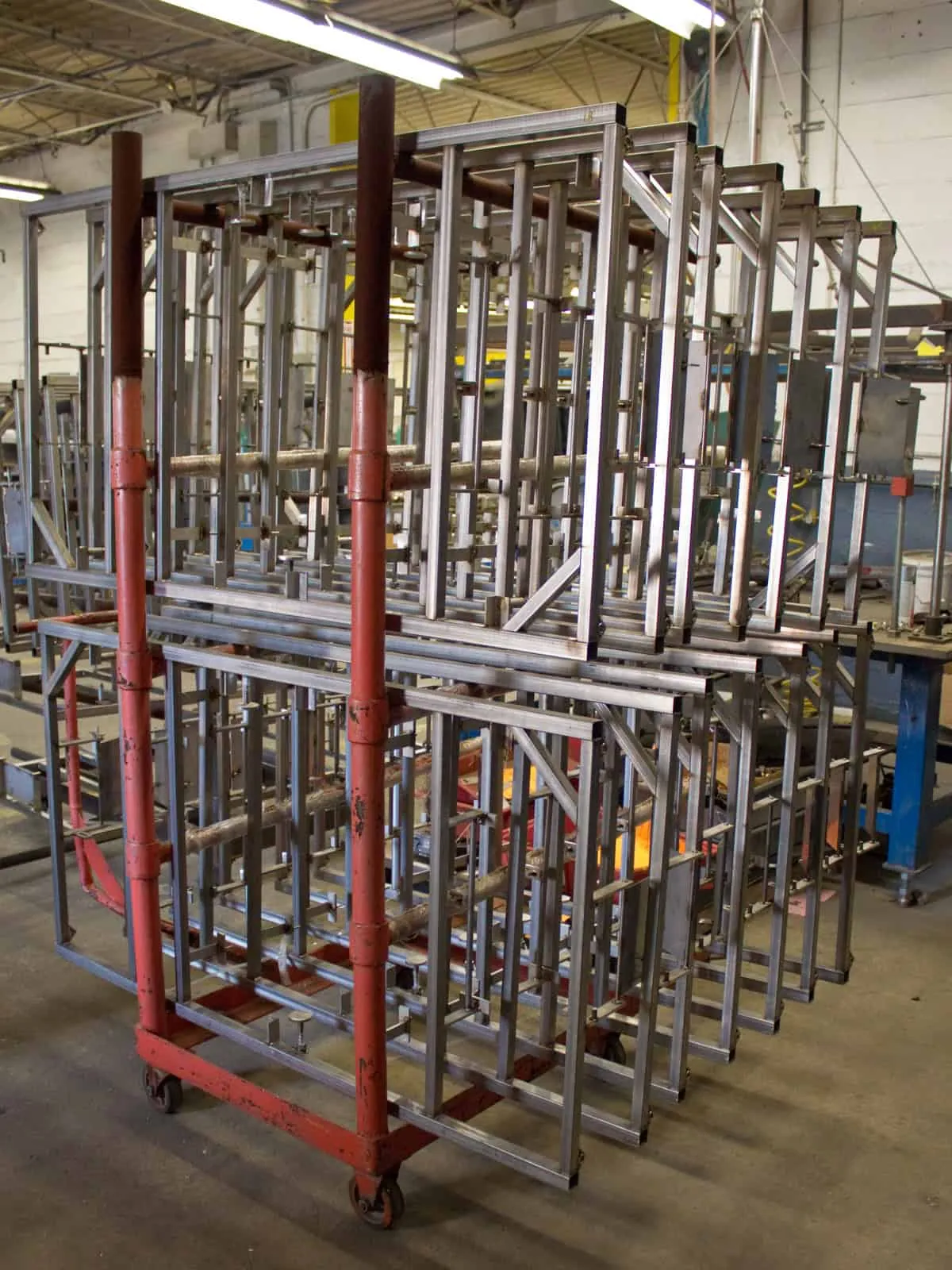
Most tube laser services ship you a box of parts. Northern ships whatever the drawing calls for: a kitted set of cut members, a tacked subframe, or a finished welded assembly. Cut parts feed our stainless steel welding services, with stainless work running in our 40,000 sq ft stainless-only production space and carbon in separate bays. The weld qualifications and code stamps live on that page.
Keeping the tube laser and the weld floor under one roof closes the loop that vendor-to-vendor handoffs leave open. When a fit-up gap reads wrong at the weld bench, the fix is a program revision the same day, not a dispute between your cutting vendor and your fabricator. Slot-and-tab geometry, cope profiles, and tab clearances get tuned against what our own welders see at the bench.
Corrosion-critical assemblies finish with stainless steel pickling and passivation to ASTM A380 and A967 in our 55-foot spray booth, restoring the passive layer that welding heat and handling disturb.
Traceability and Quality
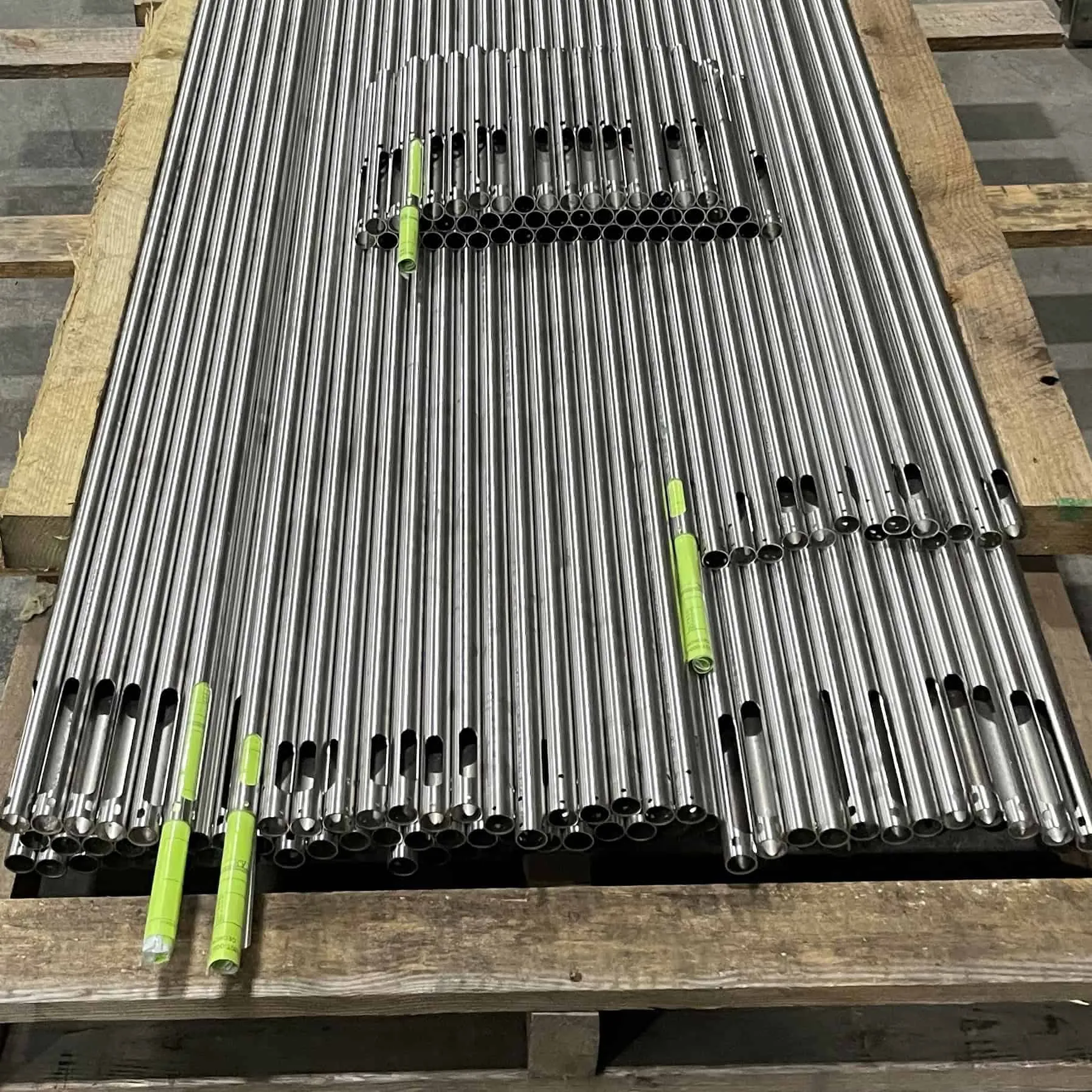
Tube and structural stock carries its identity through the shop. Material Test Reports are traced by heat number from receiving through the finished part, and etched part marking keeps the paper trail attached to the metal. Positive Material Identification (PMI) verifies alloy grade on critical-service work before cutting starts, which matters when 304 and 316L look identical on the rack.
The quality system behind the machine is the same one that runs the rest of the shop: ISO 9001:2015 certified by AVU Registrations (certificate #00157-4), with Material Test Reports traced by heat number, PMI verification, a certificate of conformance, and 3D-scan inspection for dimensional verification on assemblies where the drawing demands proof, not promises.