Northern Manufacturing
Quote
Menu
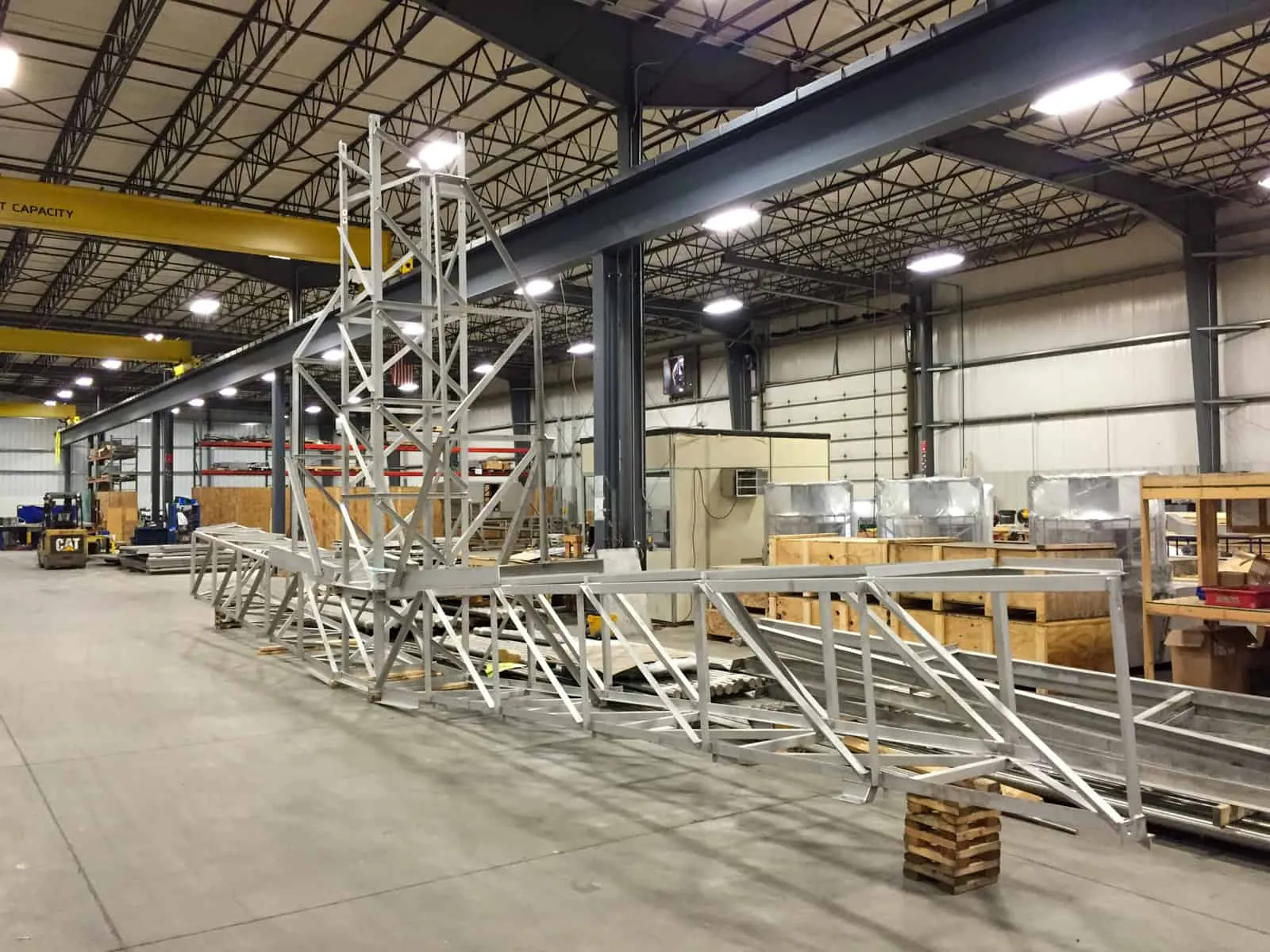
Multi-section stainless steel trough assembly fit up end to end on the Northern Manufacturing shop floor
Part of Stainless Fabrication

Trial Fit and Functional Testing

ISO 9001:2015 · ASNT SNT-TC-1A Level III · AWS CWI on staff qualified. Oak Harbor, Ohio.

  • 304 / 316L Stainless
  • Duplex 2205 / 2507
  • AL-6XN
  • Hastelloy C-276 / C-22
  • Carbon Steel
Qualified ISO 9001:2015 ASNT SNT-TC-1A Level III AWS CWI on staff
Docs shipped MTRs Weld maps WPS/PQR NDE PMI CoC
160,000 sq ft

Indoor floor for full-assembly layup

1/8 in

Straightness held over a 100 ft trough

III

ASNT SNT-TC-1A NDE level on staff

1951

Fabricating metal since

Before your fabrication ships, we assemble it on our floor, verify it against your CAD model with a Leica AT960 laser tracker, and exercise the moving parts, so a fit problem costs hours in the shop instead of days in the field.

Northern Manufacturing trial fits and function tests fabricated assemblies before they ship from our Oak Harbor, Ohio facility. Mating sections are assembled on up to 160,000 sq ft of indoor floor, dimensions are verified against your CAD model with a Leica Absolute Tracker AT960 and AS1-XL scanner, moving parts are exercised, and tanks get hydrostatic and leak testing. The economics are blunt: a fit-up issue caught here costs hours in the shop; the same issue at your site costs days in the field with a crew and crane on the clock.

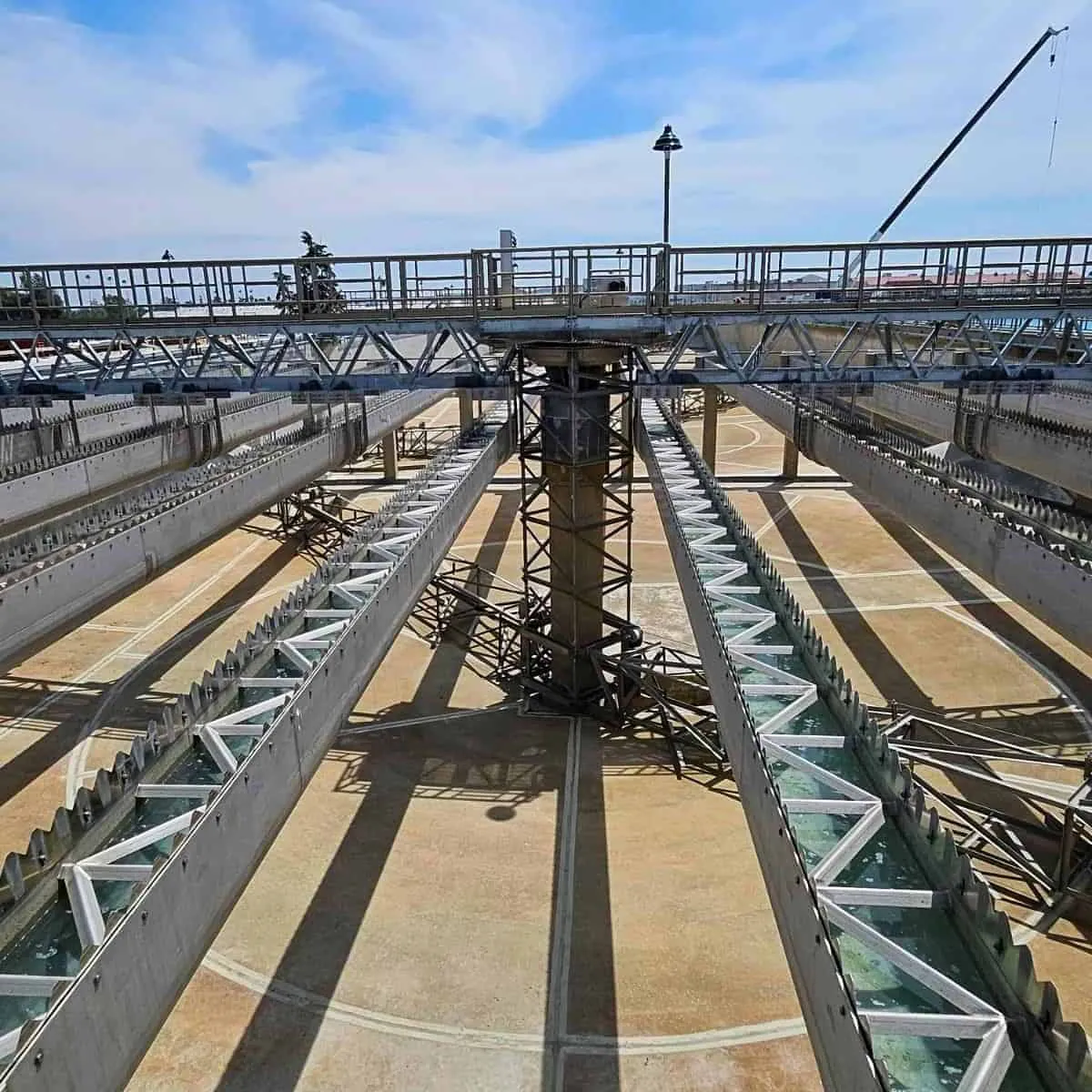
The verification is run by the same quality organization that stands behind our fabrication: ISO 9001:2015 certified by AVU Registrations (IAS-accredited, certificate #00157-4), an AWS Certified Welding Inspector on staff, and ASNT SNT-TC-1A Level III NDE capability in-house. When a regional wastewater authority needed a 100-foot trough straight within 1/8 inch, this is the discipline that proved it before the truck was loaded.

What a Trial Fit Verifies

A trial fit answers the question individual part inspection cannot: does the system go together? We assemble mating components, large multi-section weldments, and complete systems in our bays and physically prove:

  • Critical interfaces. Flange faces, mounting surfaces, and mating sections engaged the way installation will engage them
  • Hole patterns. Bolted connections proven with hardware, not overlaid drawings
  • Clearances. Moving parts swung through their travel, access envelopes confirmed
  • Overall dimensional accuracy. The assembled geometry measured against the model, where tolerance stack-up across joints either passes or fails

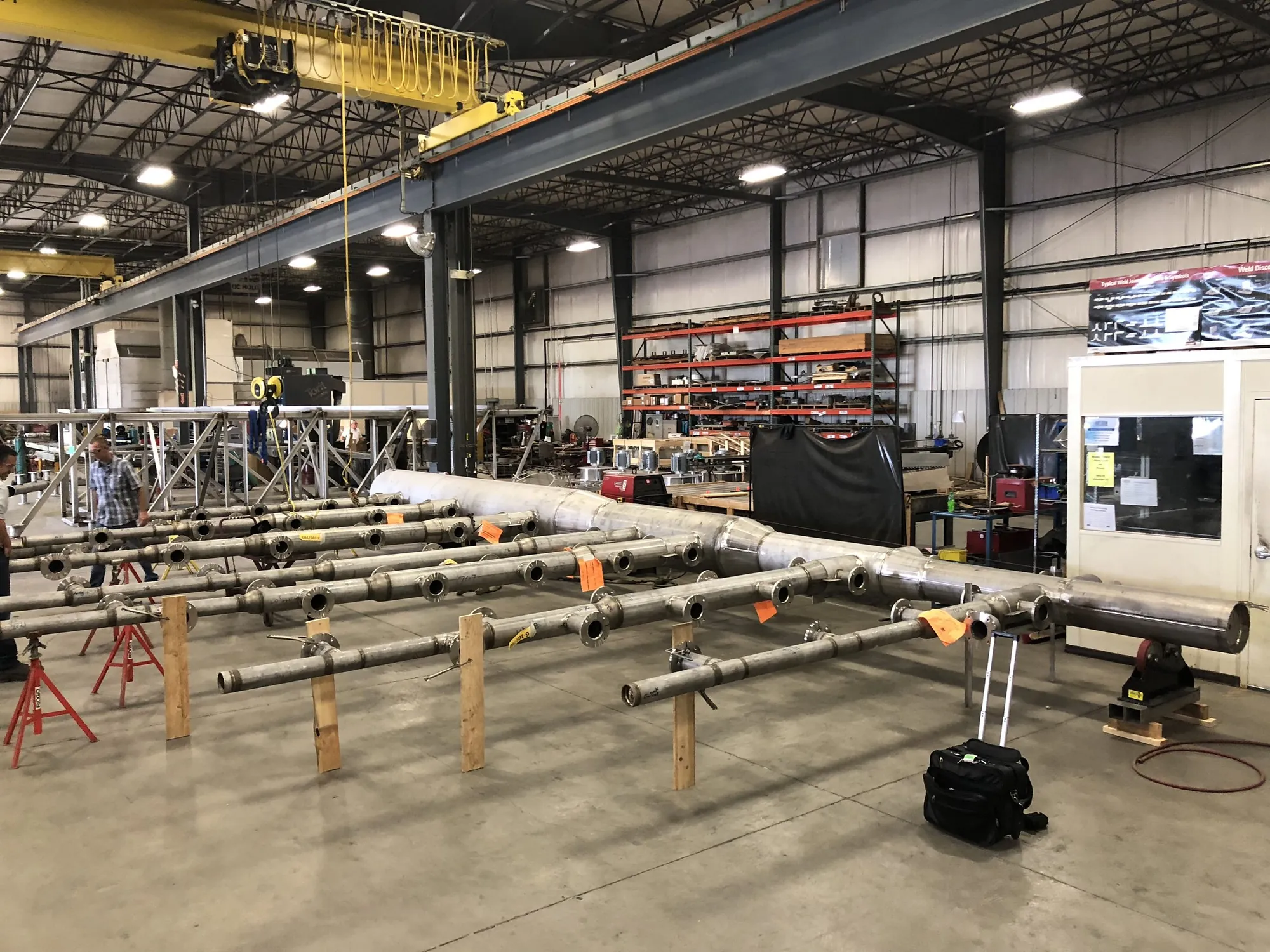
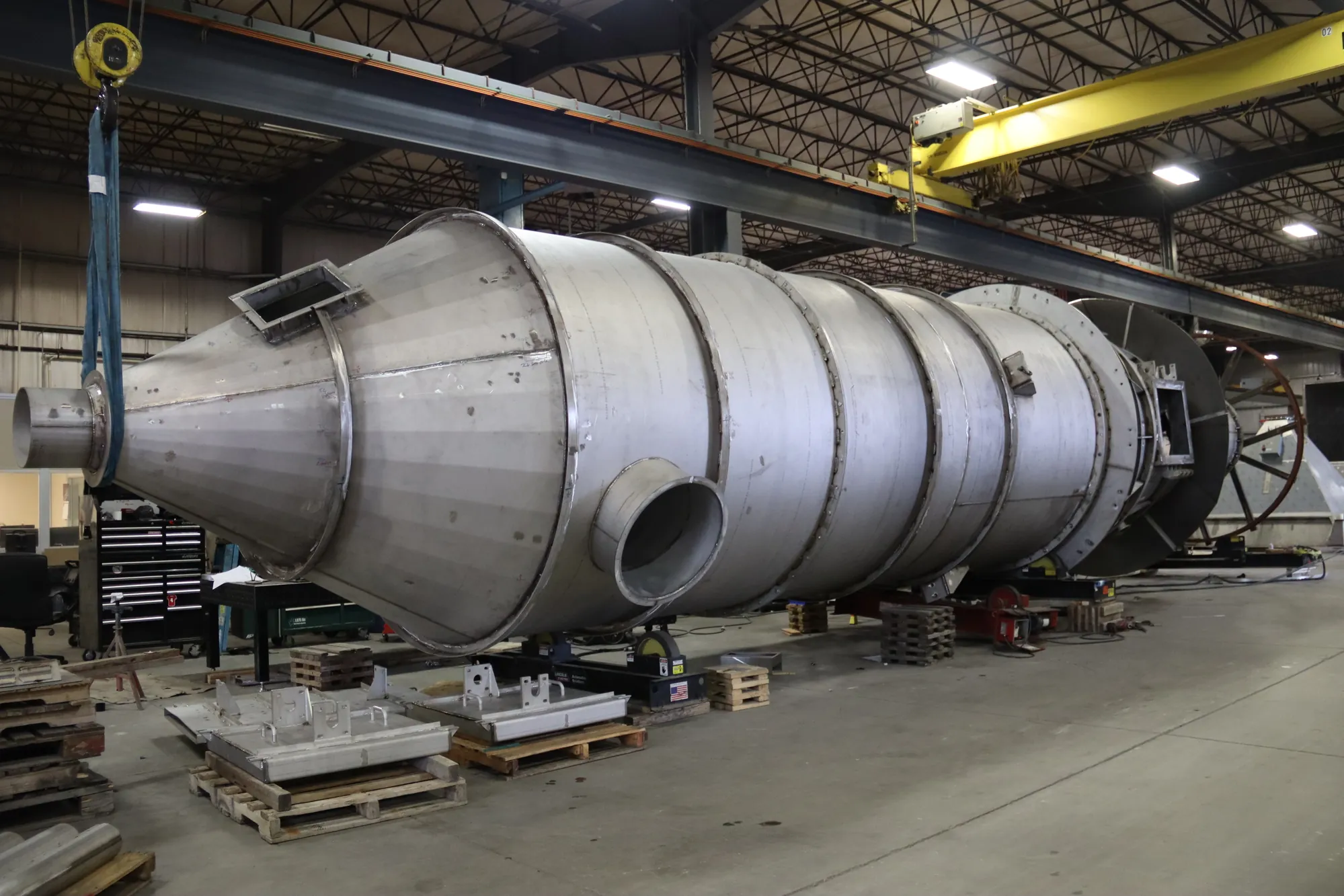
Sections are match-marked as they are proven, so the exact fit demonstrated on our floor is the fit your field crew reassembles. Our power generation ductwork work ran every assembly through a factory dry fit against its mating section before release, with no “we’ll adjust it in the field” allowances.
100-foot 304L stainless steel trough for wastewater treatment fabricated by Northern Manufacturing

Dimensional Verification Against the Model

Verification methods scale with the size and criticality of the assembly. The drawing and your spec set the scope; the table below is how the methods divide the work.

MethodEquipmentWhat it proves
Laser tracker measurementLeica AT960 + AS1-XL scannerLarge-volume geometry measured directly against the CAD model
Model-based inspectionNative 3D CAD comparisonDimensions and GD&T validated against the model, not a 2D dim chain
Layout projectionFARO laser projectorsCAD outlines projected on the work to confirm component placement
Weld geometry scanningServo-Robot WiKi-ScanFillet size, leg length, throat, and undercut captured quantitatively
Material confirmationHandheld XRF PMI analyzersAlloy verified on specialty-grade components

Weldment tolerances reference ISO 13920 unless your spec calls tighter, and the output is a quantitative report, archivable and auditable, rather than an inspector’s initials next to a checkbox.

Functional Testing: Exercise It Here, Not On Site

Static fit is half the answer. For dynamic assemblies, we test the mechanics before shipment:

  • Range of motion verified on rotating and articulating elements through their full travel
  • Motors and pneumatic systems that we mechanically integrated are exercised to confirm the drivetrain and actuation behave as designed
  • Hydrostatic and leak testing on tanks and welded containment, with vacuum box testing on seams where the method applies
  • Weld verification by dye penetrant testing and ferrite measurement on duplex welds, per the drawing

Electrical integration and controls commissioning stay with you or your integrator; our scope is the mechanical proof that the hardware they energize is right.
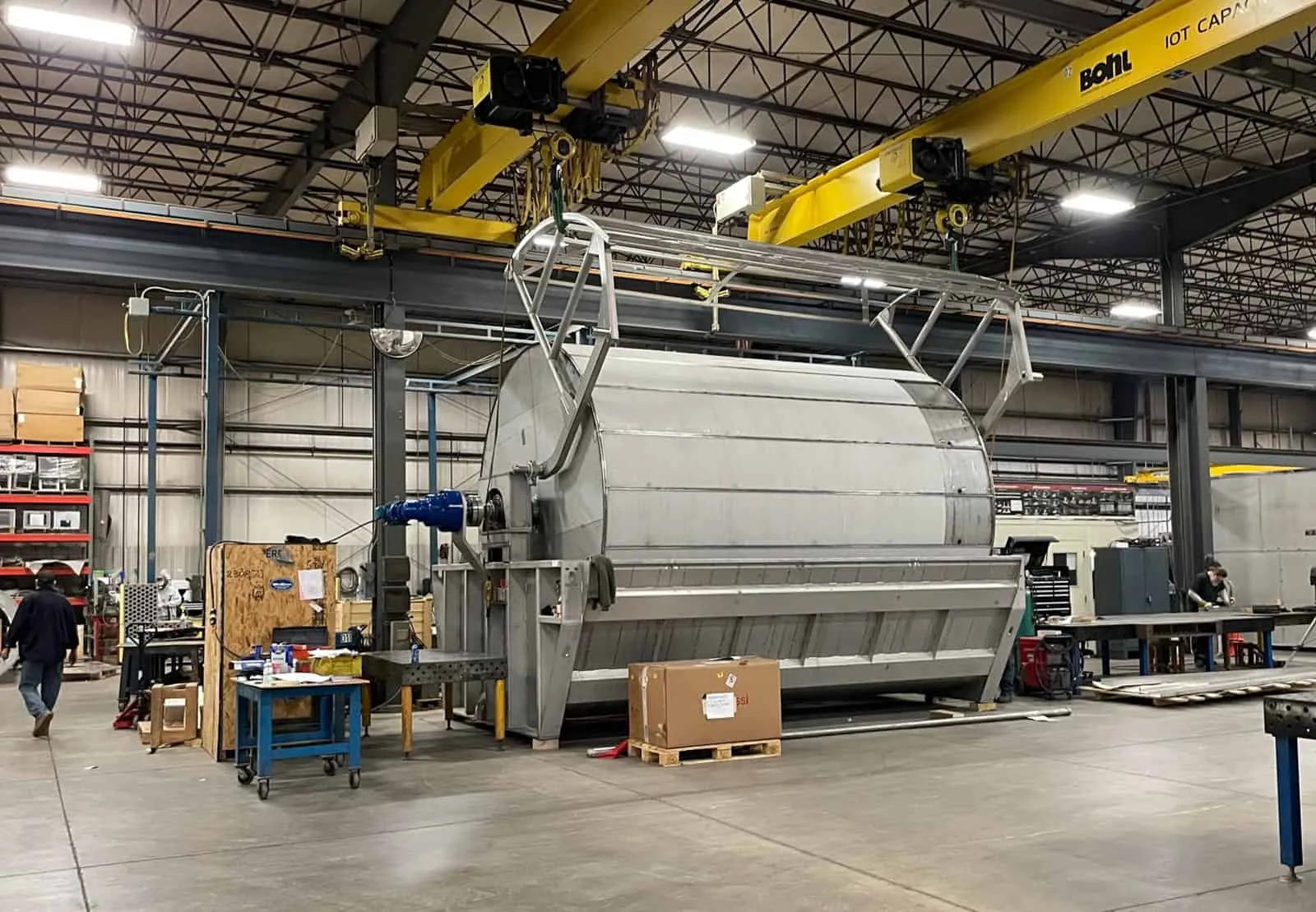
Craftsman fitting a drilled tube sheet to a large rolled stainless steel shell on roller stands at Northern Manufacturing

Witness Points and Third-Party Inspection

Customer witness and hold points are written into the inspection plan during quote review, and we host your inspector or third-party inspection agency on our floor for them. TPI is typically arranged and contracted by the customer. Flag the hold points when the order is placed so they are planned into the work rather than bolted onto it.

What Ships With a Verified Assembly

  • Dimensional verification report against your CAD model, including laser tracker data when specified
  • Trial fit records and photographs of the assembled, match-marked system
  • Functional, hydrostatic, and leak test records for the tests in scope
  • NDE reports (PT and others as specified), with ferrite measurements on duplex welds
  • Match-mark documentation so field assembly repeats the proven fit
  • Certificate of Conformance to your purchase order

Trial fit and functional testing run as the final gate on work we fabricated and assembled, or as a defined verification step your spec calls out. Either way, the assembly that leaves Oak Harbor has already been built once.
Trial Fit and Functional Testing processes we run

Process selection is driven by material, joint geometry, and the tolerance the print calls out.

  • Trial fit (shop dry fit)

    Primary

    Mating components, multi-section weldments, and complete systems assembled on our floor before shipment. Physically proves interfaces, hole patterns, clearances, and overall dimensions.

    Multi-section assemblies

  • Laser tracker verification

    Primary

    Leica Absolute Tracker AT960 with AS1-XL scanner measures large components and assemblies directly against your CAD model, with quantitative reports instead of a tape-measure judgment call.

    Large-volume 3D metrology

  • 3D model-based inspection

    Dimensions and geometric tolerances validated against the 3D model rather than a chain of 2D dimensions, catching stack-up problems individual part checks miss.

    GD&T verification

  • Functional testing

    Range of motion verified on moving parts, and mechanically integrated motors and pneumatic systems exercised, so the first actuation happens here instead of at your site.

    Dynamic assemblies

  • Hydrostatic and leak testing

    Water-fill, hydrostatic, and leak testing on tanks and welded vessels, with vacuum box testing on seams where the geometry fits the method.

    Tanks · Weldments

  • Weld verification testing

    Dye penetrant testing, ferrite measurement on duplex welds, and Servo-Robot WiKi-Scan non-contact weld geometry scanning, run by a quality team with a CWI and ASNT Level III on staff.

    PT · Ferrite · Weld scanning

Equipment running this process

Named gear on the floor, not a stock-photo list. Availability and fit-for-purpose confirmed during quote review.

  • Leica Absolute Tracker AT960 with AS1-XL scanner
  • Servo-Robot WiKi-Scan non-contact weld geometry scanner
  • FARO laser projectors for CAD-guided layout checks
  • Hydrostatic and leak test capability for tanks and weldments
  • Dye penetrant, vacuum box, and ferrite testing
  • Handheld XRF PMI analyzers
  • 160,000 sq ft of indoor floor for full-assembly layup

Have a WPS or drawing to review?

Request a Quote

Trial Fit and Functional Testing in the field

Real projects that used this capability.

Stainless steel exhaust ductwork at power generation facility

Sections dropped into position on site without field rework. Factory dry-fit eliminated forced alignment and saved significant installation labor.

When the original spec was unbuildable

Power generation facility needed large-diameter stainless exhaust ductwork to mate to existing in-plant flanges during a scheduled outage, with zero tolerance for forced alignment on site.

304 Stainless Steel
100-foot 304L stainless steel trough for wastewater treatment

Delivered straight within 1/8 inch over 100 feet, tighter than spec. Installed without field rework.

A 100-foot stainless trough, straight within 1/8"

Regional wastewater authority needed a 100-foot 304L stainless trough to replace a failed unit during a planned outage. Straightness was specified within 1/8 inch over the full 100-foot length. The previous fabricator couldn't hold tolerance over the span.

304L Stainless Steel

Want your assembly proven to fit before it leaves the shop?

Or call (419) 898-2821

Request a Quote

Frequently asked questions

What engineers and procurement managers ask us about trial fit and functional testing.

What is a shop trial fit?

A trial fit assembles your fabrication the way the field will: mating sections bolted or fit together, interfaces engaged, hole patterns proven with real hardware. It is the difference between every part passing inspection individually and the whole system actually going together. We run trial fits on our own fabrications as a final quality gate and stage them on up to 160,000 sq ft of indoor floor, so even long multi-section runs lay up end to end.

Every part already passed inspection. Why trial fit the assembly?

Stack-up. Ten parts that are each within tolerance can still combine into an assembly that does not fit, because individual tolerances accumulate across joints, weld shrinkage moves interfaces, and 2D inspection of single parts never exercises the connections between them. A trial fit is the only check that loads the real interfaces with the real hardware. Finding the problem here costs hours in the shop; finding it during installation costs days in the field, plus the crane and crew standing around while it gets fixed.

What functional tests can you run?

For dynamic assemblies we verify range of motion on moving parts and exercise mechanically integrated motors and pneumatic systems. For containment we run water-fill, hydrostatic, and leak tests on tanks and welded vessels, with vacuum box testing on accessible seams. Weld-level verification includes dye penetrant testing and ferrite measurement on duplex. Test scope is set against your spec during quote review, so the package matches what your commissioning plan actually needs.

What does laser tracker verification add over conventional measurement?

Objectivity at size. A tape and a level top out quickly on a 40 foot assembly; the Leica AT960 measures the actual surfaces and features of large fabrications and compares them directly to your CAD model, producing a quantitative report of where the assembly sits relative to nominal. With the AS1-XL scanner it captures full surface data, not just discrete points. It is the same instrument we used to verify a 100 foot trough straight within 1/8 inch.

Can our inspector or a third party witness the testing?

Yes. Customer witness points and hold points are written into the inspection plan during quote review, and your inspector or your third-party inspection agency is welcome on our floor for them. TPI is typically arranged and contracted by the customer; tell us the hold points early so the schedule is built around them rather than interrupted by them.

What if we only have 2D drawings, not a 3D model?

Model-based verification works best from your native CAD, and we ask for STEP or SolidWorks files first. When only 2D prints exist, our 8-person engineering team models the critical geometry in-house so laser tracker results still compare against a defined nominal. That scope gets called out in the quote, not discovered later.

What documentation comes out of a trial fit?

A dimensional verification report against your model (including laser tracker data when used), functional and leak test records for the tests performed, photographs of the fitted assembly, NDE reports for any weld verification in scope, and a Certificate of Conformance to your purchase order. Match-marking on mating sections is documented so field crews reassemble exactly what we proved.

Send us a drawing. We'll tell you what it takes.