Northern Manufacturing
Quote
Menu
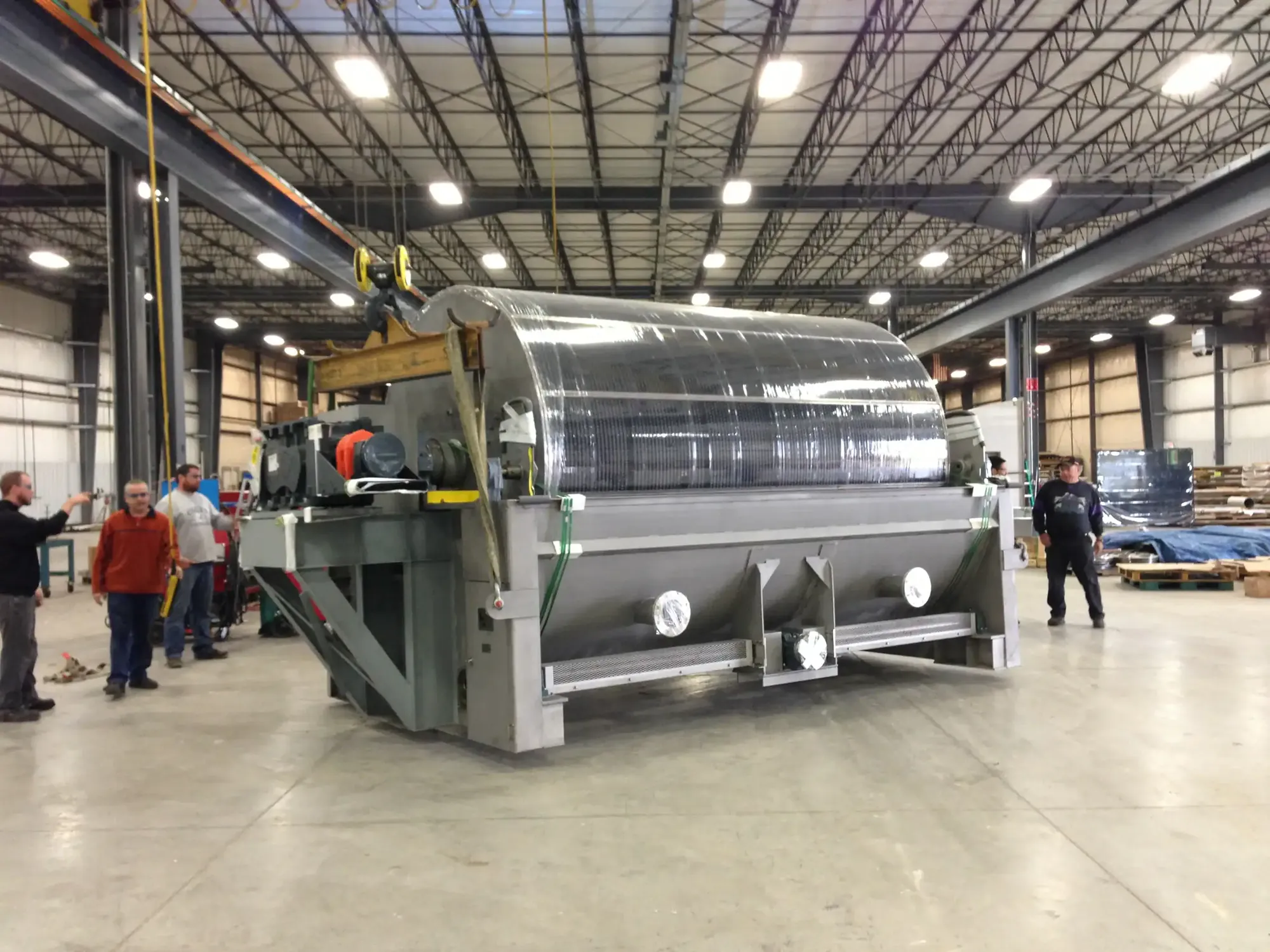
Assembled stainless steel rotary drum unit with drive motor staged under an overhead crane while Northern Manufacturing craftsmen look it over
Part of Stainless Fabrication

Mechanical Assembly Services

ISO 9001:2015 · AWS CWI on staff · ASNT SNT-TC-1A Level III qualified. Oak Harbor, Ohio.

  • 304 / 316L Stainless
  • Duplex 2205 / 2507
  • Specialty Alloys
  • Carbon Steel
Qualified ISO 9001:2015 AWS CWI on staff ASNT SNT-TC-1A Level III
Docs shipped MTRs Weld maps WPS/PQR NDE PMI CoC
160,000 sq ft

Indoor fabrication and assembly space

90,000 sq ft

Outdoor laydown and staging

160 +

Craftsmen across departments

1951

Building metal products since

Our craftsmen carry your fabrication past the weld floor: shafts, bearings, drives, pneumatics, and customer hardware installed in dedicated assembly bays and verified under the same ISO 9001:2015 system that built the parts.

Northern Manufacturing runs mechanical assembly in dedicated assembly and fit-up bays inside our 160,000 sq ft Oak Harbor, Ohio facility, with 90,000 sq ft of outdoor laydown behind it for staging and crating. Our craftsmen build bolted structures, set shafts, bearings, and couplings, mount motors, pumps, and gearboxes, plumb pneumatic systems and actuators, and install gaskets, seals, and insulation, working from your drawings and bill of material under the same ISO 9001:2015 quality system that fabricated the parts (certified by AVU Registrations, IAS-accredited, certificate #00157-4).

The scope boundary is honest and simple: mechanical only. We do not perform electrical wiring or controls assembly. What we ship is a mechanically complete, dimensionally verified unit, fabrication, assembly, and final testing handled start to finish under one roof.

From Fabricated Parts to Working Assemblies

Most of what leaves our weld floor is destined to become part of a machine: a frame that carries a drive, a housing that holds a rotating drum, a hopper that feeds a conveyor. Shipping those as loose fabrications moves the integration risk onto your dock. Assembling them here keeps the risk where the parts were made, with the people who made them.

Component classExamplesWhat we do
Structures and fasteningFrames, guards, platforms, bolted jointsAssemble per drawing with specified hardware
Rotating elementsShafts, bearings, couplingsInstall and align so rotation matches design intent
DrivesMotors, pumps, gearboxesMount and connect mechanically per the print
ActuationPneumatic systems, cylinders, actuatorsInstall and connect, function-checked before shipment
Soft goodsGaskets, seals, insulationInstall at final assembly so the unit arrives closed up
HardwareCustomer-supplied or Northern-sourcedReceive, verify against BOM, track through the build

Complex multi-part sub-assemblies are the normal case here, not the exception. The bays, overhead cranes (four added in the January 2026 expansion), and rigging that handle our largest weldments handle assembled units the same way.
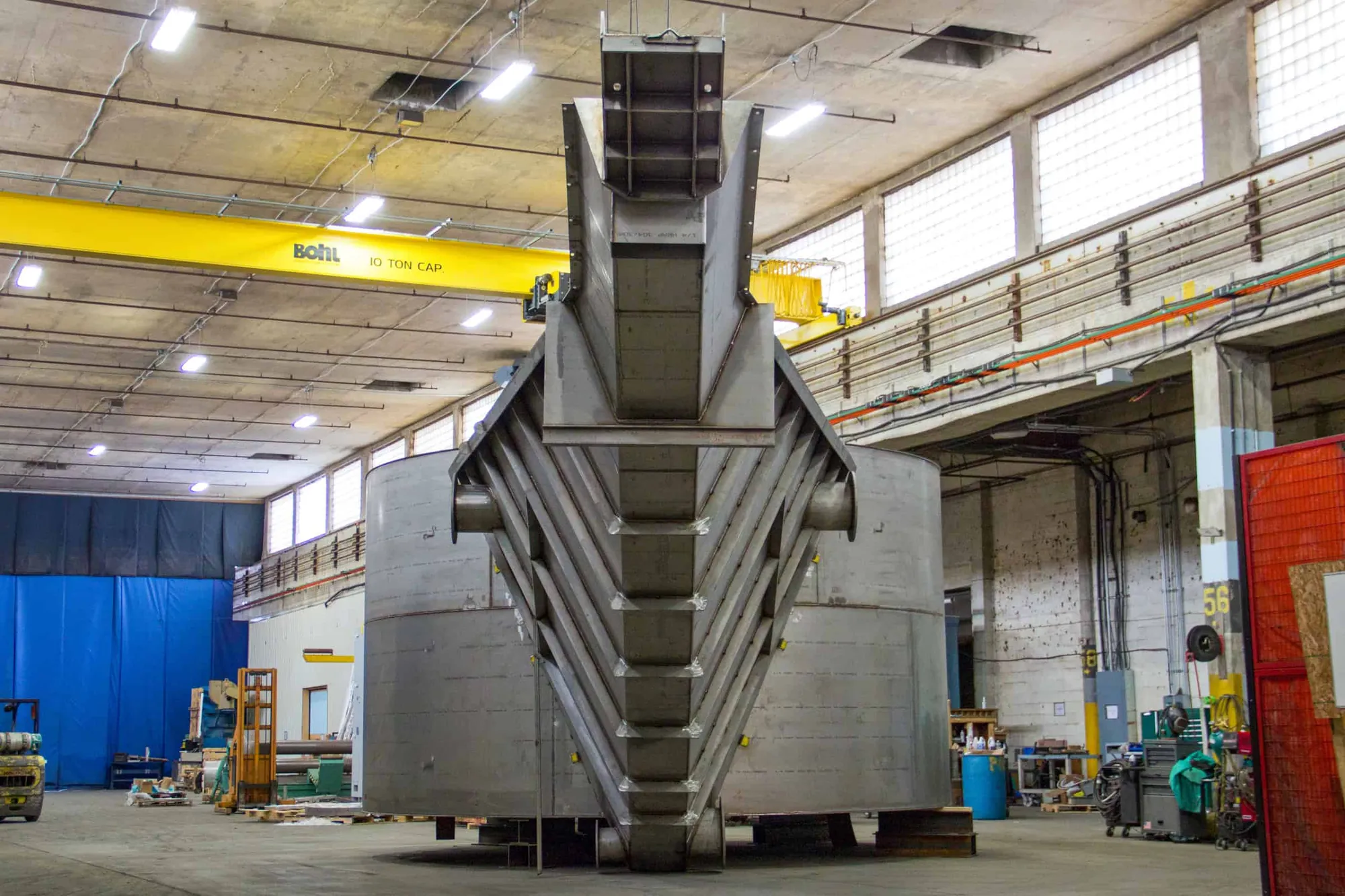
Large welded stainless steel hopper assembly with panel weld seams staged under an overhead crane at Northern Manufacturing

One Vendor From Laser Cut to Final Bolt

Splitting fabrication and assembly across vendors multiplies handoffs, and every handoff is a place where accountability can leak. When a hole pattern does not line up, the fabricator blames the assembler’s sequence and the assembler blames the fabricator’s tolerance, and you referee from a job site.

Putting both under one roof collapses that loop. The craftsman who fit the weldment is across the floor from the one bolting it to its drive. An interface problem found during assembly goes back to the source in hours, with the fixtures, the weld maps, and the people who built the part all still in place. One purchase order, one quality system, one accountable supplier.

Kitting and Kanban Programs

For customers with recurring production needs, we run kitting and Kanban programs: finished fabrications and hardware staged as kits and released against your pull signals instead of arriving as one bulk shipment. Each kit carries what one build station consumes, which cuts the receiving, sorting, and material-handling work on your floor. Program rules, kit contents, and release triggers are agreed up front; the parts inside carry the same documentation as any other Northern fabrication.
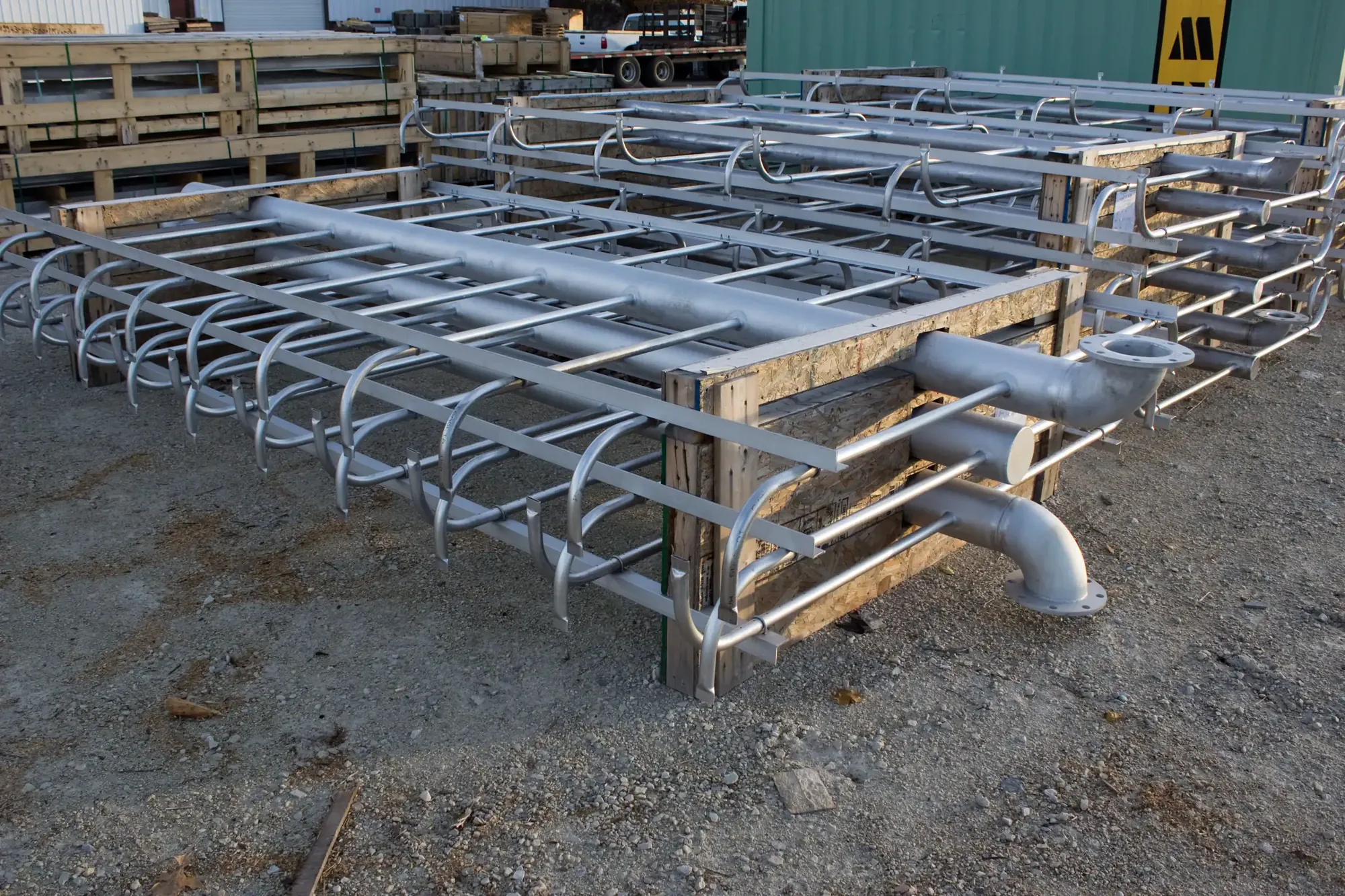
Batch of identical stainless steel pipe manifold frame assemblies crated for shipment in the Northern Manufacturing laydown yard

How Assembly Work Is Verified

Assembly is a quality gate, not just labor. Verification scales to the job:

  • In-process checks under the ISO 9001:2015 system, with hold points where the drawing or your spec calls for them
  • FARO laser projectors that project CAD outlines directly onto the work, guiding component placement and catching mislocations before they are bolted in
  • Dimensional verification against your model, escalating to Leica AT960 laser tracker measurement on large or critical assemblies
  • Trial fit and functional testing as the final gate: mating interfaces proven, moving parts exercised, and leak or hydro testing where the design calls for it
  • PMI verification with handheld XRF analyzers when material confirmation on specialty alloys is specified

What Ships With an Assembled Unit

  • Material Test Reports (MTRs) traced by heat number for Northern-fabricated components
  • Weld maps and NDE reports carried forward from fabrication
  • Dimensional verification records, including laser tracker reports when specified
  • Functional and trial fit test records for assemblies that ran the final gate
  • Hardware and BOM verification records for supplied components
  • Certificate of Conformance to your purchase order

If your program needs assembly-level inspection documents we have not listed, our quality department scopes them during quote review, before the work starts, not after it ships.

Mechanical Assembly processes we run

Process selection is driven by material, joint geometry, and the tolerance the print calls out.

  • Mechanical sub-assembly

    Primary

    Bolted and fastened connections built from your drawings and bill of material, from bracket-level sub-assemblies through complete multi-part units ready to install.

    Fabricated + purchased parts

  • Rotating components

    Shafts, bearings, and couplings installed and aligned so the rotating element turns the way the design intends before the assembly leaves the bay.

    Shafts · Bearings · Couplings

  • Drives and actuation

    Motors, pumps, gearboxes, and pneumatic systems and actuators mounted and connected mechanically per the drawing.

    Motors · Pumps · Pneumatics

  • Sealing and insulation

    Gaskets, seals, and insulation installed as part of final assembly, so the unit arrives closed up instead of as a box of soft parts and an instruction sheet.

    Gaskets · Seals · Insulation

  • Kitting and Kanban programs

    Recurring parts staged as kits and released against your pull signals, for customers who consume the same fabrications repeatedly.

    Repeat production support

  • Final verification

    Primary

    Dimensional checks and trial fit and functional testing as the last quality gate before the assembly is crated and shipped.

    ISO 9001:2015 gate

Equipment running this process

Named gear on the floor, not a stock-photo list. Availability and fit-for-purpose confirmed during quote review.

  • Dedicated assembly and fit-up bays
  • Overhead bridge cranes, four added in the January 2026 expansion
  • FARO laser projectors: CAD outlines projected onto the work for placement
  • Leica AT960 laser tracker for large-assembly verification
  • Handheld XRF PMI analyzers for material verification
  • 90,000 sq ft outdoor laydown for staging and crating

Have a WPS or drawing to review?

Request a Quote

Have a fabrication package that should ship as an assembled, verified unit?

Or call (419) 898-2821

Request a Quote

Industries that depend on this

Click through for the product and the proof, industry by industry.

Frequently asked questions

What engineers and procurement managers ask us about mechanical assembly.

What does your mechanical assembly scope include?

Bolted and fastened structures, shafts, bearings, and couplings, motors, pumps, and gearboxes, pneumatic systems and actuators, gaskets, seals, and insulation, and complex multi-part sub-assemblies. We work from your engineering drawings and bill of material, with parts we fabricated, parts you supply, or both. The output is a mechanically complete unit, verified and crated, instead of a pallet of pieces.

Do you do electrical assembly or wiring?

No. Our expertise is mechanical assembly. We do not perform electrical wiring, panel building, or controls work. We will mount motors, actuators, and other electrically driven components mechanically, and we leave terminations and controls integration to you or your electrical integrator. We would rather be straight about that boundary than learn it together on your project.

Can you work with customer-supplied hardware and components?

Yes. Customer-supplied and Northern-sourced hardware both run through receiving, get checked against the bill of material, and are tracked under our ISO 9001:2015 system through the build. If a supplied component arrives damaged or out of spec, you hear about it before it gets buried in an assembly.

What are kitting and Kanban programs?

For customers who consume the same fabrications on a recurring basis, we stage finished parts as kits and release them against your pull signals rather than shipping one large batch. A kit arrives with everything one build station needs, which cuts receiving and material-handling work on your end. Scope, kit contents, and release triggers are set up front and run under the same quality system as the parts themselves.

How is assembly work verified before it ships?

In-process verification under ISO 9001:2015, FARO laser projectors to guide and check component placement against CAD, dimensional verification scaled to the job (up to Leica AT960 laser tracker measurement on large assemblies), and trial fit and functional testing as the final gate. Moving parts get exercised, mating interfaces get proven, and the records ship with the unit.

Why have the fabricator do the assembly?

Because fit problems surface where they are cheapest to fix. When the shop that cut, formed, and welded the parts also bolts them together, an interface issue is a walk across the floor, not a vendor dispute. You get one accountable supplier, one quality system from first laser cut to final bolt, and cranes and floor space already sized for the work. Start to finish under one roof.

Send us a drawing. We'll tell you what it takes.