In chemical service a sound weld is everything: the wrong heat input or filler turns a corrosion-resistant alloy into the failure point. We fabricate process vessels, heat exchangers, piping, and scrubbers in duplex, Hastelloy, and AL-6XN to your spec, with ASME Section IX qualified procedures, matching filler, ferrite control, and PMI verification behind every assembly.
Northern Manufacturing fabricates chemical processing equipment in the alloys aggressive chemistry demands: 316L, duplex 2205 and 2507, Hastelloy C-276 and C-22, and AL-6XN. We have built corrosion-resistant alloy fabrications in Oak Harbor, Ohio since 1951, supplying process vessels, heat exchangers, pipe spools, storage tanks, mixing vessels, and scrubbers to chemical plants, specialty chemical producers, and the EPC firms managing their capital projects. Every project starts with the same question: what does this equipment contact, at what temperature, and for how long?
60+ AWS-certified welders. ISO 9001:2015 certified (AVU Registrations). Welding procedures qualified per ASME BPVC Section IX across P8 austenitic stainless, P10H duplex, P43 nickel alloys (Hastelloy C-276 and C-22), and P45 (AL-6XN). Certified Welding Inspector (CWI) on staff and ASNT SNT-TC-1A Level III NDE capability. In-house pickling and passivation per ASTM A380/A967 in a 55-foot spray booth.
Equipment We Fabricate for Chemical Processing
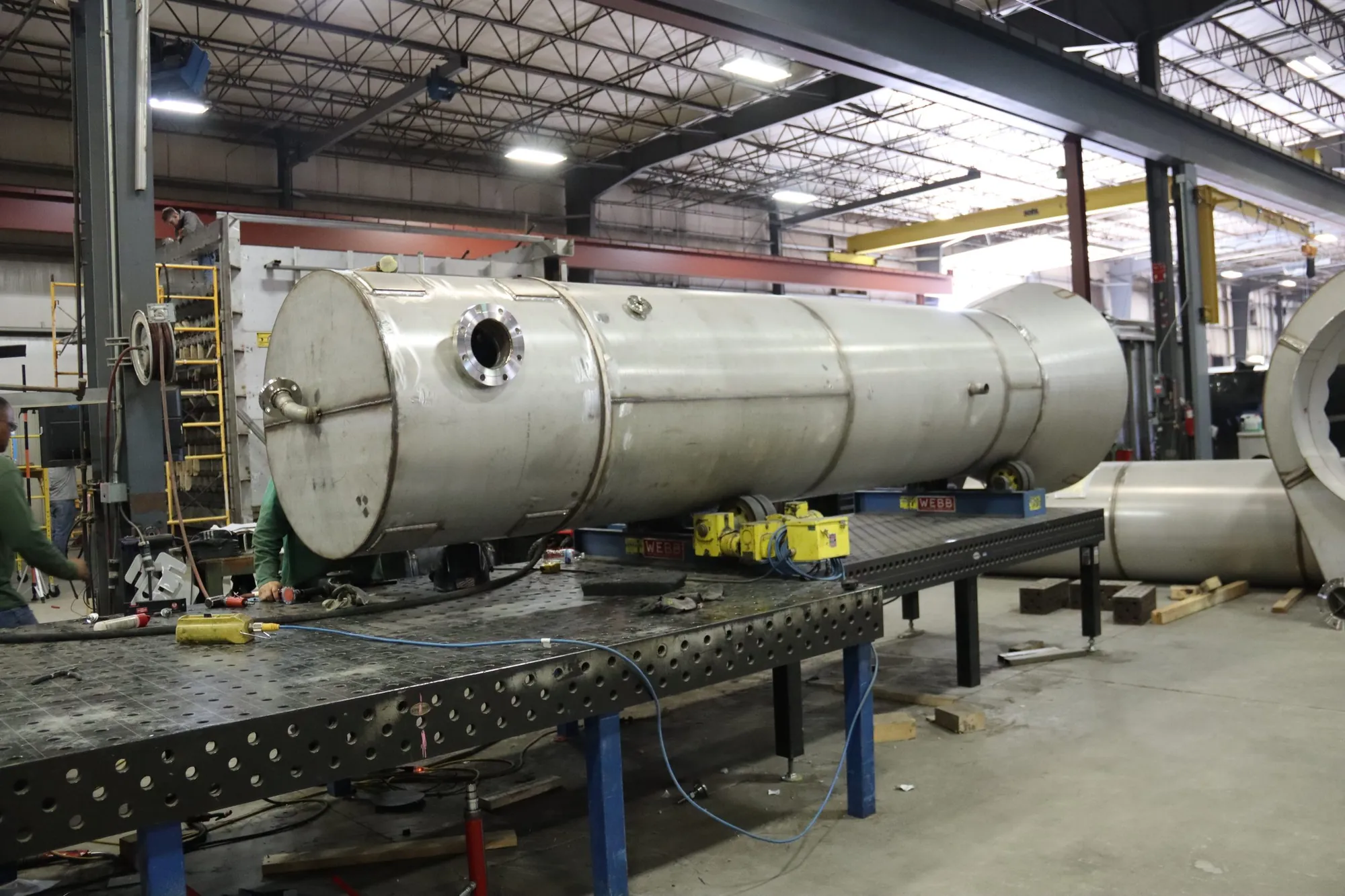
Reactor and Process Vessels
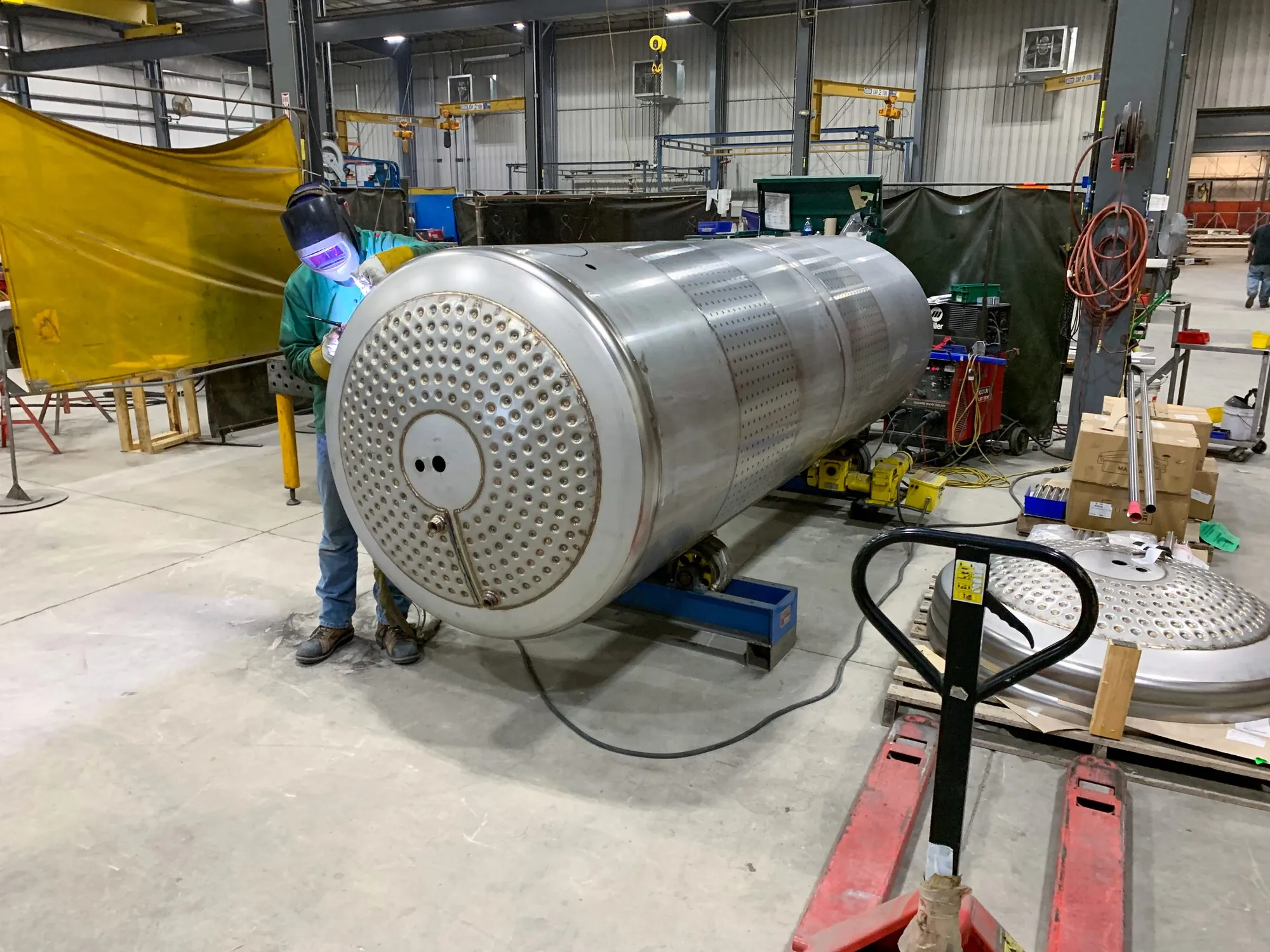
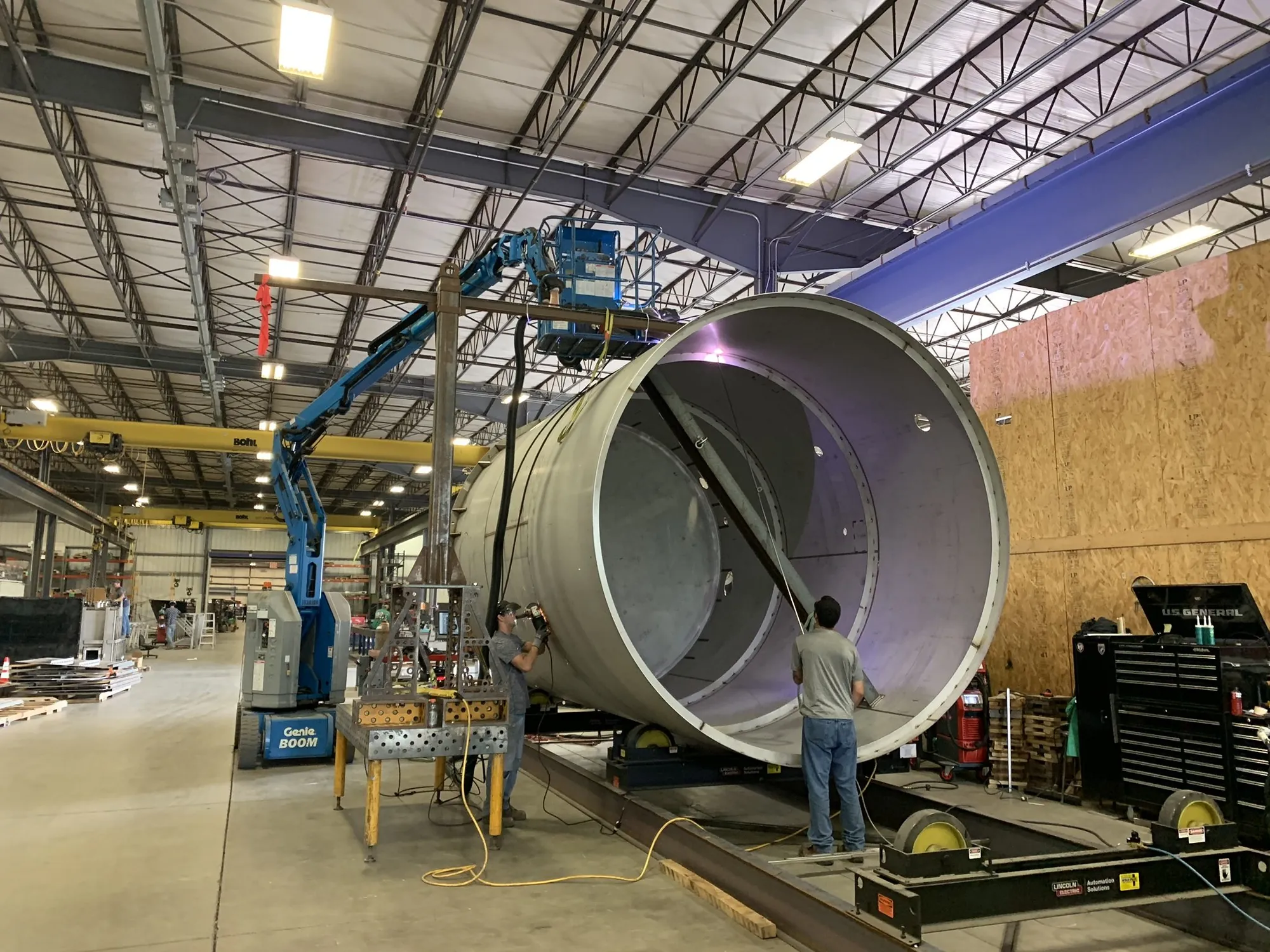
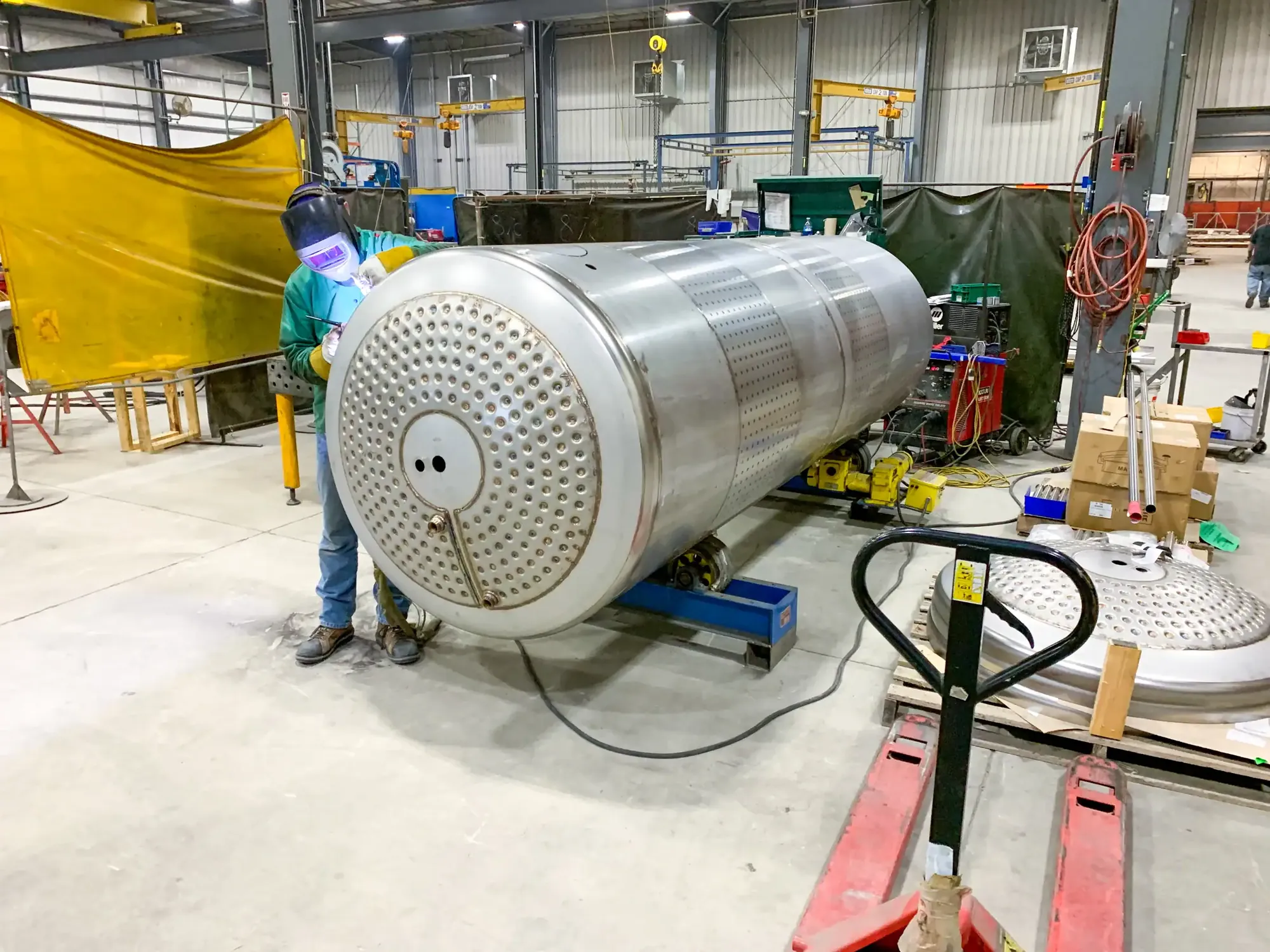
Shell courses, nozzle reinforcements, and internal baffles fabricated with welding procedures qualified per ASME BPVC Section IX. Weld integrity is non-negotiable when the contents are corrosive.
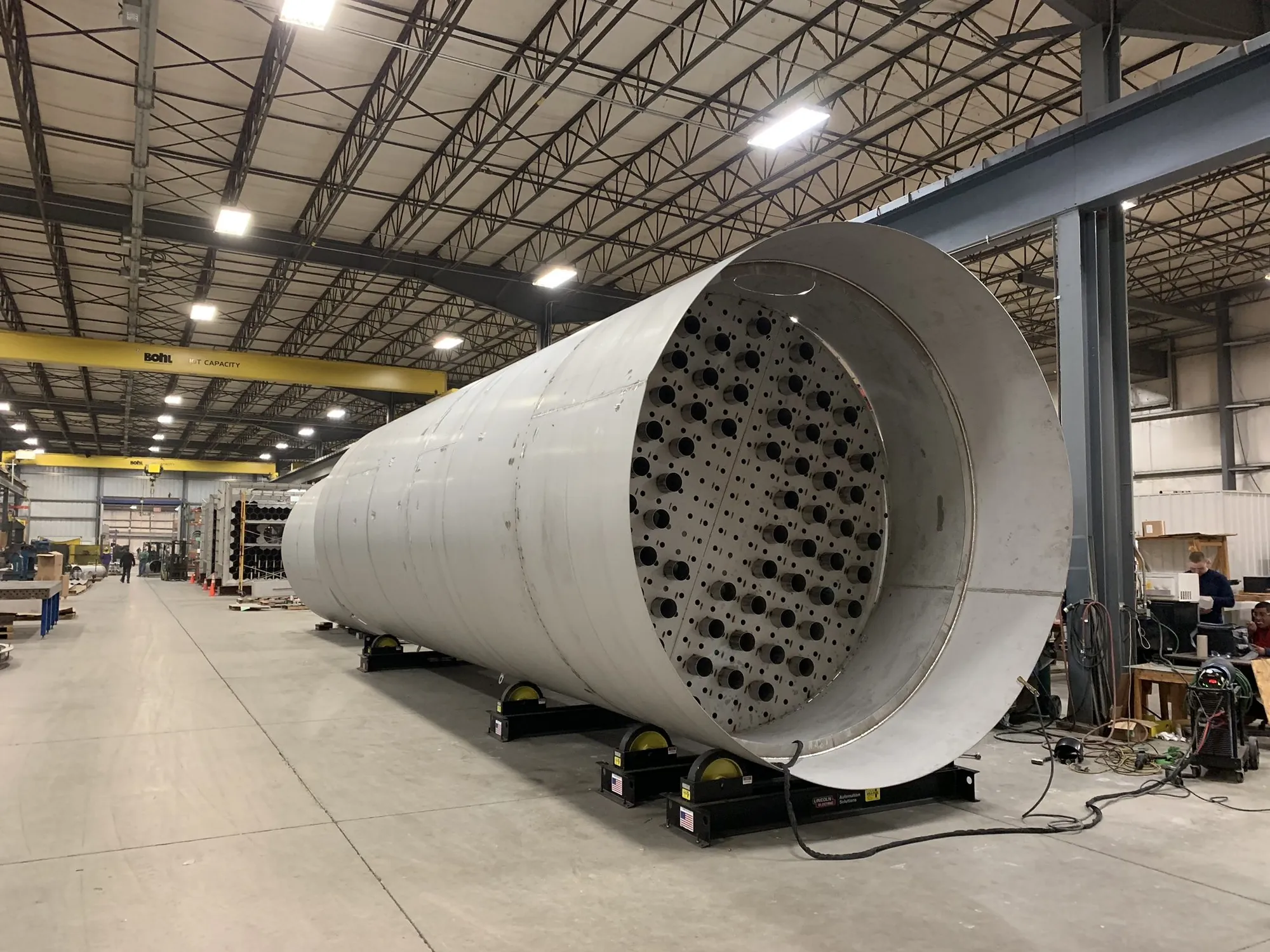
Heat Exchangers
Tube-to-tubesheet welds in corrosion-resistant alloys, where joint geometry and heat input control decide whether the unit lasts two years or twenty.
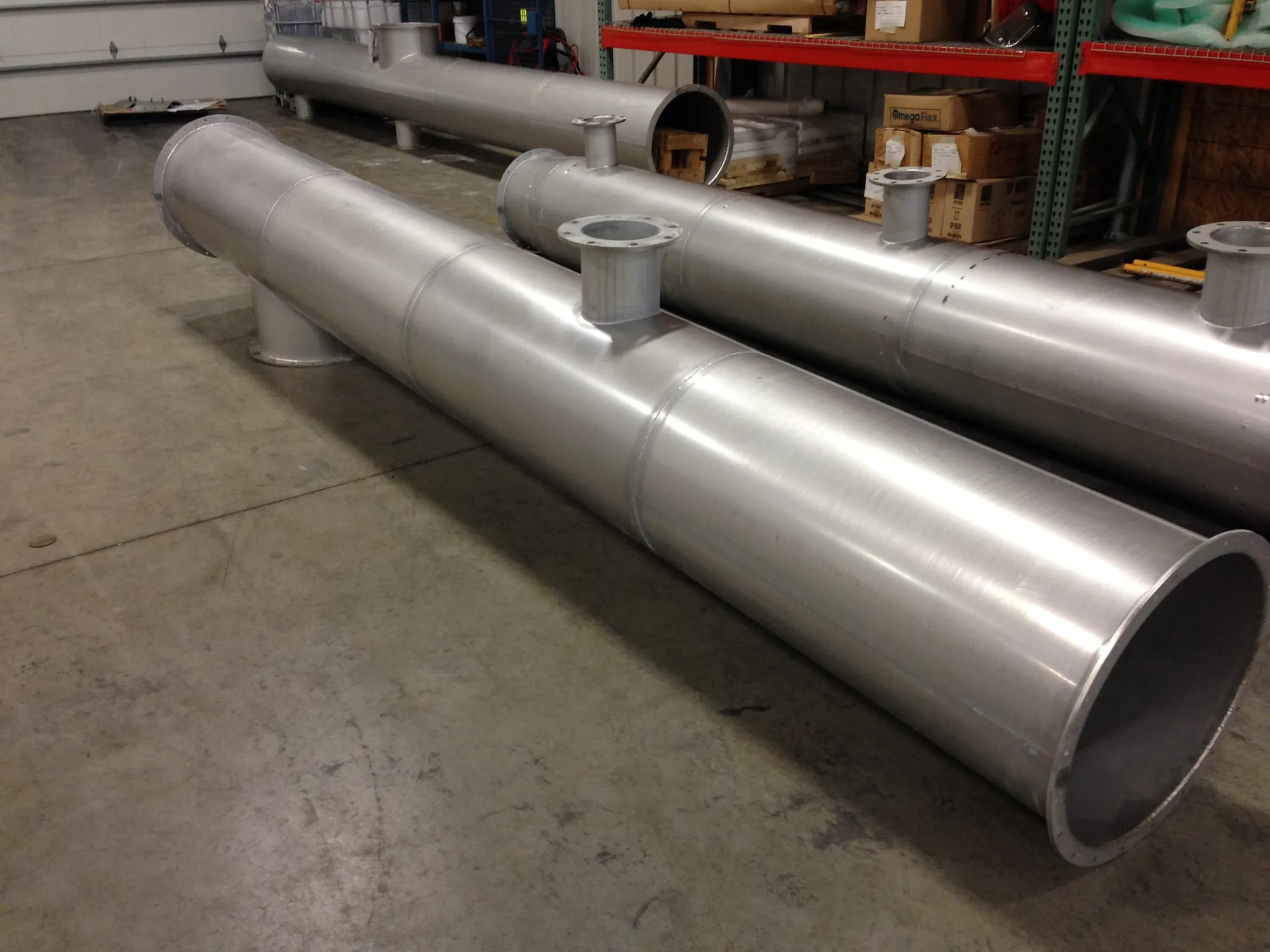
Pipe Spools and Piping Systems
Prefabricated pipe spools with full weld documentation, NDE, and fit-up verification before they ship to the job site.
Storage and Batch Tanks
Built to the corrosion allowances and surface finish requirements the application demands.
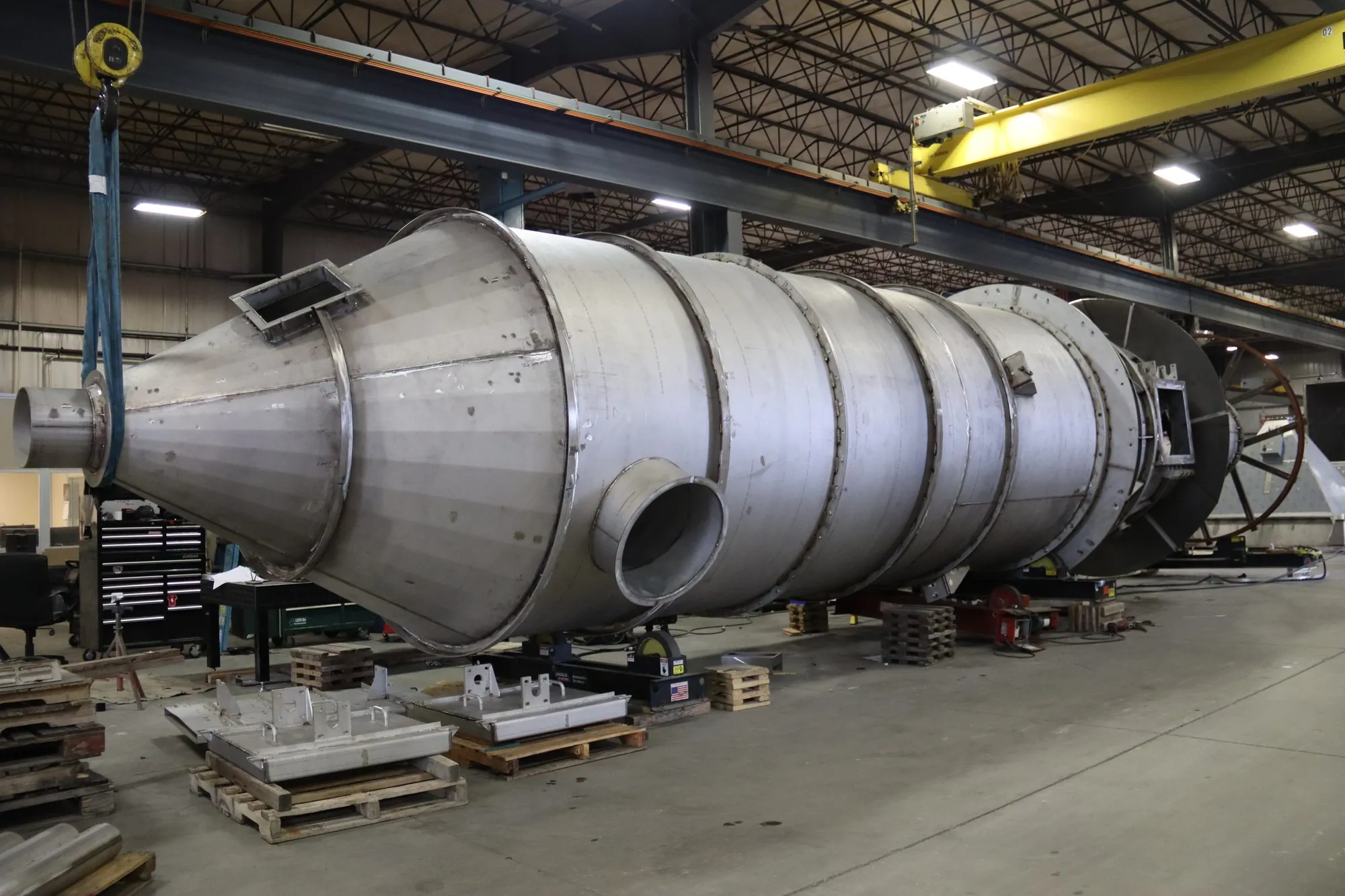
Scrubbers and Gas-Contact Equipment
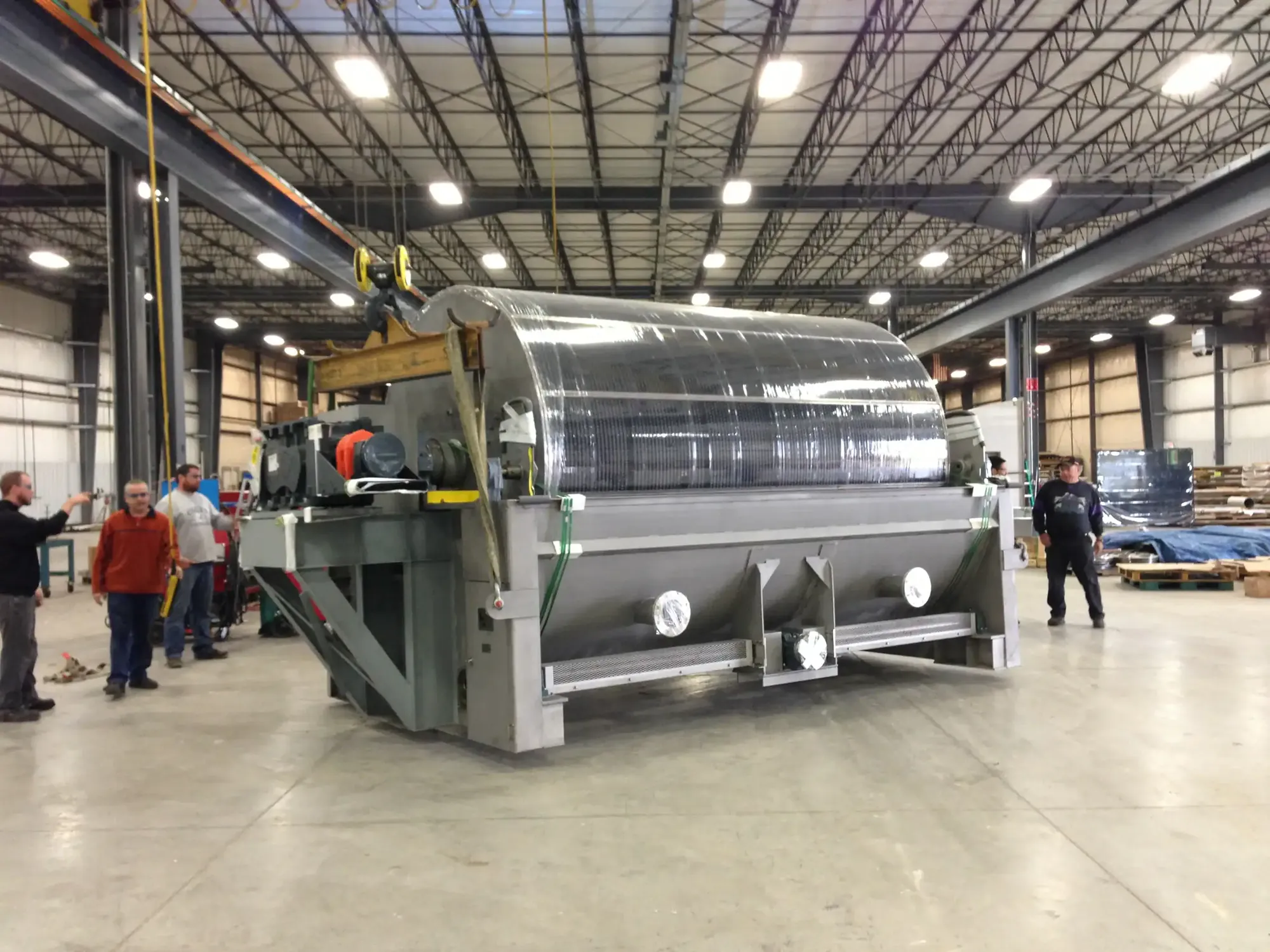
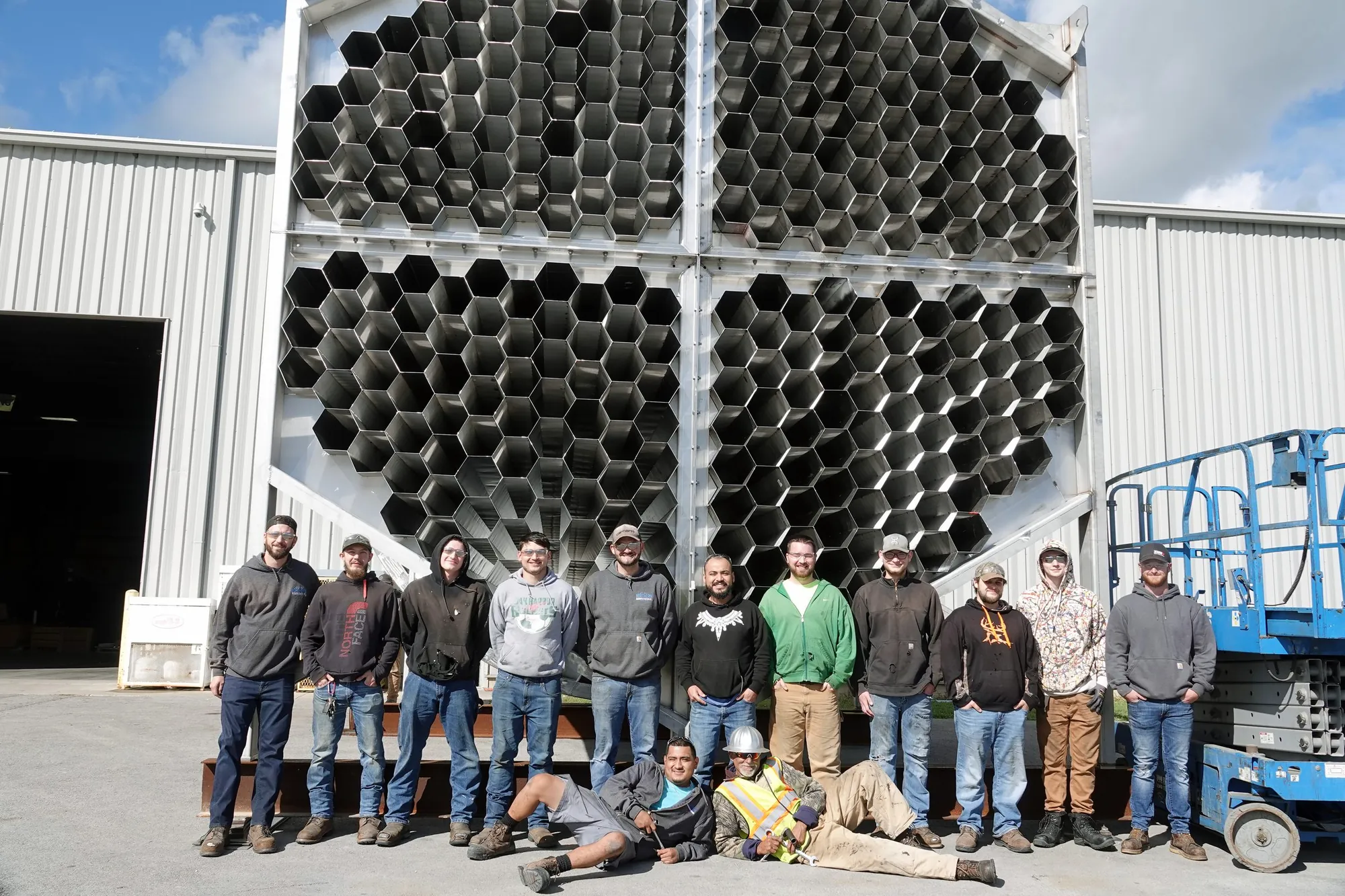
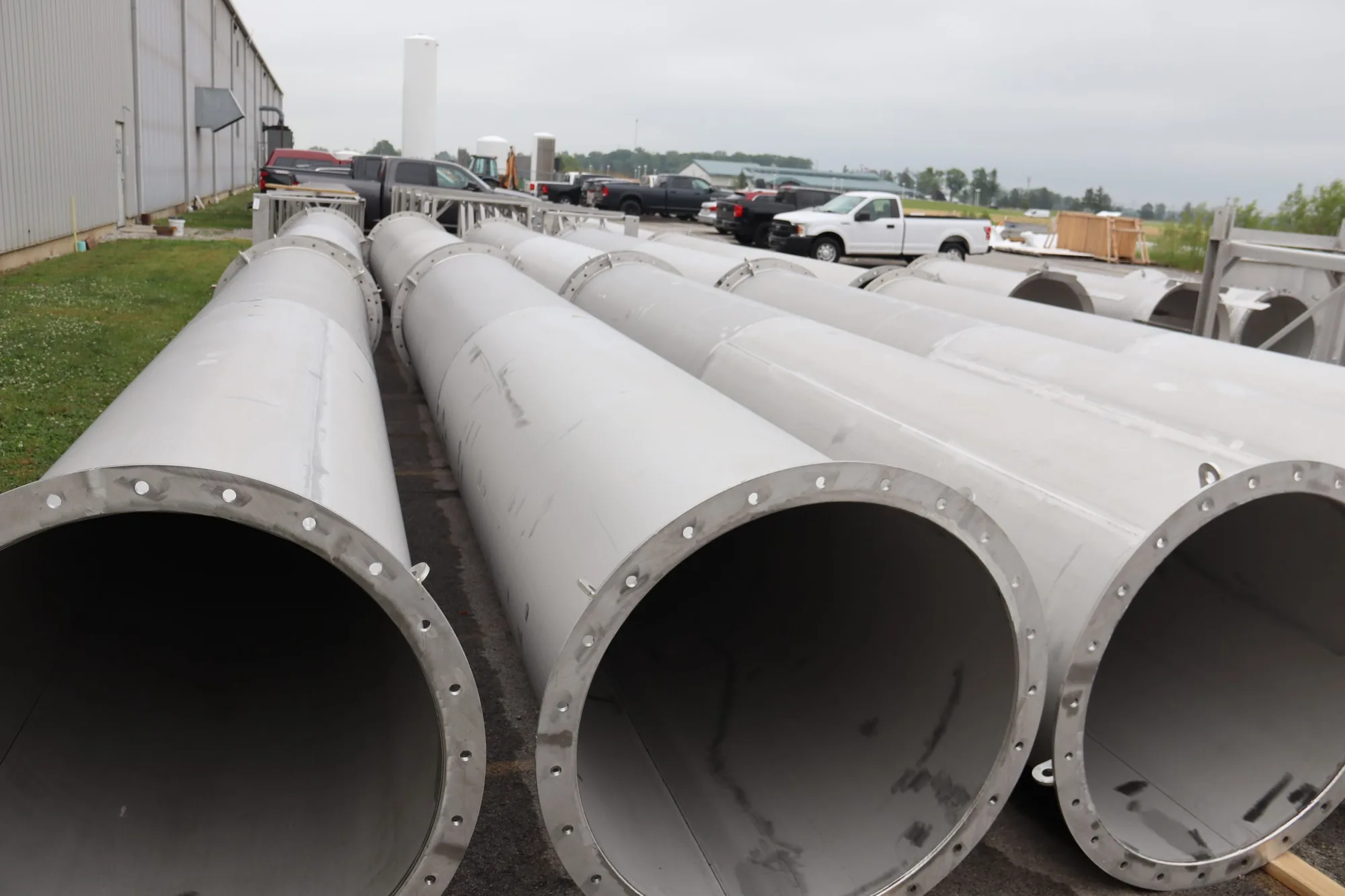
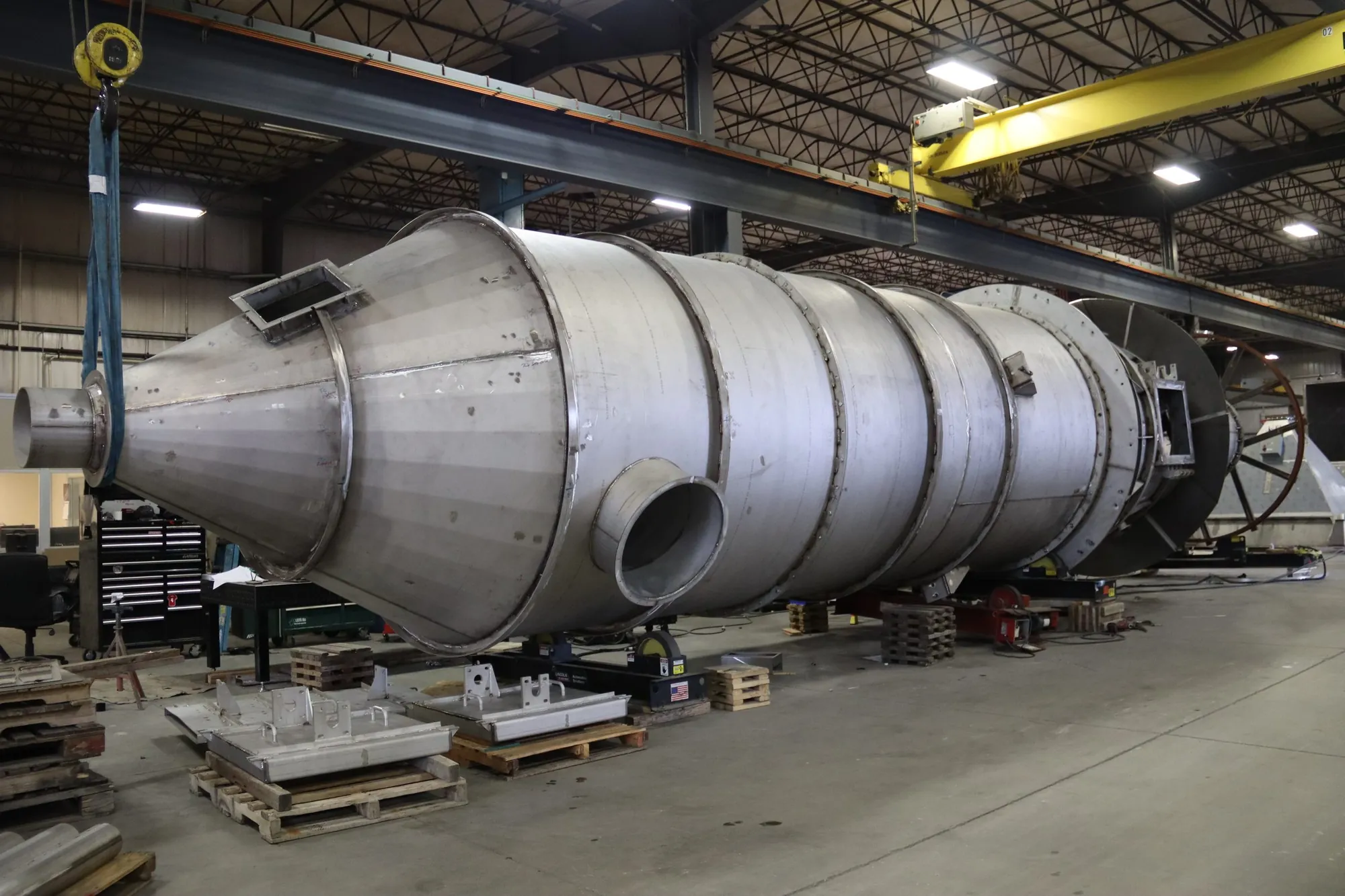
Surfaces that face some of the most aggressive condensing chemistry in any plant, where weld integrity and finish separate equipment that performs from equipment that gets replaced. Related work: pollution control fabrication.
Mixing Vessels and Agitator Tanks
Internal surface finish, baffle welding, and nozzle placement all affect process performance. We work from your engineering drawings or collaborate on design-assist projects.
Fabricating Corrosion-Resistant Alloys to Spec
Your specification calls the alloy for the chemistry; our job is to fabricate it without compromising the corrosion resistance you are paying for. The grades chemical service relies on, and the welding discipline each demands, sort into three failure modes we control for. Chloride stress corrosion cracking (SCC) is the most common reason standard 304 and 316 stainless fails in chemical plants. Even trace chloride levels at elevated temperature can initiate cracking in austenitic grades. Duplex 2205 carries roughly twice the yield strength of 316L with far superior chloride SCC resistance, making it the standard choice for chloride-bearing chemical streams, and the higher strength often allows thinner wall sections, which cuts weight and material cost. Acid attack destroys the passive layer that gives stainless steel its corrosion resistance. Concentrated sulfuric, hydrochloric, and phosphoric acids require alloys engineered for those environments: Hastelloy C-276 handles reducing acids and chloride-contaminated acid mixtures that would destroy conventional stainless grades, and for mixed-acid environments where both oxidizing and reducing conditions exist, Hastelloy C-22 provides broader resistance across a wider pH range. Pitting and crevice corrosion targets weld zones, gasket surfaces, and any geometry that traps stagnant fluid. AL-6XN, a super-austenitic 6% molybdenum alloy, resists pitting in warm chloride solutions where 316L fails, and it welds with conventional GTAW technique.
A corrosion-resistant alloy is only as good as the weld that joins it.
| Grade | When to specify it |
|---|---|
| 316L | Mild chemical environments, food-grade chemical processing, moderate temperatures |
| Duplex 2205 | Chloride-bearing streams, caustic solutions, process water with elevated chlorides |
| Super Duplex 2507 | Severe chloride environments and high-demand lines where 2205 is marginal |
| Hastelloy C-276 | Concentrated reducing acids (sulfuric, hydrochloric, phosphoric), chloride-contaminated acid streams |
| Hastelloy C-22 | Mixed-acid environments and oxidizing-reducing transitions |
| AL-6XN | Warm chloride pitting conditions and brackish utility water where 316L pits |
Material selection always depends on the specific chemistry, concentration, and temperature your equipment will see. These are the starting points decades of corrosion-resistant fabrication have established. We stock 316/316L plate from 20-gauge through 1 inch in standard sizes; heavier plate, duplex, Hastelloy, and AL-6XN are sourced through our distributor network in sheet, plate, pipe, and tube, with the sourcing window confirmed during quoting.
Weld Integrity in Corrosive Service
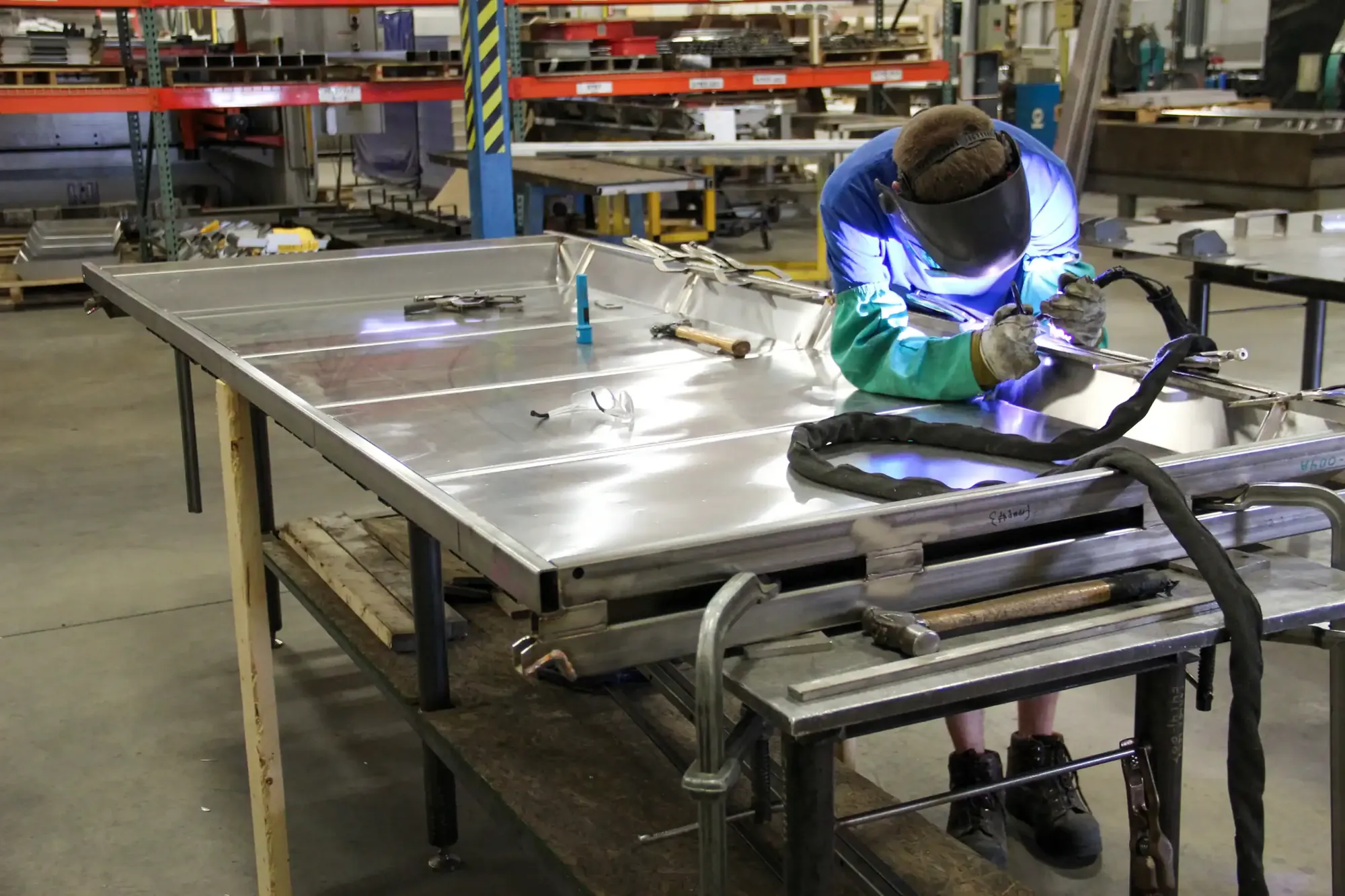
Every weld in a chemical vessel is a potential failure point. The heat-affected zone has different metallurgy than the base metal, and in corrosive service that difference matters: a weld that passes hydro test can still corrode preferentially and fail months into operation.
Our welding team runs procedures qualified per ASME BPVC Section IX for each alloy family we fabricate, with matching filler selection built into the WPS (ER2209 on duplex 2205, for example) and qualified dissimilar-metal combinations for transitions such as stainless to Hastelloy and stainless to AL-6XN. A Certified Welding Inspector oversees weld quality, and nondestructive examination is performed under ASNT SNT-TC-1A Level III supervision to the code and standard your project requires.
Surface Finish, Pickling, and Passivation
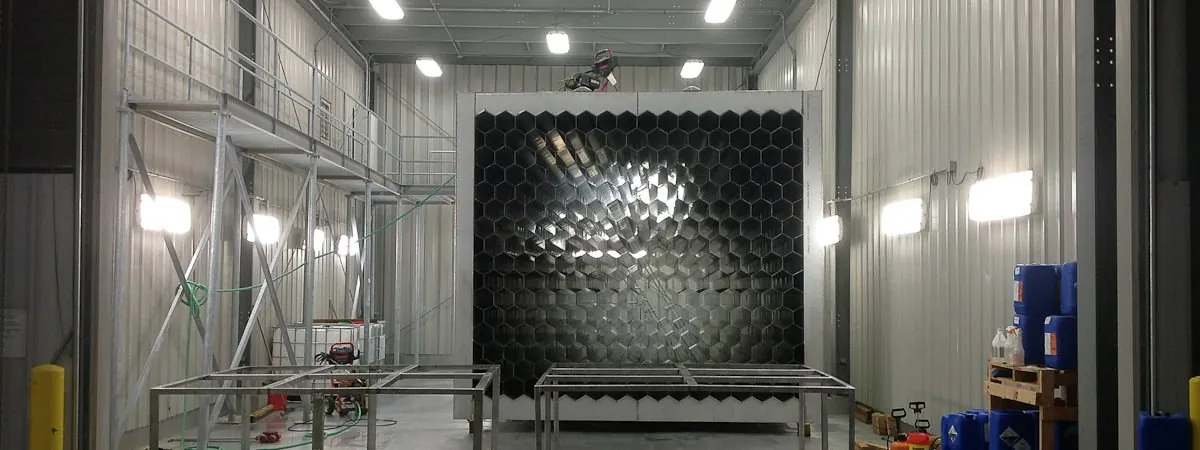
Many chemical applications specify interior surface finishes, measured in Ra, that affect cleanability, product purity, and corrosion resistance. We control surface finish through mechanical polishing and bead blasting with stainless media, then restore the passive layer chemically. Pickling and passivation per ASTM A380 and ASTM A967 runs in-house in our 55-foot spray booth. Pickling strips weld heat tint and the chromium-depleted layer beneath it; passivation rebuilds the chromium-oxide layer that gives stainless its corrosion resistance. Oversized assemblies that other shops send out are treated whole, in one pass, under one quality system.
Proof
PMI and Material Traceability
When your spec calls for C-276 and a 316 nozzle gets welded in by mistake, the consequences in acid service are catastrophic. We verify alloy identity with PMI (positive material identification) on incoming material and completed assemblies, so the material certs match what is actually in your equipment. Material Test Reports are traced by heat number from mill cert to final assembly, and when your spec requires it, the traceability records are provided with the equipment.