Northern Manufacturing
Quote
Menu
Northern Manufacturing welder running a GTAW pass on a stainless steel panel assembly clamped to a fixture table
Part of Stainless Fabrication

Sanitary Stainless Steel Fabrication for Hygienic Processing Equipment

ISO 9001:2015 · ASME BPVC Section IX · AWS D1.6 qualified. Oak Harbor, Ohio.

  • 316L
  • 304L
  • AL-6XN
  • Hastelloy C-22 / C-276
Qualified ISO 9001:2015 ASME BPVC Section IX AWS D1.6
Docs shipped MTRs Weld maps WPS/PQR NDE PMI CoC
100 %

Penetration on product-contact welds

60 +

AWS-certified welders

40,000 sq ft

Stainless-only production space

55 ft

Pickling and passivation booth

Sanitary equipment lives or dies at the weld and the surface. We fabricate product-contact stainless with full-penetration, crevice-free GTAW welds, hold the Ra finish your spec calls out, and pickle and passivate per ASTM A380/A967 before anything ships.

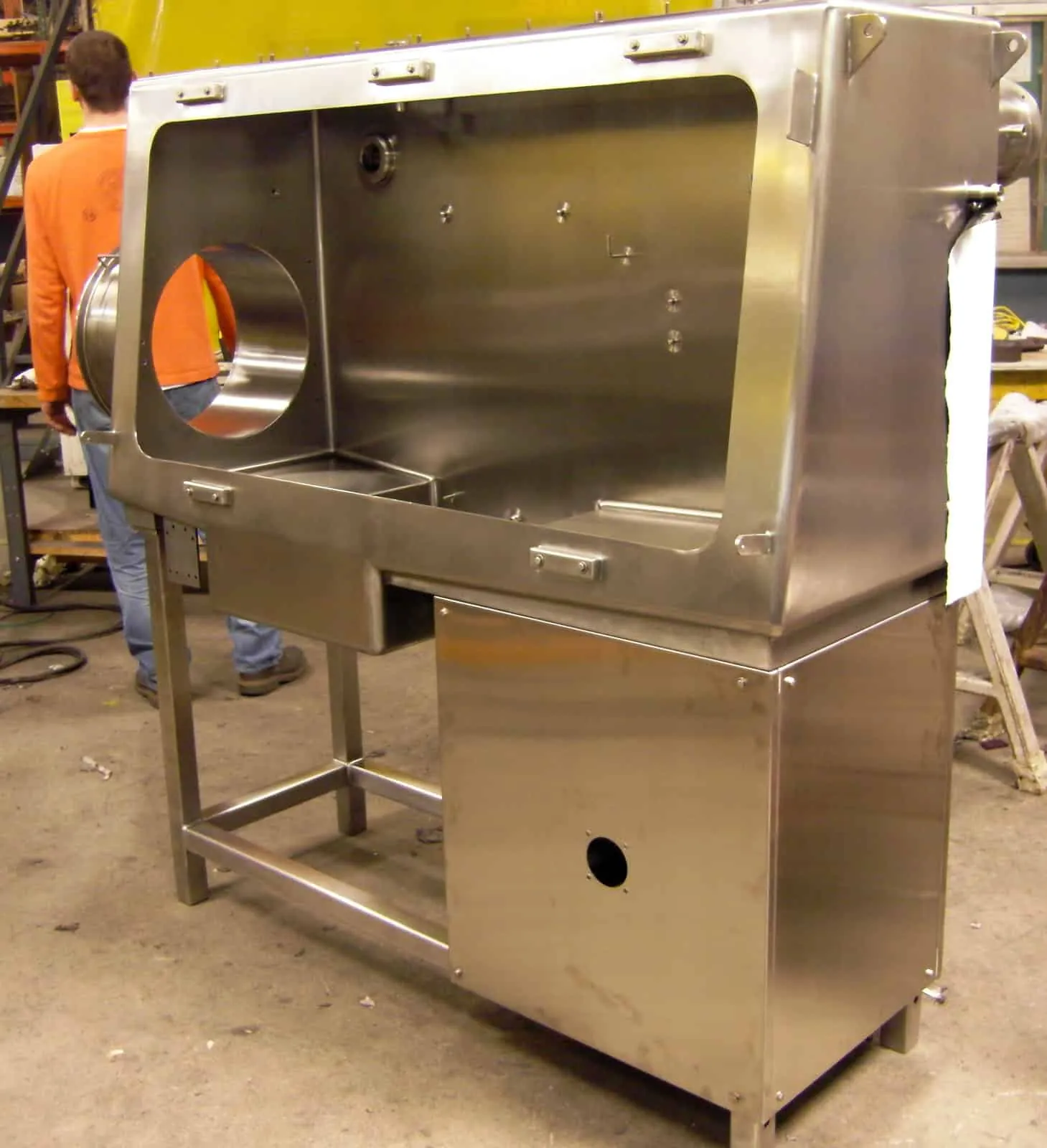
Northern Manufacturing fabricates sanitary stainless steel equipment for food, beverage, pharmaceutical, and personal care processors: vessels, CIP skids, hygienic conveyors, and process piping where preventing contamination is the whole job. Product-contact welds are full-penetration GTAW, ground and blended crevice-free. Surface finishes are held to the Ra your specification calls out. Every assembly runs through our 40,000 sq ft stainless-only production space in Oak Harbor, Ohio, and finishes with pickling and passivation per ASTM A380/A967 in our 55-foot spray booth.

60+ AWS-certified welders. ISO 9001:2015 certified (AVU Registrations). Welding procedures qualified per ASME BPVC Section IX for P8 austenitic stainless, with welder qualifications to AWS D1.6. Material traceability by heat number from mill cert to final assembly.

What We Build for Sanitary Service

  • Mixing tanks, vessels, and bioreactor bodies. Custom-fabricated stainless containers with smooth, crevice-free interior surfaces for mixing, holding, or cultivating sensitive product.
  • CIP skids and skid-mounted process systems. Clean-in-place systems and other pre-assembled modules built on a portable stainless frame, fabricated and fit as a unit before shipment.
  • Hygienic conveyors and augers. Screw conveyors and material handling frames designed for washdown exposure and built so bulk product moves without hanging up in corners or seams.
  • Sanitary process piping and valve manifolds. GTAW-welded stainless piping, tubing runs, and valve clusters for hygienic fluid transfer.
  • Custom hoppers, chutes, and transitions. Sheet and plate fabrications with smooth interior surfaces for product flow and cleanability.

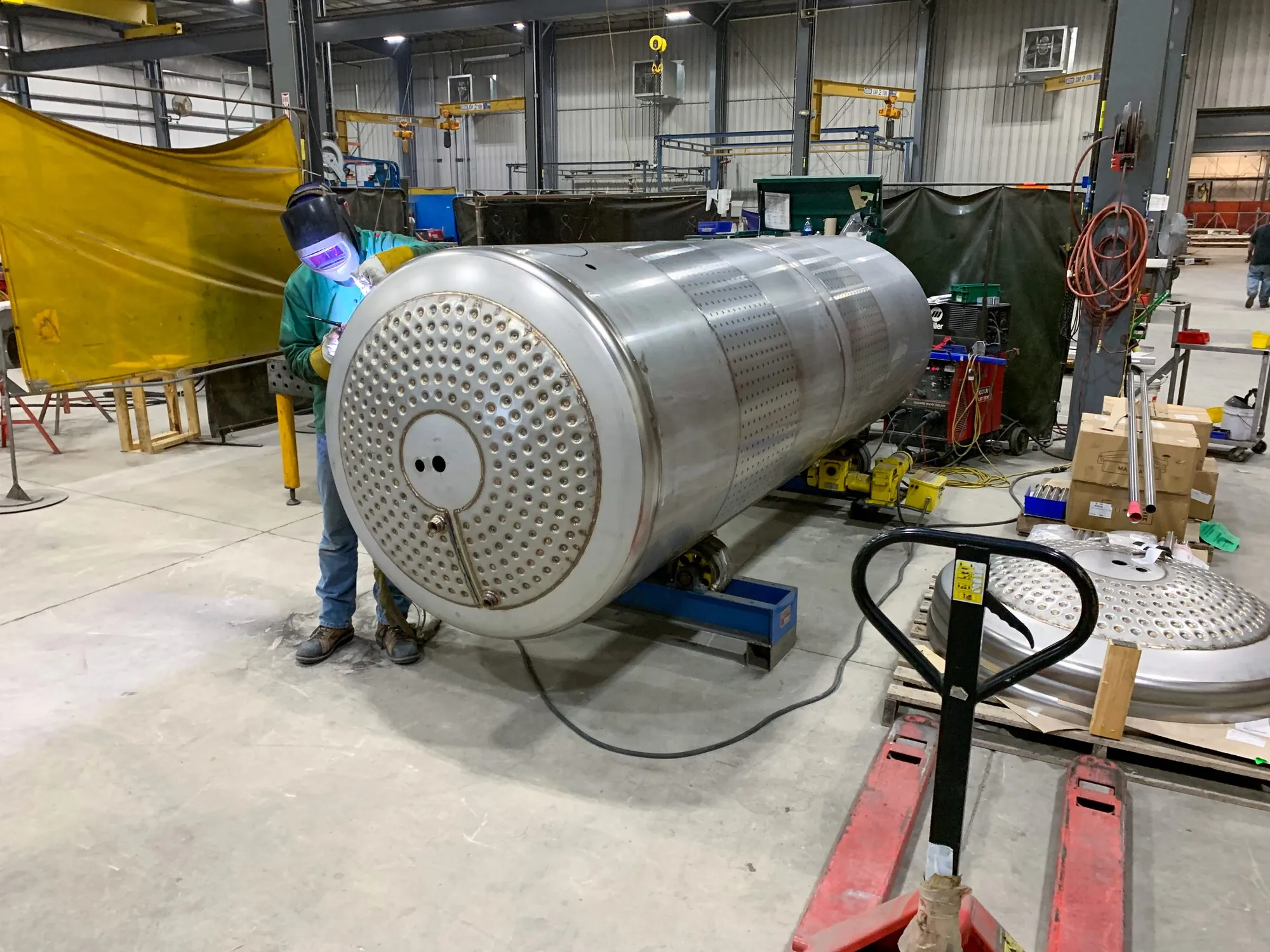
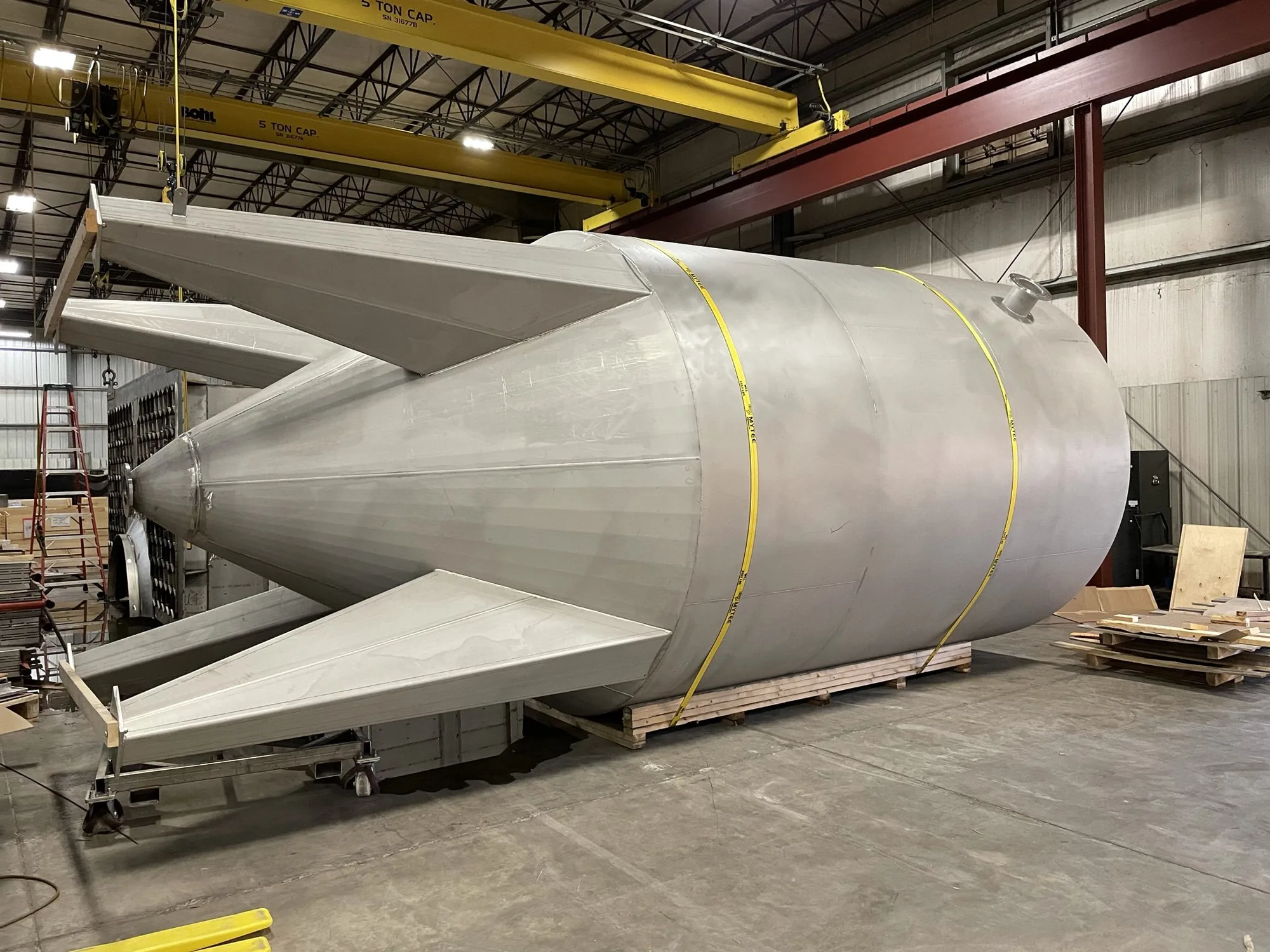
Rolled stainless steel cylindrical tanks on tubular legs staged outside Northern Manufacturing

Crevice-Free Welding for Product-Contact Surfaces

A sanitary weld failure does not look like a structural weld failure. A microscopic crevice from undercut, overlap, or incomplete penetration becomes a harbor for bacteria, and the resulting biofilm survives CIP cycles that clean every other surface in the system. That risk is fabrication-controlled, so it is where our process is strictest.

Product-contact welds at Northern are full-penetration GTAW (TIG), made by welders qualified per ASME BPVC Section IX for P8 austenitic stainless. Interior weld surfaces are ground and blended to eliminate crevices, then verified by visual and borescope inspection. Every joint carries a WPS reference on the weld map, so your quality team can trace any weld on the assembly back to the qualified procedure and the welder who made it.

Fingertip beside a laser weld seam on a stainless steel sheet, with the weld bead narrower than the fingernail

Holding a Specified Ra

Surface roughness on product-contact stainless determines cleanability and bacterial adhesion, not appearance. We control finish from forming through final delivery: controlled grinding and polishing sequences hold specified Ra values, with common finishes running from #4 satin to mirror polish depending on the service. Where the specification requires it, measured Ra verification ships in the documentation package.

After mechanical finishing, assemblies are pickled and passivated per ASTM A380 and ASTM A967 in our 55-foot spray booth. Pickling strips weld heat tint and the chromium-depleted layer underneath it; passivation restores the chromium-oxide layer that gives stainless its corrosion resistance. Whole assemblies go through in one pass, so there is no sectioning and re-welding after treatment.

Material Selection for Cleaning Chemistry

Most sanitary equipment is 316L, and for good reason: the molybdenum addition resists the chloride pitting that acidic products and caustic cleaning agents cause in 304L. But the right grade depends on your process chemistry, and we will tell you when the answer is not the default.
GradeWhen to specify it
304LFrames, supports, and non-contact surfaces in dry or low-chloride environments
316LProduct-contact surfaces, tanks, piping, and CIP systems; the sanitary workhorse
AL-6XNHigh-chloride process or cleaning chemistry, especially warm chlorides where 316L pits
Hastelloy C-22 / C-276Aggressive mixed-acid or reducing-acid service beyond what super-austenitic grades handle

We stock 316L plate from 20-gauge through 1 inch with 2-day availability from our distributor network; heavy plate through 2 inches is available within 5 days. Specialty grades like AL-6XN are sourced per project.

Contamination Control by Separation

Free iron on sanitary stainless is a latent defect. Particles embedded by shared grinding wheels or carbon-steel fixtures pass visual inspection at shipment, then corrode in service and seed pitting in the stainless around them.

Northern runs sanitary work through a 40,000 sq ft stainless-only production space. Tooling, abrasives, clamps, and work tables in that room never touch carbon steel. Free-iron verification per ASTM A380 is performed on critical-service assemblies before passivation, and the passivation certificate ships with the equipment.

Documentation Built for Your Audit

Sanitary buyers do not just need clean equipment, they need proof of it. Every project ships with a turnover package assembled under our ISO 9001:2015 quality system:

  • Material Test Reports (MTRs) traced by heat number from mill cert to final assembly
  • Weld maps with WPS references for every joint, plus welder continuity logs
  • Surface finish (Ra) verification where the specification requires it
  • Pickling and passivation certification per ASTM A380/A967
  • Dimensional inspection reports to your drawing tolerances
  • Certificate of Conformance (CoC) to your purchase order requirements

When a customer audit or regulatory inspection asks how a weld was made or where the material came from, the answer is already in the binder.

Sanitary projects

Real work for this industry.

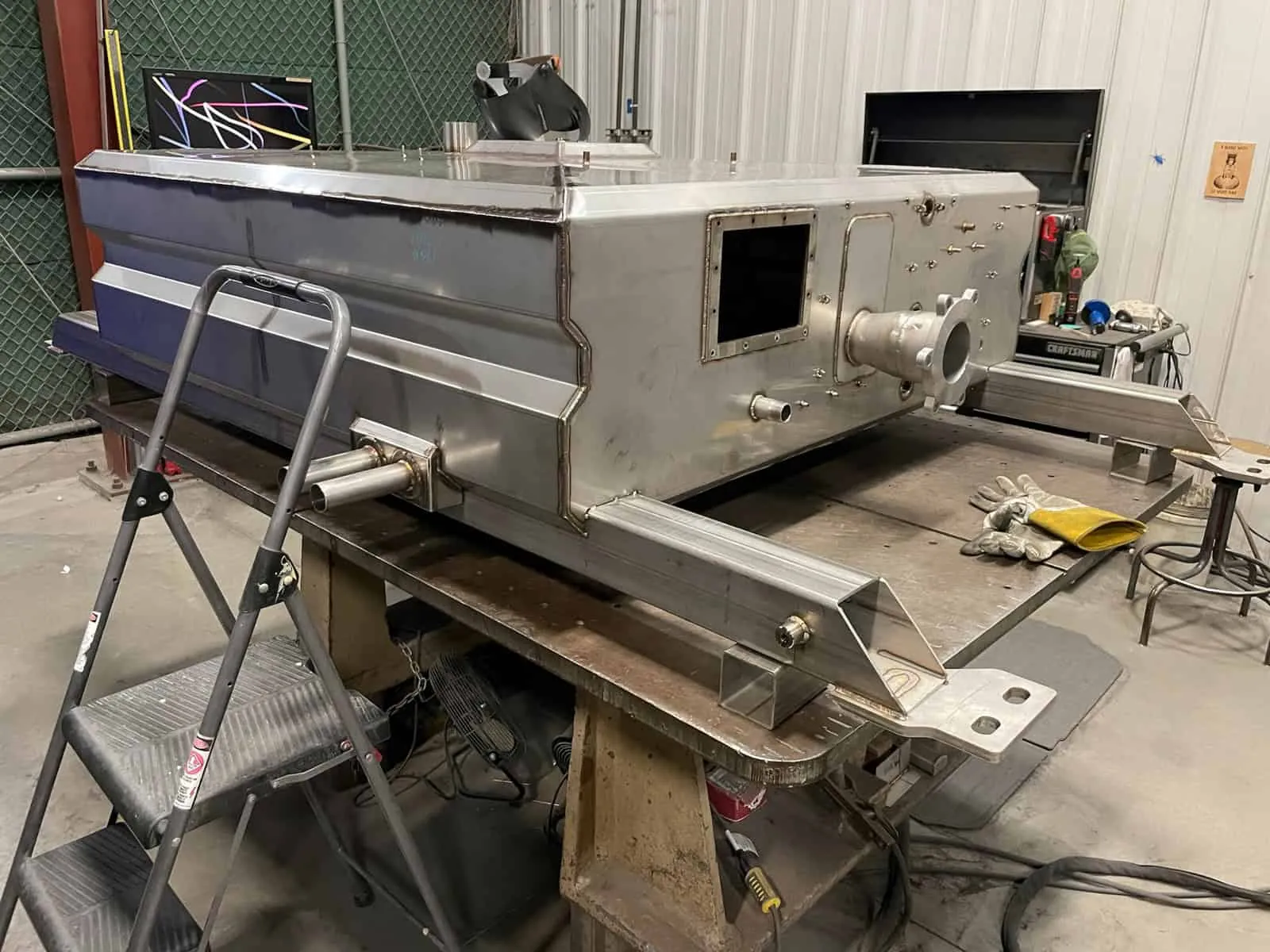
Formed 316L stainless steel equipment housing staged on a pallet in the fabrication bay

Zero NCRs, passed radiographic inspection on first submission. Customer returned with repeat orders.

Catastrophic weld failure, solved by redesign

Food & beverage OEM was seeing stainless weld joints fail in the field within months. Previous fabricator had not adjusted joint geometry for the service environment.

316L Stainless Steel

Have a sanitary or high-purity stainless project on your desk?

Or call (419) 898-2821

Request a Quote

Capabilities behind this work

Every sanitary project draws on specific fabrication processes. These are the ones we use most for this industry.

Frequently asked questions

What engineers and procurement managers ask us about sanitary fabrication.

What makes sanitary fabrication different from standard stainless fabrication?

Hygienic design for cleanability. Standard structural fabrication tolerates partial-penetration welds, as-welded surfaces, and internal corners. Sanitary fabrication does not: product-contact welds must be full penetration and crevice-free, surfaces must hold a specified Ra roughness, geometry must drain, and every material and weld must be traceable. A weld that would pass a structural code can still harbor biofilm that CIP cycles never reach. That is the failure sanitary fabrication exists to prevent.

Do you fabricate to 3-A or ASME BPE design requirements?

Yes. When your drawing or specification invokes 3-A sanitary standards or ASME BPE design requirements, we fabricate to them: full-penetration crevice-free product-contact welds, drainable geometry, specified surface finishes, and the documentation package to prove each one. Tell us the governing standard during quoting and the traveler, inspection points, and turnover package are built around it from the start.

How do you verify surface finish on product-contact surfaces?

We hold specified Ra (roughness average) values through controlled grinding and polishing sequences, from #4 satin through mirror polish depending on the application. Measured Ra verification is documented and included in the quality package on request, alongside the weld maps and passivation certificates.

When should I specify 316L versus a higher alloy like AL-6XN?

316L covers most sanitary service. The molybdenum addition resists the chloride pitting that 304L develops under acidic product or caustic CIP chemistry. Step up to AL-6XN when the process or cleaning chemistry carries high chloride concentrations, especially warm chlorides where 316L pits. For aggressive mixed or reducing acid service beyond super-austenitic grades, Hastelloy C-22 and C-276 are the next tier. Send us the cleaning chemistry and operating temperatures and we will walk the selection with you before you lock the spec.

How do you prevent carbon steel contamination on sanitary work?

With a 40,000 sq ft stainless-only production space. Tooling, grinding wheels, clamps, work tables, and consumables in that room are dedicated to stainless, and no carbon steel work runs there. Free iron embedded by shared tooling is invisible at shipment and corrodes in service, so we keep it out by separation first, then verify per ASTM A380 on critical-service assemblies before passivation.

What documentation ships with a sanitary fabrication project?

A turnover package built for your audit: Material Test Reports traced by heat number, weld maps with WPS references for every joint, welder continuity logs, dimensional inspection reports, surface finish (Ra) verification where specified, pickling and passivation certification per ASTM A380/A967, and a Certificate of Conformance to your purchase order. PMI records and radiographic testing reports are available when the spec calls for them.

Send us a drawing. We'll tell you what it takes.