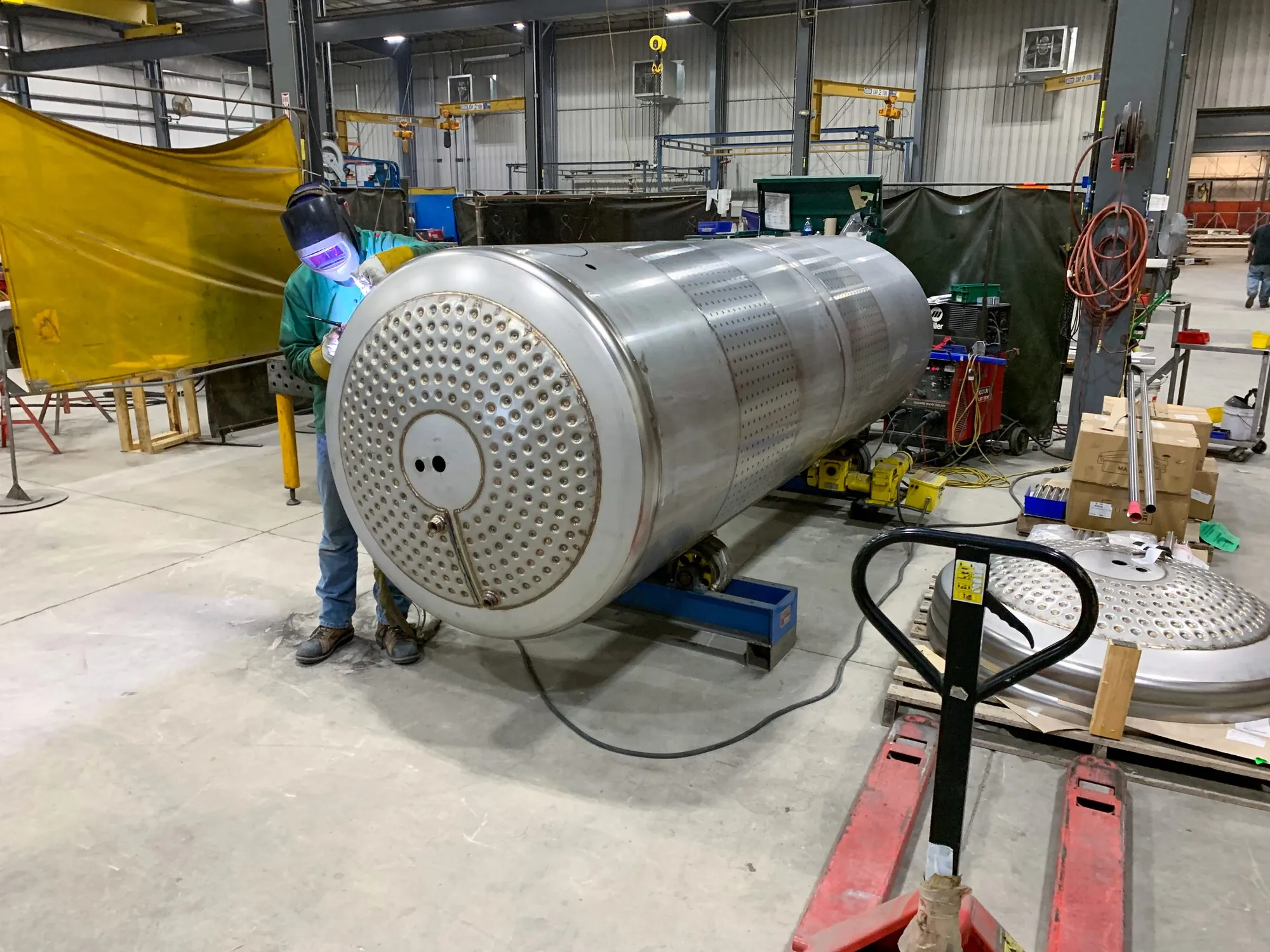
Exhaust duct, tower internals, and process spools in 304, 316, duplex, and Hastelloy, welded to ASME Section IX procedures.
Northern Manufacturing fabricates custom stainless and high-nickel alloy equipment for power generation facilities, chemical processing plants, and EPC firms managing capital projects in corrosive environments. Materials range from standard austenitic grades (304, 316L) through duplex (2205, 2507) and into high-nickel alloys (Hastelloy C-276, C-22, AL-6XN) for aggressive chemical service. All welding is performed in our 40,000 sq ft dedicated stainless-only production space.
60+ AWS-certified welders. ISO 9001:2015 certified (AVU Registrations). ASME BPVC Section IX qualified welding procedures for P8 (austenitic), P10H (duplex), P43 (Hastelloy), and P45 (AL-6XN). CWI on staff. In-house pickling and passivation per ASTM A380/A967.
Equipment We Build for Power, Energy, and Chemical
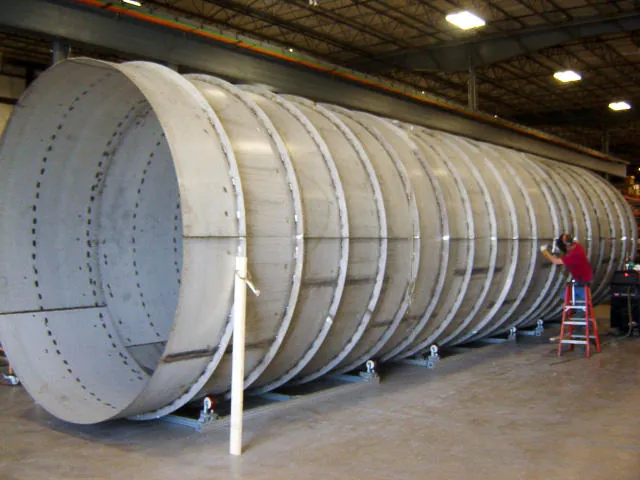
Exhaust Ductwork
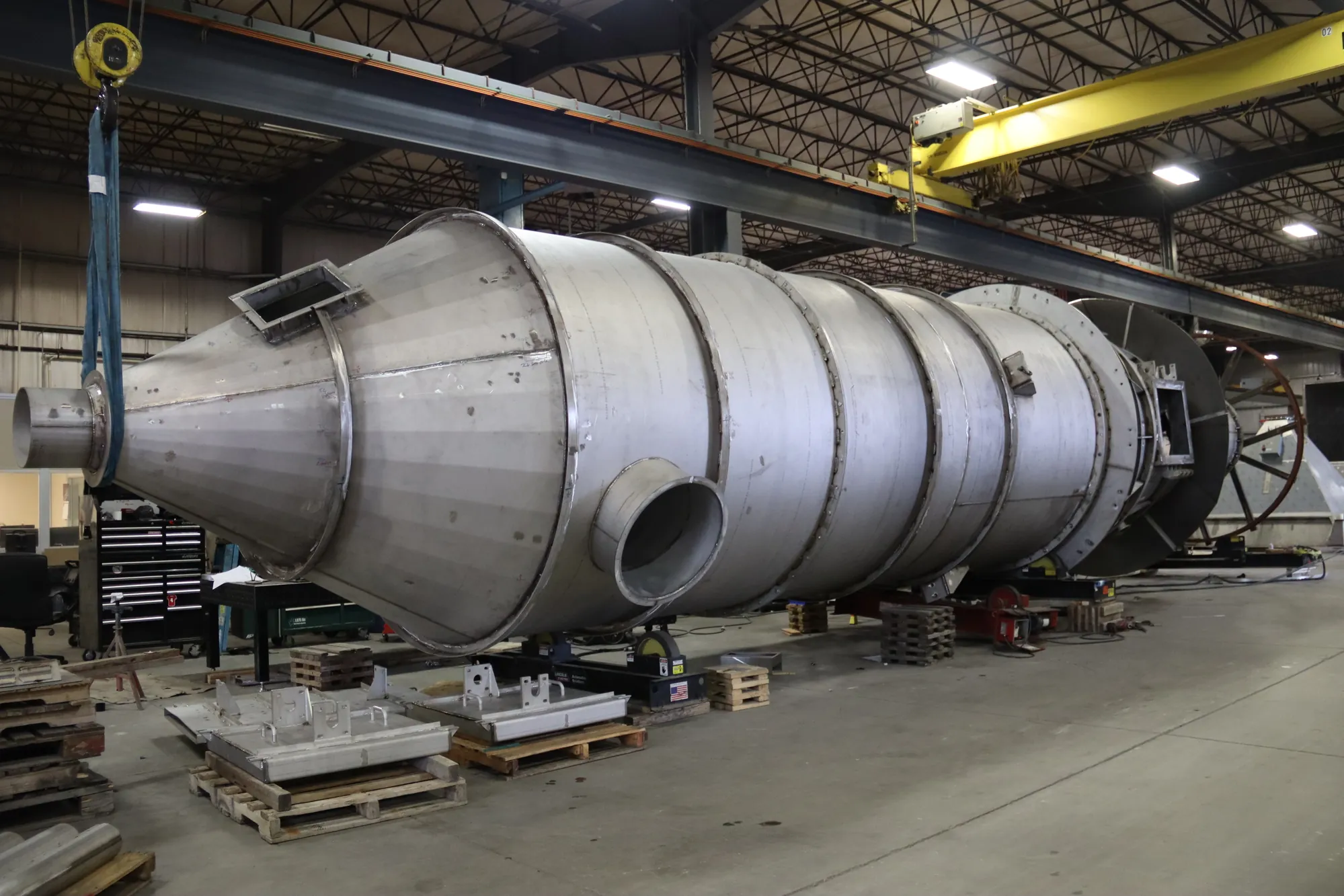
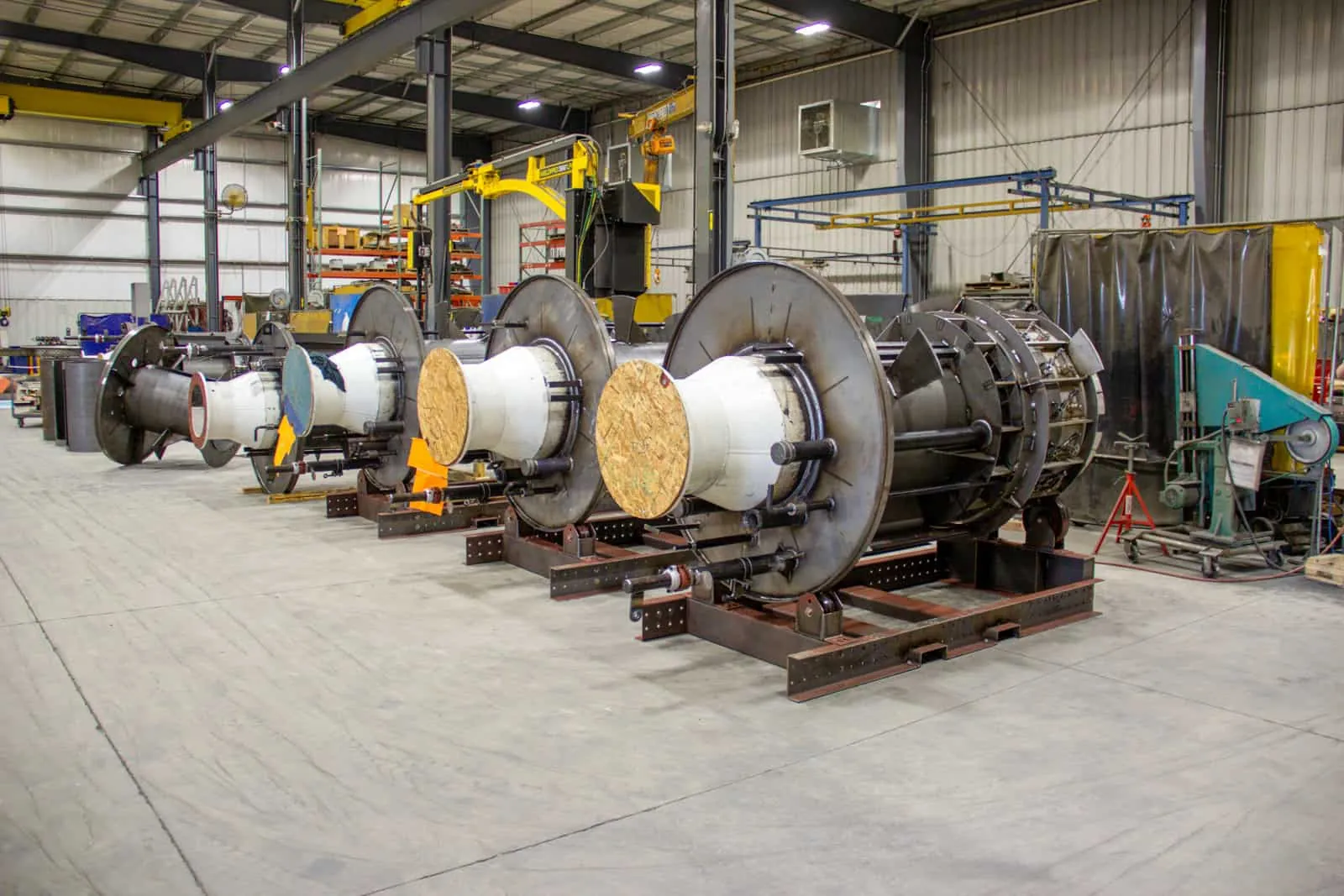
Large-diameter stainless ductwork for power generation exhaust systems. Factory dry-fit against mating sections before shipment to eliminate forced alignment on site.
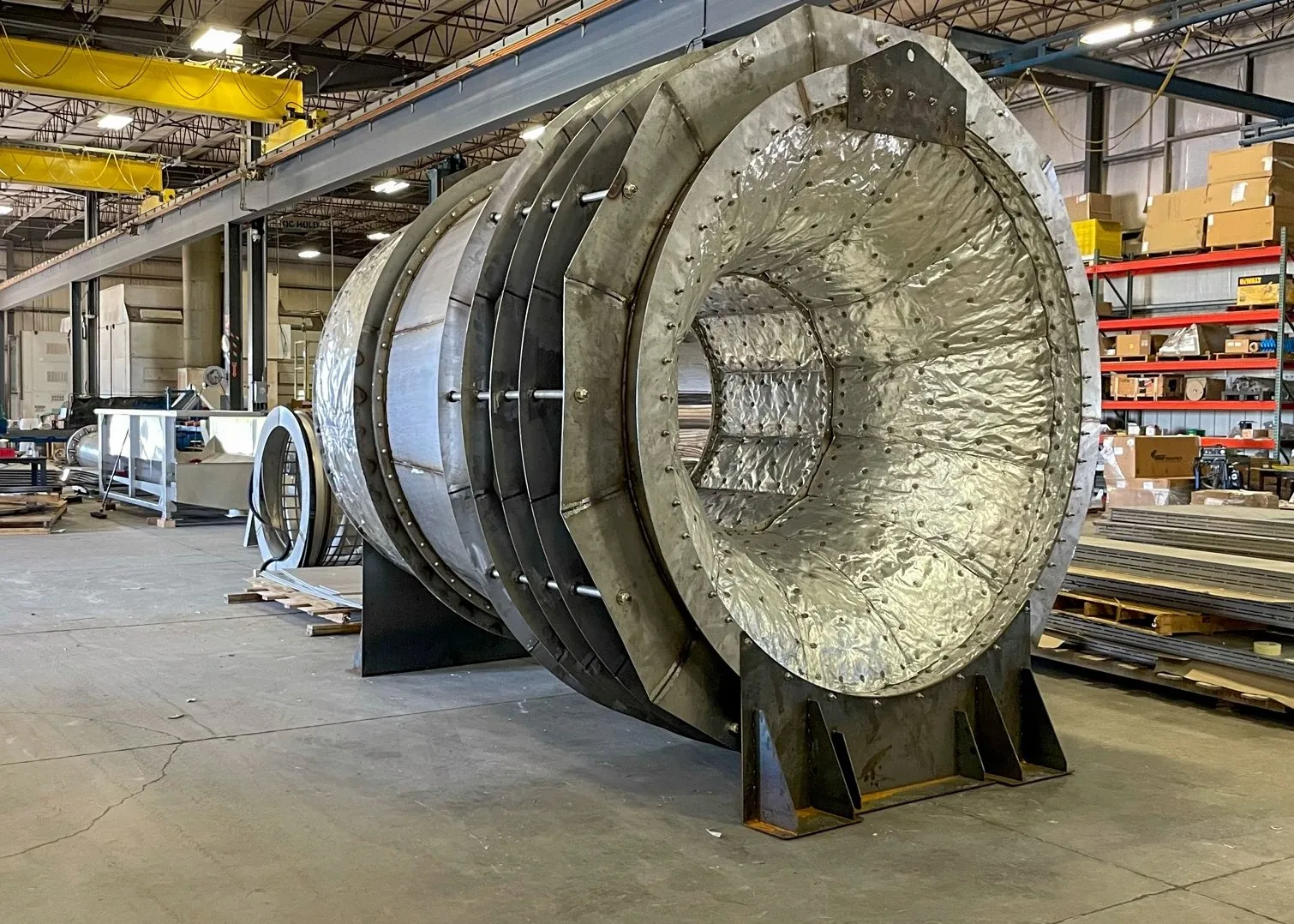
Gas-Turbine Enclosures & Exhaust
409 stainless gas turbine exhaust, plus acoustic enclosures, silencers, inlet structures, and intake ducting for gas-turbine power packages, built to OEM drawings.
Tower Trays & Internals
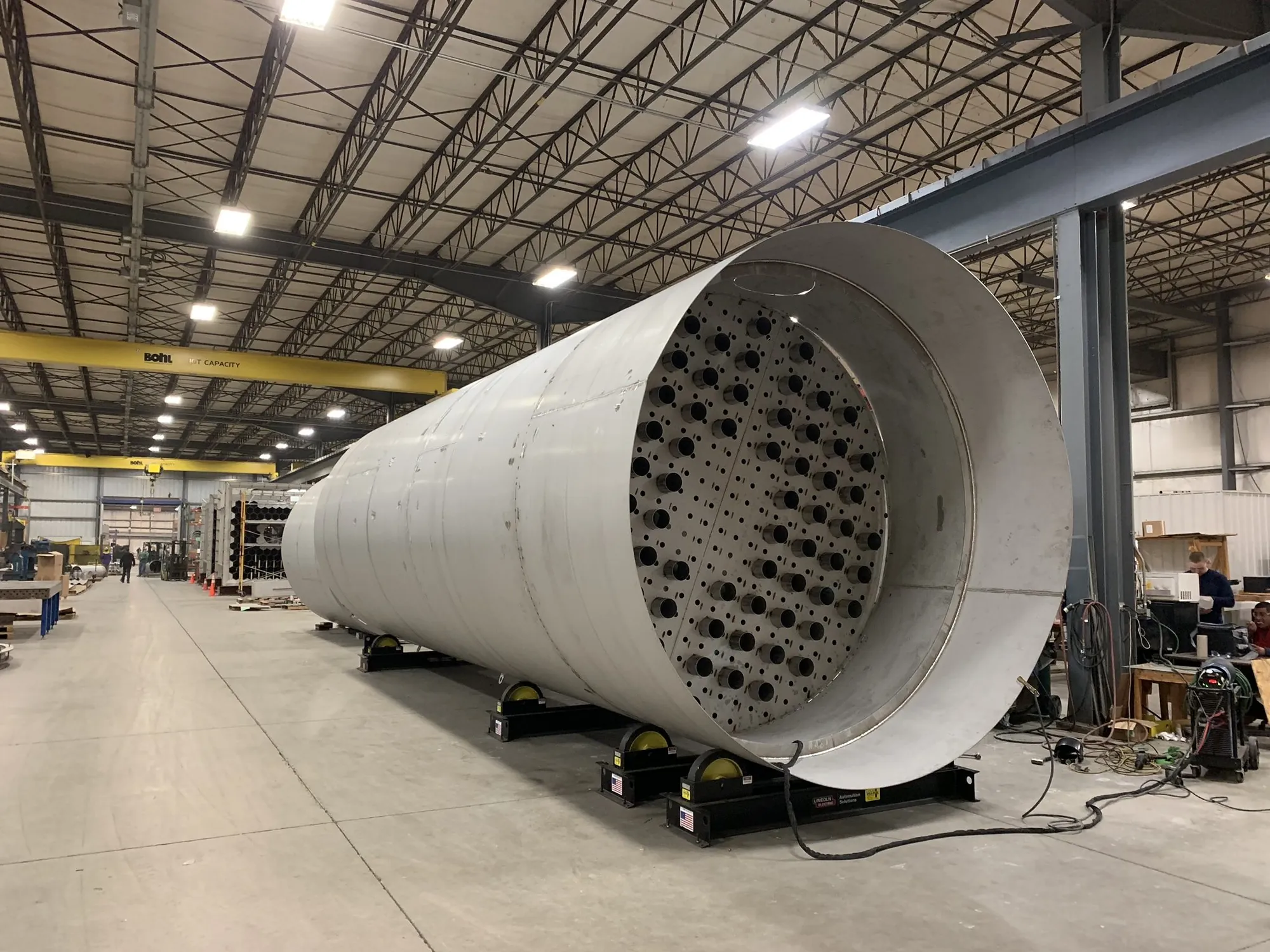
Trays, tubesheet assemblies, baffles, and distribution internals for flue-gas and process towers, welded in 304L, 316L, and duplex to the drawing.
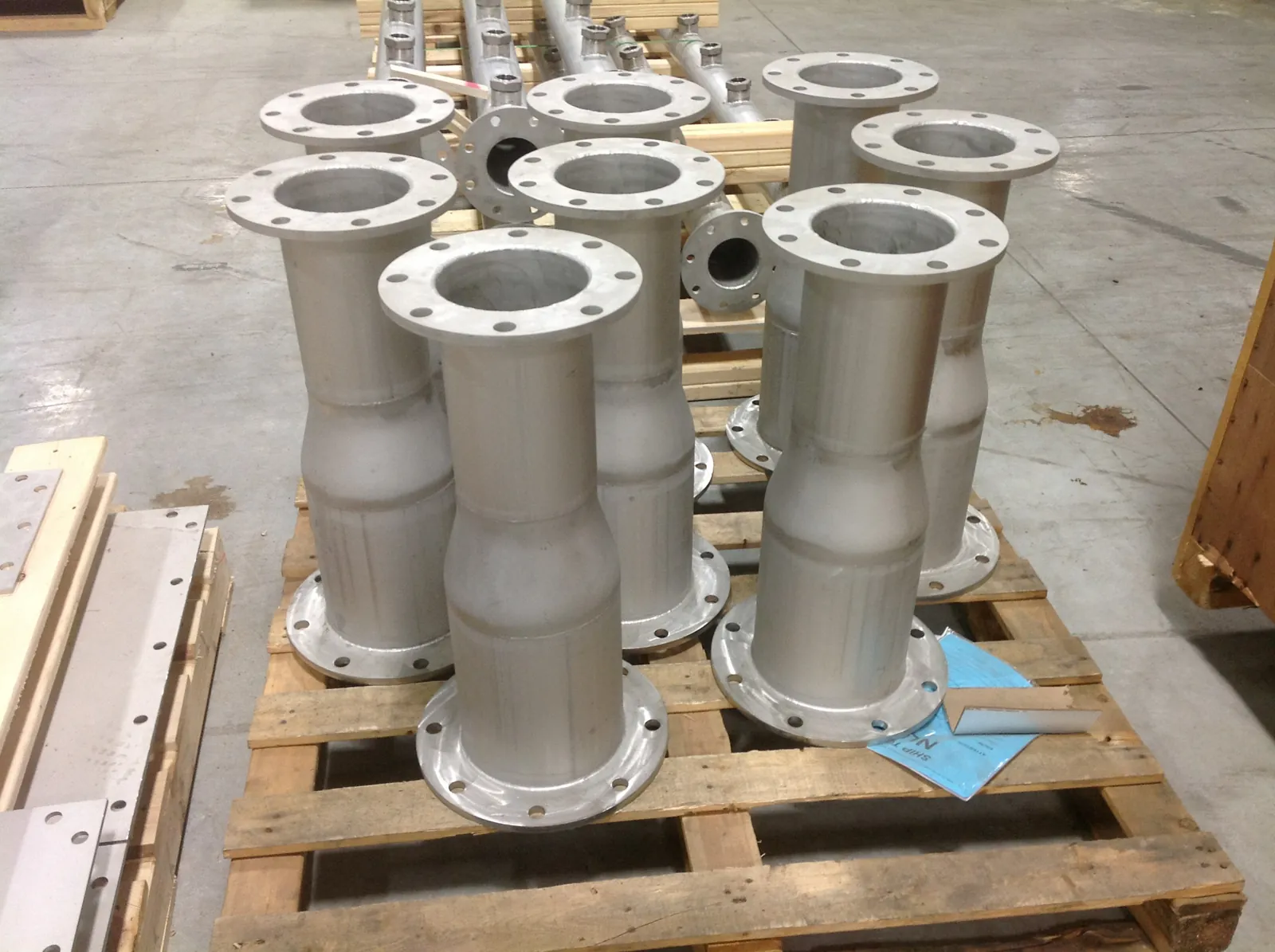
Process Piping & Spools
Prefabricated pipe spools with weld documentation, NDE, and dimensional verification as your spec requires, including code piping under the PP stamp (Certificate #63198) where the spec calls for it. Alloys selected for the service temperature and chemical exposure.
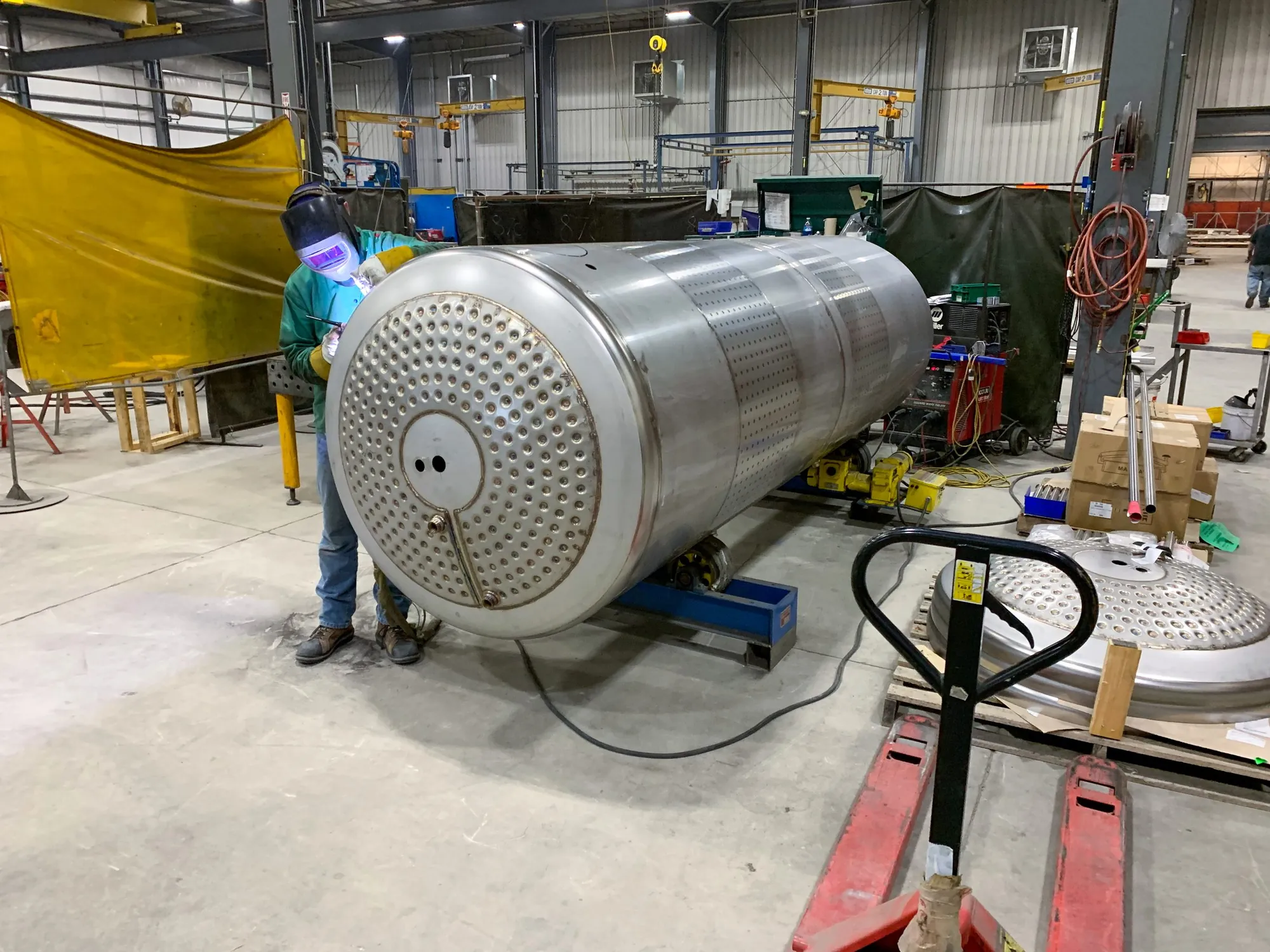
Heat Exchanger Components
Tube-to-tubesheet welds in corrosion-resistant alloys where joint geometry and heat input control determine equipment lifespan.
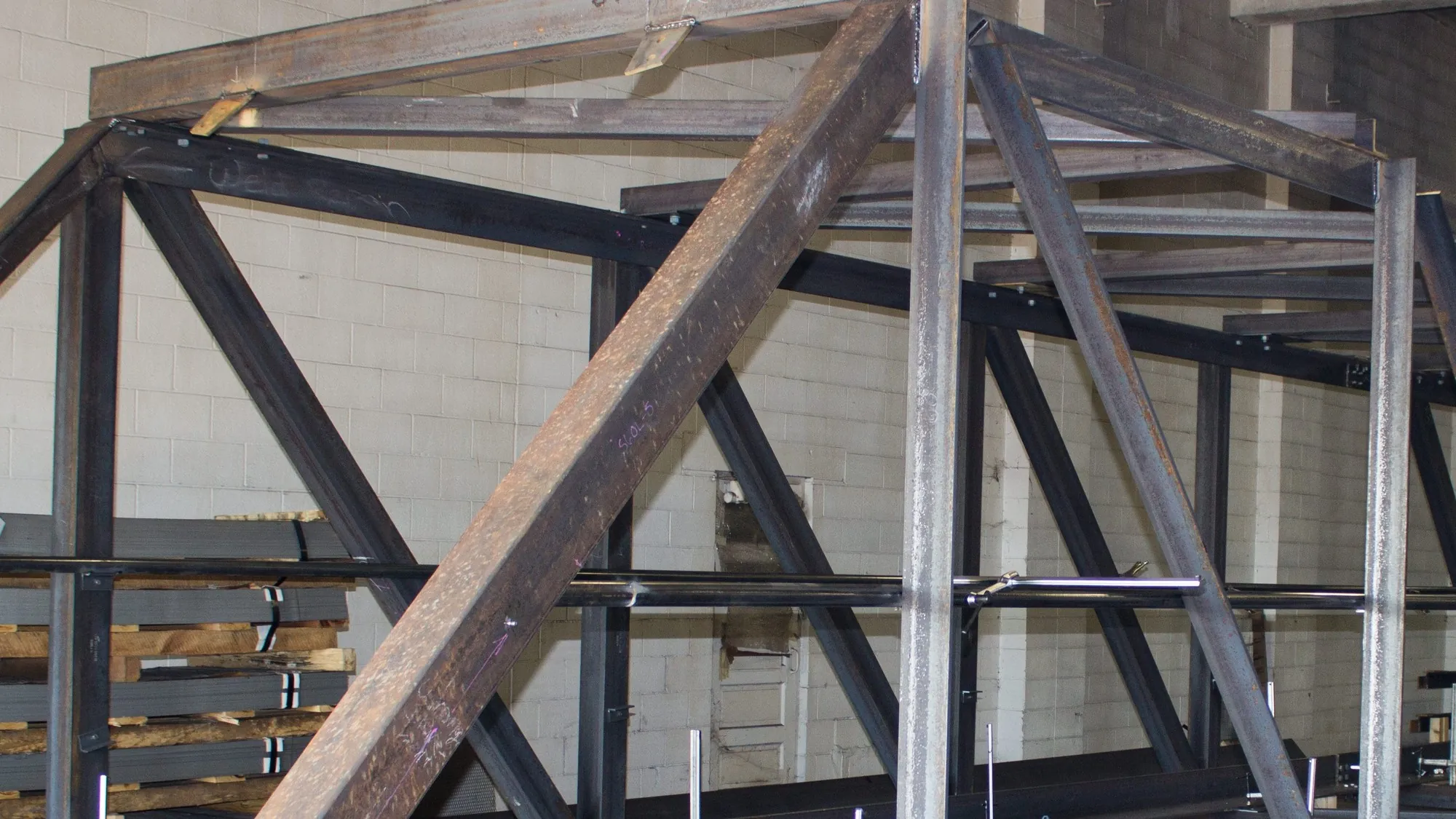
Structural Components & Platforms
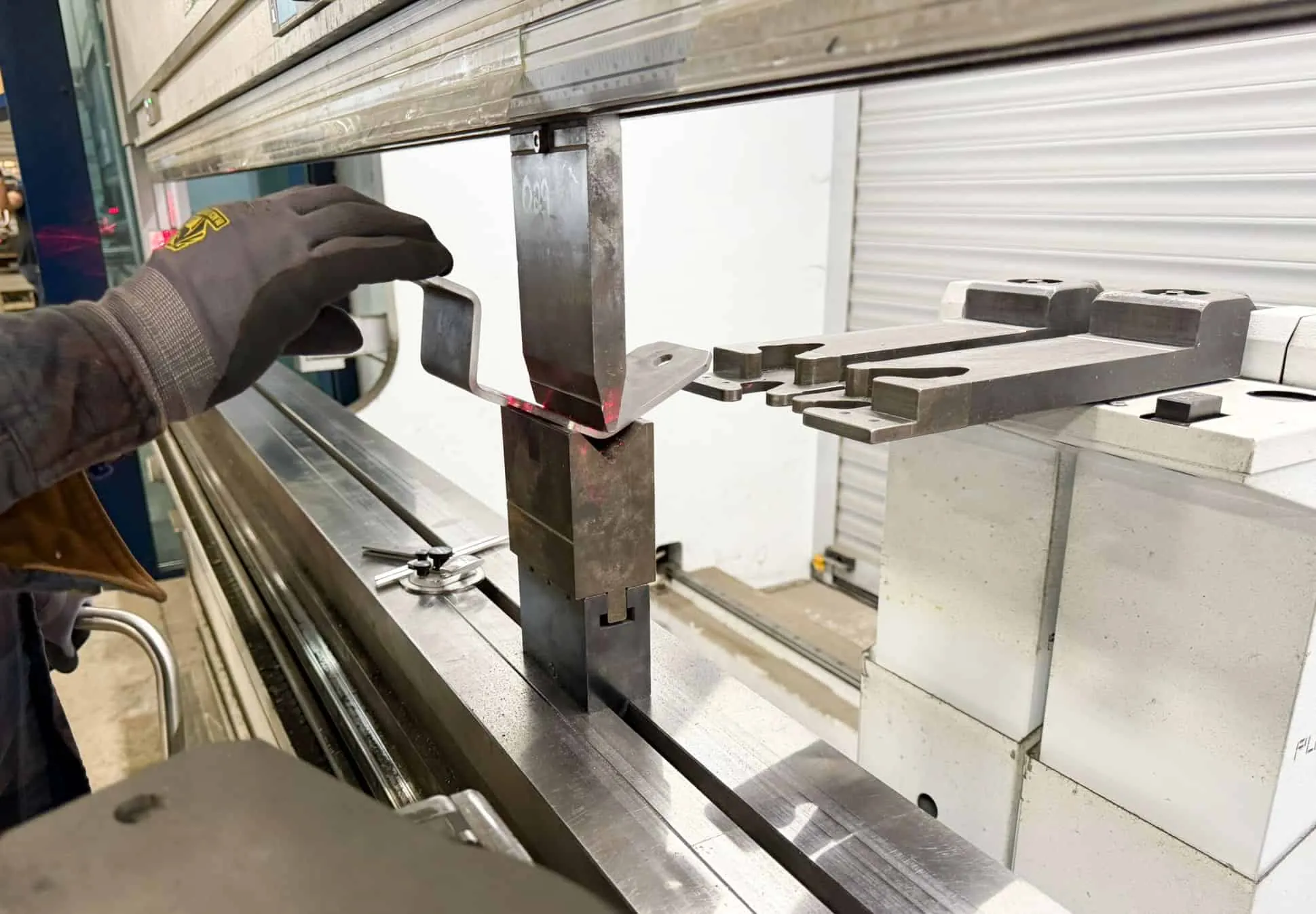
Stainless structural work for process environments where carbon steel corrodes under chemical exposure or washdown conditions.
Power-Package & Skid Weldments
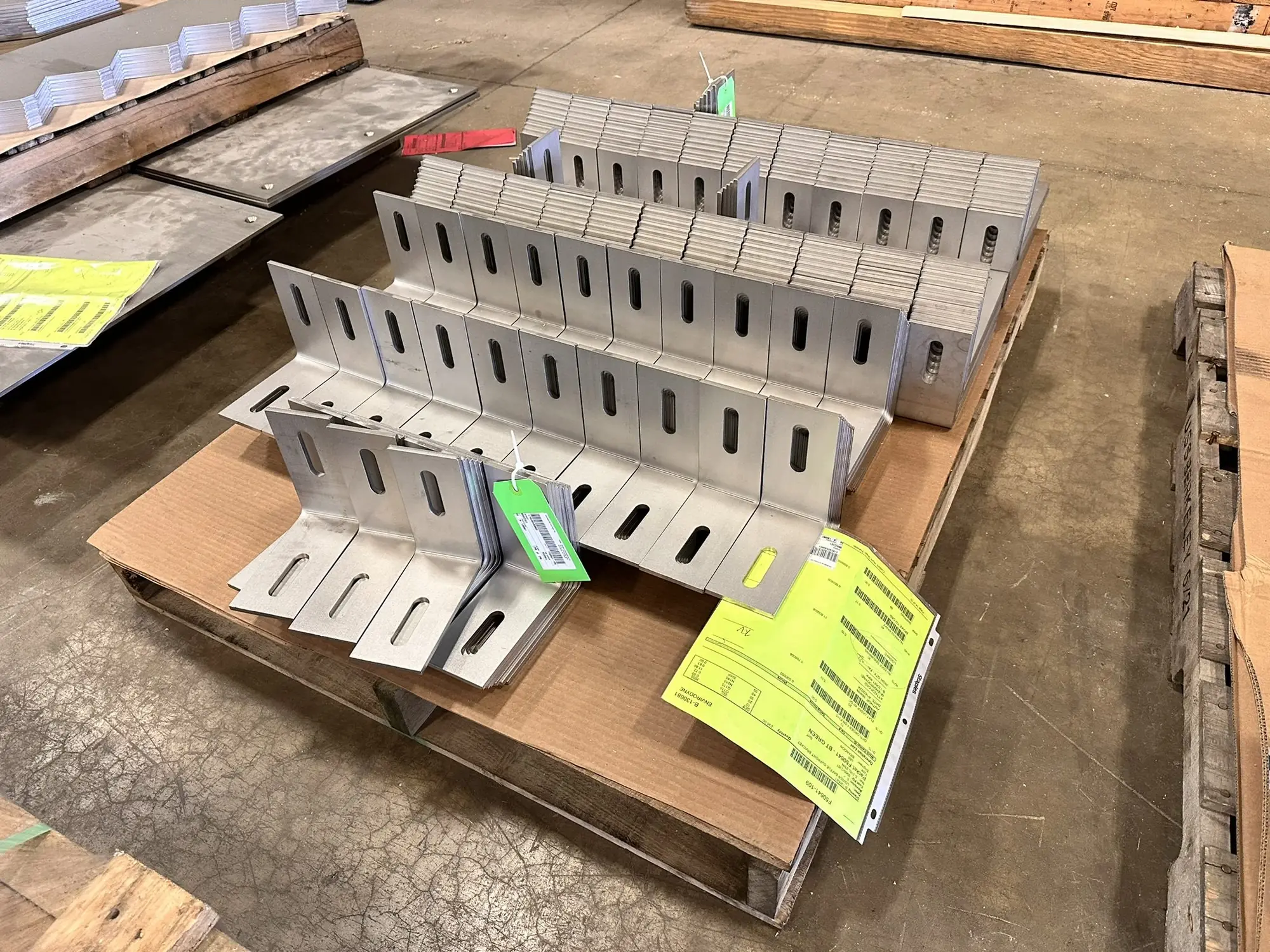
Skid- and trailer-mounted power-package structures and process weldments for distributed and clean-energy systems, welded in stainless to the customer drawing.
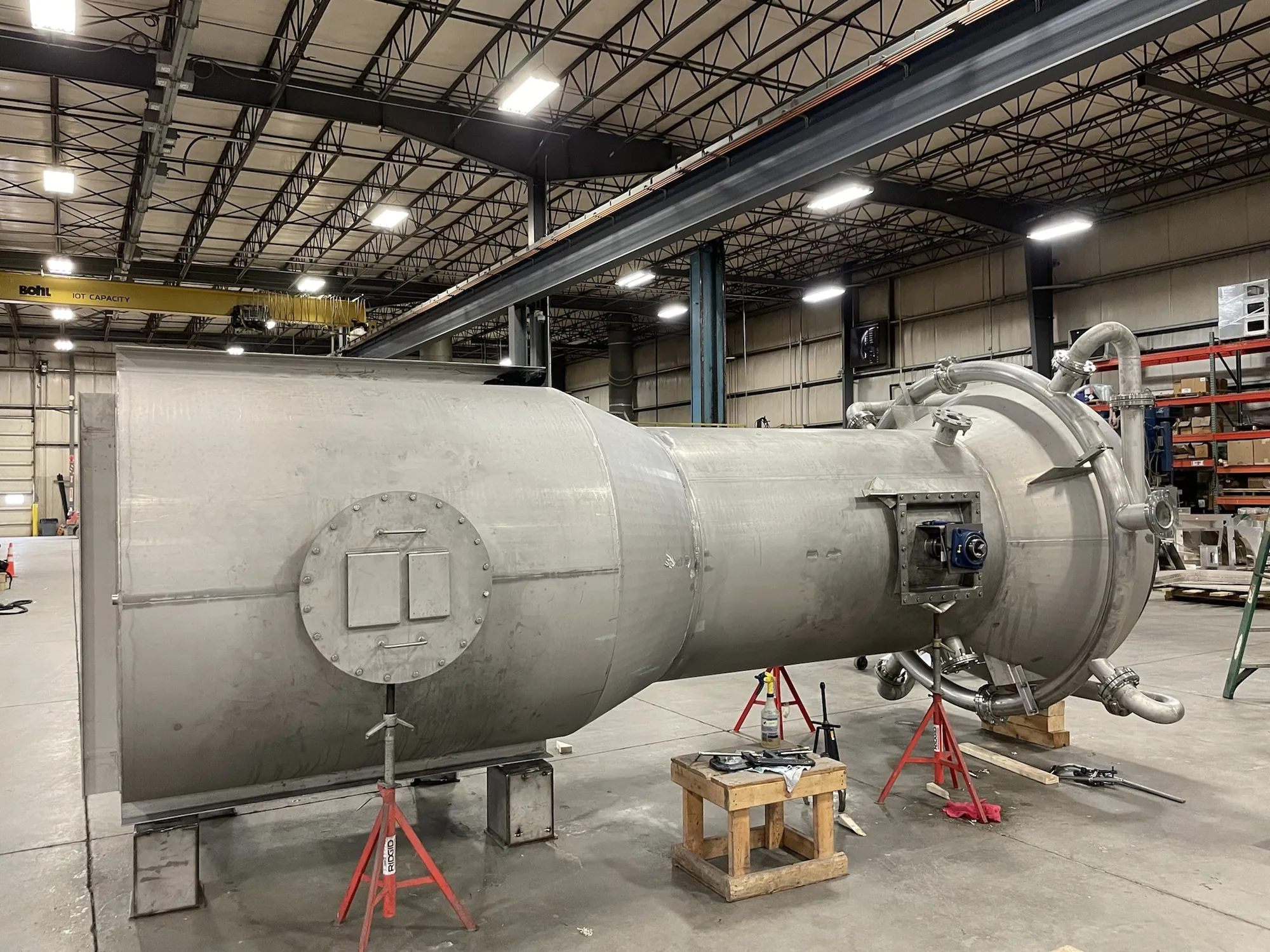
Scrubbers & Air-Quality Equipment
Baghouse and oxidizer housings, inlet ductwork, precipitator internals, and adsorber support structures in 304L and 2205 duplex for acid-dew-point exposure.
Material Selection for Chemical and High-Temperature Service
Material selection in power and chemical processing is driven by the specific chemistry, temperature, and pressure your equipment will see. Decades of fabrication in these environments have established clear starting points. Northern has qualified welding procedures and production experience across all of these alloys. If you are not sure which grade fits your application, we can review your process conditions and recommend options.
| Grade | Best for | Filler metal | Why |
|---|---|---|---|
| 316L | Mild chemical environments, moderate temperatures | ER316L | Good general corrosion resistance; cost-effective baseline |
| Duplex 2205 | Chloride-bearing streams, caustic solutions | ER2209 | 2x yield strength of 316L; resists chloride SCC |
| Duplex 2507 | Severe chloride, hot seawater, high-pressure lines | ER2594 | Superior pitting resistance where 2205 is marginal |
| Hastelloy C-276 | Concentrated acids (sulfuric, HCl, phosphoric), wet chlorine gas | ERNiCrMo-4 | Resists both oxidizing and reducing acids |
| Hastelloy C-22 | Mixed-acid environments, oxidizing-reducing transitions | ERNiCrMo-10 | Broader corrosion resistance than C-276 in mixed chemistries |
| AL-6XN | Severe chloride pitting, warm brackish water | ERNiCrMo-3 | Super-austenitic with 6% molybdenum for pitting resistance |
Welding High-Nickel and Duplex Alloys
High-nickel alloys and duplex stainless punish fabrication shortcuts. Each family has specific metallurgical constraints that standard welding procedures do not address.
Duplex (2205, 2507): Excessive heat input destroys the 50/50 austenite-ferrite balance, creating brittle sigma phase. We control interpass temperature and use matching filler (ER2209 for 2205, ER2594 for 2507) with ferrite measurement on production weldments.
Hastelloy (C-276, C-22): These alloys are susceptible to hot cracking and segregation in the weld metal. We use low-heat-input GTAW with tight bead-width control and matching filler (ERNiCrMo-4 for C-276, ERNiCrMo-10 for C-22).
AL-6XN: The high molybdenum content makes AL-6XN prone to microsegregation during welding. We use overmatching filler (ERNiCrMo-3) to maintain corrosion resistance in the weld zone.