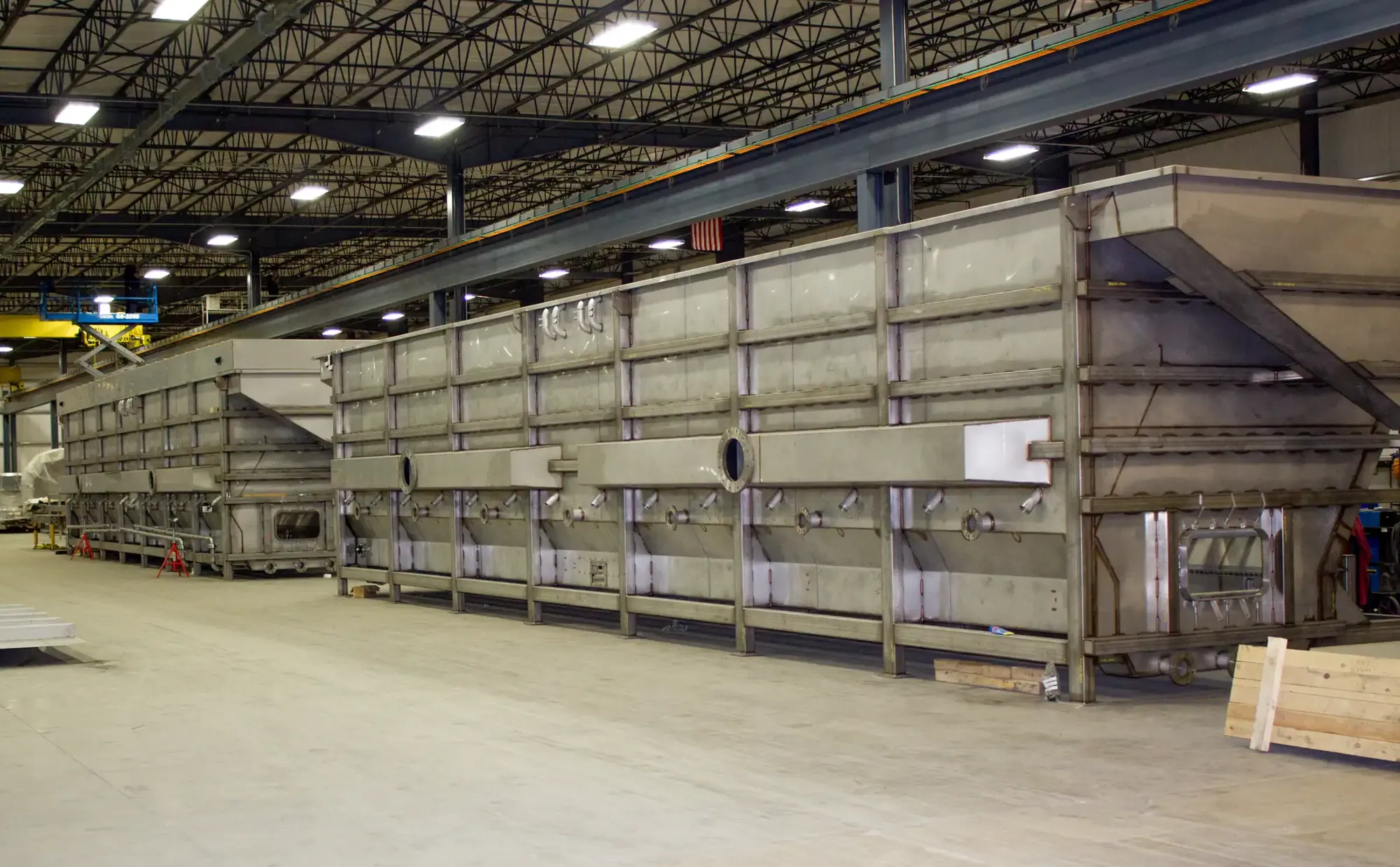
Northern Manufacturing runs laser welding two ways: autogenous, where the beam fuses the joint with no filler metal, and hybrid, where the beam works with a GMAW wire feed on joints that need filler chemistry. Both run on stainless and carbon steel sheet, backed by a weld department of 60+ AWS-certified welders across 78 welding bays. Every stainless seam runs inside our 40,000 sq ft dedicated stainless-only production space in Oak Harbor, Ohio, where carbon tooling and carbon dust never touch corrosion-critical work.
ISO 9001:2015 certified by AVU Registrations (IAS-accredited, certificate #00157-4), with ASME BPVC Section IX qualified welding procedures and an AWS Certified Welding Inspector (CWI) on staff anchoring the quality system every assembly ships under. Laser welding here sits beside GTAW, GMAW, K-TIG, and robotic welding in one department, so the process that welds your assembly is chosen against the print, the alloy, and the service environment.
Where Laser Welding Earns Its Place
Low heat input. Distortion tracks the volume of metal you melt. A focused laser beam fuses a narrow joint with very little extra material melted on either side of the faying surfaces, so the heat-affected zone stays small and the part keeps the shape it was formed to.
Flat panels stay flat. On thin-gauge stainless, arc welding heat is the enemy: panels oil-can, edges wave, and straightening adds labor that shows up in your price. The laser’s narrow fusion zone takes most of that distortion budget off the table, which is why sheet assemblies headed for cosmetic or sanitary service are strong laser candidates.
Repeatability under CNC motion. The beam path is programmed, not hand-guided. Seam four hundred matches seam one in penetration, width, and appearance, which is what you want on production runs where every unit gets inspected against the same acceptance criteria.
Sealed seams without sealant. A continuous full-penetration laser seam is liquid- and air-tight on its own. Sheet assemblies designed around rivet lines and sealant beads can often be redesigned around fused seams instead, removing parts, process steps, and a maintenance item that ages in service.
Thin sheet is where heat input shows up first. On a 14-gauge 304 stainless lap joint that has to stay flat, GTAW puts enough heat into the part to pull it out of plane, and getting it back means strongbacks, repeated checks, and sometimes scrap. Laser welding fuses the seam with a fraction of the heat, so a formed thin-gauge part comes off the table flat and holds the shape it was formed to. A lap-joint laser weld melts the top sheet into the one beneath it to make a sealed, low-stress seam, which is exactly what thin sheet needs when the goal is a flat sealed joint rather than a high-load structural weld. The work runs with minimal fixturing, which matters on a high-mix floor where the next part on the table is a different part. We qualify the procedure to AWS D1.6 and ASME BPVC Section IX before it runs.
On assemblies where critical features have to be cut after welding, that low heat input keeps the welded part dimensionally close enough that those features can be cut to final alignment on the 5-axis laser.
Autogenous Laser Welding: No Filler Metal
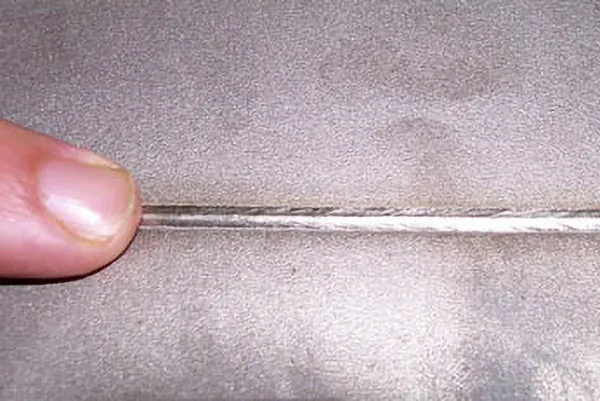
Austenitic stainless steels (304, 316) and carbon steels take autogenous laser welding well. The beam fuses the faying surfaces directly: no filler wire, no flux, no edge preparation when the blanks fit tight. On sheet, full weld penetration is achieved from one side, which matters on assemblies where the back of the joint is closed off or where a backside cleanup pass is not an option.
Because there is no filler, the weld metal is the base metal. There is no dilution calculation and no filler-selection question for the corrosion engineer to sign off on 304 or 316. For corrosion-critical service, the finishing step is the same one the rest of our stainless gets: ASTM A380 pickling and ASTM A967 passivation in our own booth, restoring the passive layer across the seam and the heat-affected zone.
The discipline autogenous welding demands is fit-up. A beam with no filler cannot bridge a gap, so blank accuracy and fixturing carry the job. We cut blanks in-house on fiber and CO2 laser cutting cells, so the edge that gets welded was cut, formed, fixtured, and fused without leaving the building or the quality system.
Hybrid Laser Welding: Laser Plus GMAW Wire
Some joints need filler metal, full stop: an alloying filler specified for corrosion or strength, or a joint geometry that wants more metal than fusion alone provides. Hybrid laser welding combines the beam with a GMAW weld puddle, driving the molten filler deep into the joint.
The result is filler-metal chemistry with penetration GMAW cannot reach on its own, plus more tolerance for fit-up variation than an autogenous seam. The trade is heat: hybrid welding puts more energy into the part than autogenous laser welding, so distortion control comes back into the conversation. We treat hybrid as a targeted tool for the specific applications that require it, not as the default.
Laser or GTAW: How We Pick the Process
The laser is not a religion here. It is one process in a department that runs nine, and the print decides. The comparison below is the conversation we have during quote review.
| Factor | Laser welding | GTAW (TIG) |
|---|---|---|
| Heat input | Very low; narrow fusion zone and HAZ | Higher; wider bead and heat-affected zone |
| Thin-sheet distortion | Minimal; panels stay flat | Needs fixturing, sequencing, often post-weld straightening |
| Filler metal | None (autogenous) or GMAW wire (hybrid) | Matching or overmatching filler per the alloy |
| Fit-up | Tight; faying surfaces in contact, machine-cut blanks | Forgiving; filler bridges real-world gaps |
| Access | Line-of-sight, fixtured seams | Any position, tight access, repair work |
| Strongest on | Long repeatable seams on sheet, sealed joints, cosmetics | Thick sections, open roots, duplex and nickel alloys |
Penetration is the other reason we reach for the laser. A 3/8 in 316L butt joint welded with an arc process usually needs a V-groove bevel and multiple passes, and every pass adds weld metal that shrinks as it cools. The V-groove profile also drives angular distortion because of the weld volume it takes to fill. A laser weld is a single deep, narrow profile that reaches full penetration on a square edge with no bevel, so there is far less weld volume, mostly transverse shrinkage instead of angular pull, and less prep on large sheet and pipe joints. We qualify the joint to ASME BPVC Section IX before it runs, and we pick laser over GTAW when the part is heat-sensitive or when the prep and distortion of an arc weld would cost more than they are worth.
Duplex, Hastelloy, and the rest of the specialty-alloy list run under ASME Section IX qualified arc procedures where ferrite balance and filler chemistry are controlled on the WPS. And when a joint needs low heat but laser fixturing does not pay at your volume, Fronius CMT cold-metal-transfer welding is the low-heat arc alternative in the same department.
Documentation for Your Laser-Welded Assembly
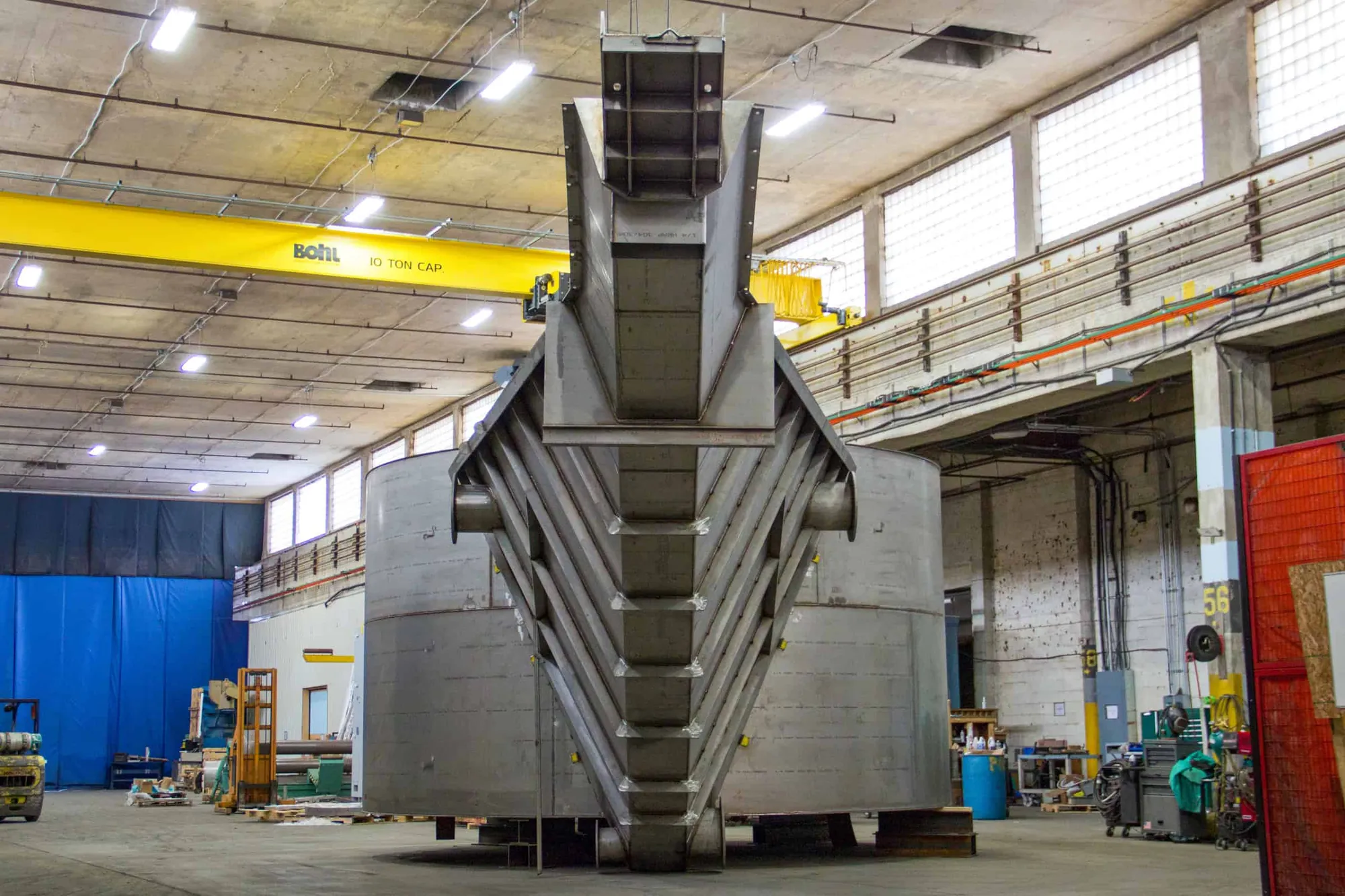
We can provide the same documentation the rest of the weld department produces, when your purchase order calls for it:
- Material Test Reports (MTRs) traced by heat number from mill cert through finished weldment
- Weld maps identifying every seam on the assembly
- NDE reports (VT, PT, and other methods as your drawing specifies)
- Pickling and passivation records per ASTM A380 and A967 when finishing is in scope
- Certificate of Conformance (CoC) to your purchase order
If your drawing calls for a sheet assembly that has to stay flat, stay sealed, or stay cosmetic, send it over. During quote review we will tell you whether the laser, the arc, or a combination of the two builds it best.