
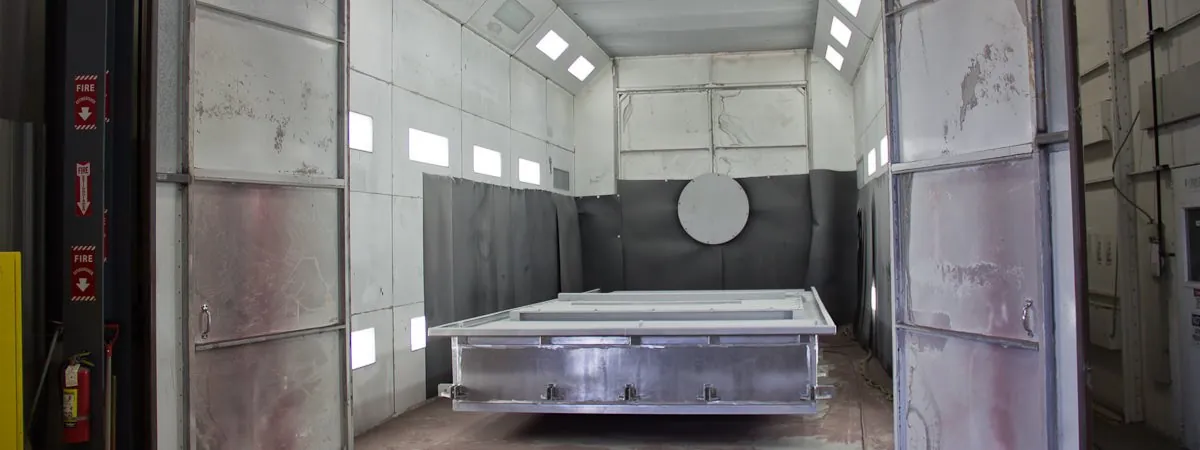
Stainless steel bead blasting at Northern Manufacturing puts a uniform, non-directional matte finish on parts and full welded assemblies at our Oak Harbor, Ohio facility. Stainless blasting runs on dedicated stainless equipment, with carbon work kept in separate bays, the same separation discipline that governs our 40,000 sq ft stainless-only production space. When the drawing also calls for restored corrosion resistance, ASTM A380 spray pickling and ASTM A967 passivation run in our 55-foot booth under the same roof: one location, one quality system.
ISO 9001:2015 certified by AVU Registrations (IAS-accredited, certificate #00157-4). AWS Certified Welding Inspector (CWI) on staff. Bead blasting runs as a finishing step on work we fabricated, or as a standalone service on customer-supplied parts and assemblies.
Why Bead Blast Stainless Steel?
A Uniform, Non-Directional Finish
Bead blasting uses spherical media, so the finish has no grain direction. Brushed and polished finishes carry a lay that mismatches where a formed corner meets flat stock or a weld zone crosses a panel. A bead blast finish reads the same from every viewing angle, across compound curves, weld seams, and flat faces alike. It also contrasts cleanly against polished trim when a design mixes the two.
Compressive Surface Stress
Because the media is round, it peens the surface instead of cutting it. Every impact cold-works a thin surface layer and leaves it in compression. Chloride stress corrosion cracking in austenitic stainless starts at surface tensile stress, so a peened, compressive surface layer can improve resistance to it. The finish you specified for looks also does quiet metallurgical work.
No Carbon Contamination
Carbon residue is the enemy of a corrosion-critical stainless surface. Free iron embedded during finishing corrodes on its own schedule in service and pits the stainless around it. Stainless bead blasting at Northern runs on dedicated stainless equipment, and carbon steel work runs in separate bays, so the finishing step that is supposed to protect your surface never becomes the step that contaminates it.
What a Bead Blast Finish Looks Like
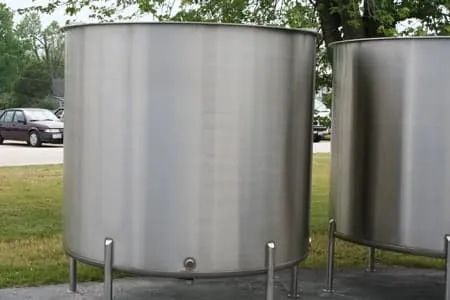
The surface comes out a soft matte gray that scatters light instead of reflecting it. That matters on production equipment for two reasons. First, the matte surface hides the minor scuffs and handling marks that accumulate during shipping, installation, and service, marks that stand out sharply on a polished or mill finish. Second, the uniformity holds across an entire welded assembly, so a tank, frame, or housing fabricated from plate, formed panels, and structural sections presents one consistent appearance.
The look is a staple on food service and pharmaceutical equipment, where buyers want a clean, even, professional surface without paying for a mirror polish. Finish appearance is subjective by nature, so the cleanest way to specify it is against a reference sample agreed during quote review.
Choosing a stainless finish
| Finish | Appearance | Directionality | Best for | Relative cost |
|---|---|---|---|---|
| Bead blast | Uniform matte gray | Non-directional, reads the same from every angle | Complex weldments where one even look matters across welds, formed panels, and flat stock | Lower than mechanical polishing |
| Brushed | Linear satin | Directional grain that mismatches at weld joints and formed corners | Flat panels and simple geometry | Moderate |
| Polished / mirror | High reflectivity | Directional | Show surfaces that need a mirror | Highest, climbs fast on large weldments |
Pickling and Blasting Work Better Together
Bead blasting and chemical cleaning solve different problems, and we quote them honestly. Blasting removes visible weld discoloration, but it does not remove the chromium-depleted layer that welding heat leaves under the tint, and it does not dissolve embedded free iron the way pickling chemistry does. If the spec requires restored corrosion resistance on a wetted or corrosion-critical surface, blasting alone is the wrong scope.
The strongest result combines both: ASTM A380 spray pickling and ASTM A967 passivation restore the surface chemistry first, then bead blasting delivers the uniform matte finish. Northern runs both processes at one location, which keeps the sequence controlled, the handling in-house, and the documentation traceable through a single quality system.
Who Specifies a Bead Blast Finish
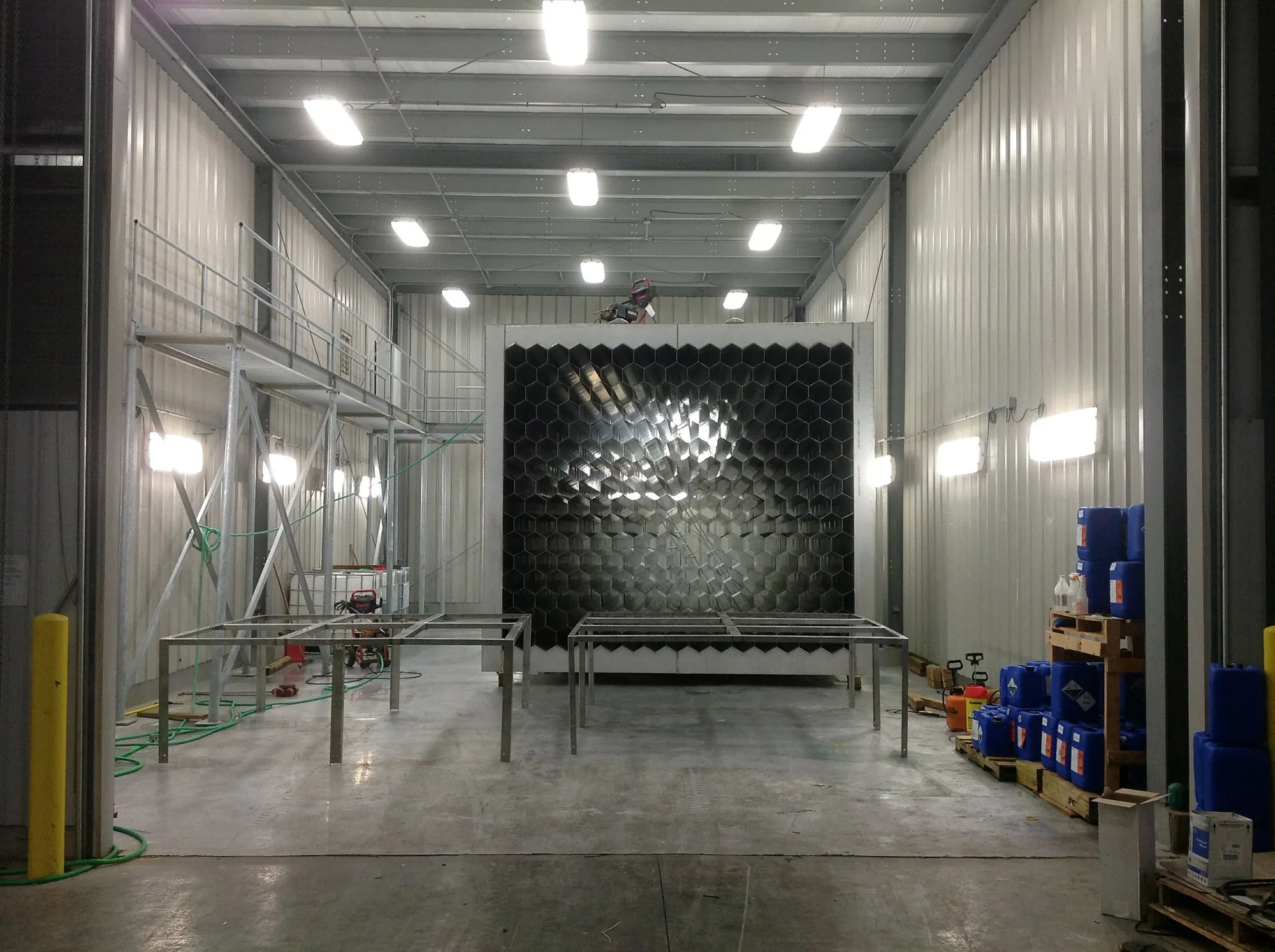
Food and sanitary equipment builders specify bead blast for housings, frames, tanks, and guards where the surface needs to look clean and stay looking clean through years of washdown and handling. Architectural fabricators use it on panels and structural stainless that will be seen up close, because the non-directional finish stays consistent across changing light and viewing angles in a way brushed finishes do not.
OEMs, machine builders, and contract manufacturers send us both loose parts and finished weldments. On a welded frame or enclosure, one blast pass unifies weld zones, formed corners, and flat stock into a single appearance without the labor cost of polishing every surface. If the same assembly needs corrosion restoration first, the pickle-then-blast sequence covers both in one stop.