Process tanks, chutes, and vacuum boxes in duplex 2205/2507, welded to hold ferrite balance in liquor and bleach service.
Northern Manufacturing fabricates custom stainless steel equipment for pulp and paper mills, where abrasive stock, corrosive liquors, and high-chloride bleach chemistry destroy carbon steel in months. The economic case for stainless and duplex in mill environments is straightforward: a properly specified duplex 2205 or 2507 component lasts many times longer than carbon steel in the same service, eliminating the recurring cost of line-stop replacements. Northern’s 40,000 sq ft stainless-only production space handles the heavy-gauge plate and large-format assemblies mill work demands.
60+ AWS-certified welders. ISO 9001:2015 certified (AVU Registrations). ASME BPVC Section IX qualified welding procedures for austenitic (P8) and duplex (P10H) stainless. CWI on staff. In-house pickling and passivation per ASTM A380/A967.
Equipment We Build for Pulp and Paper
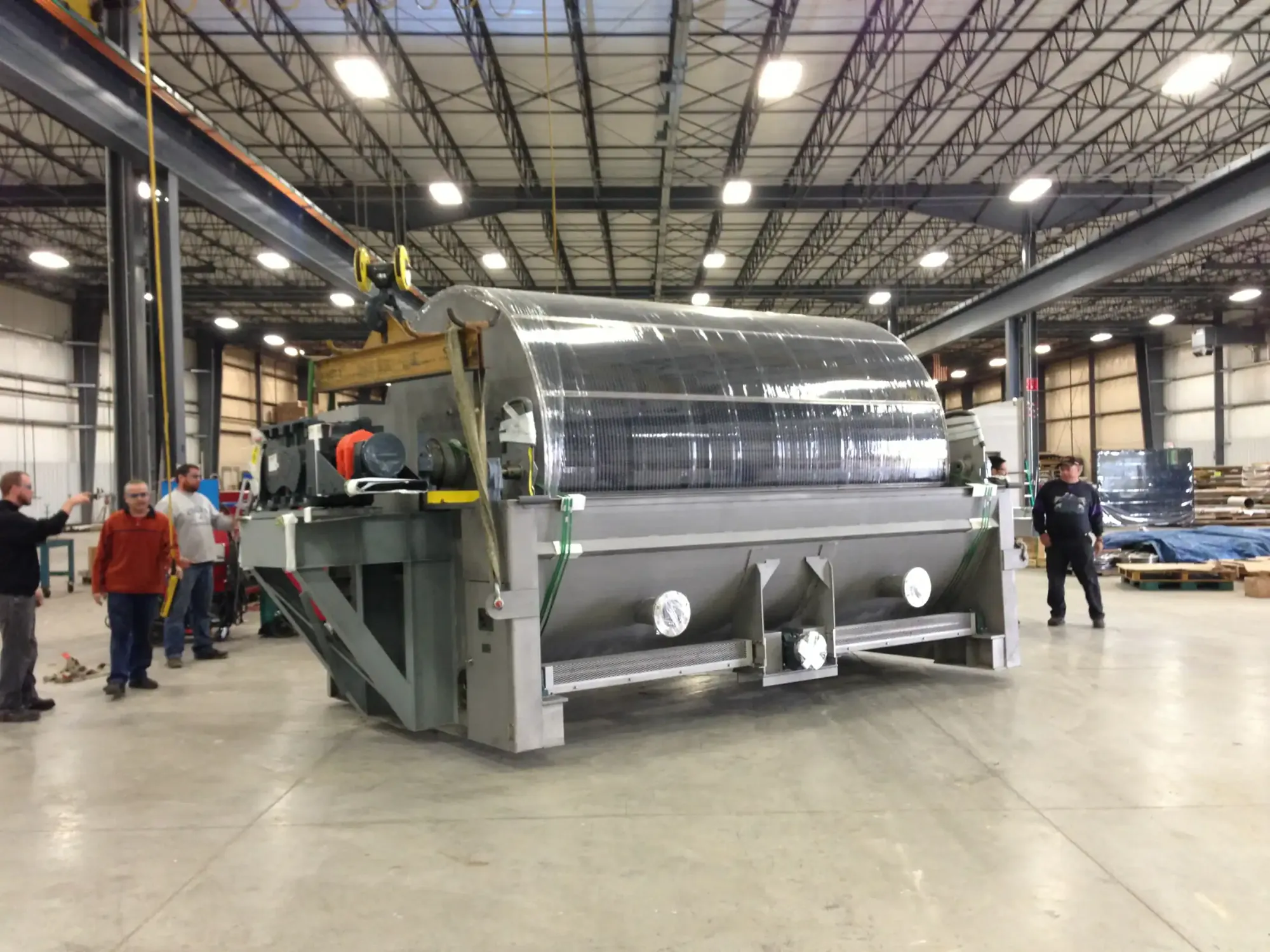
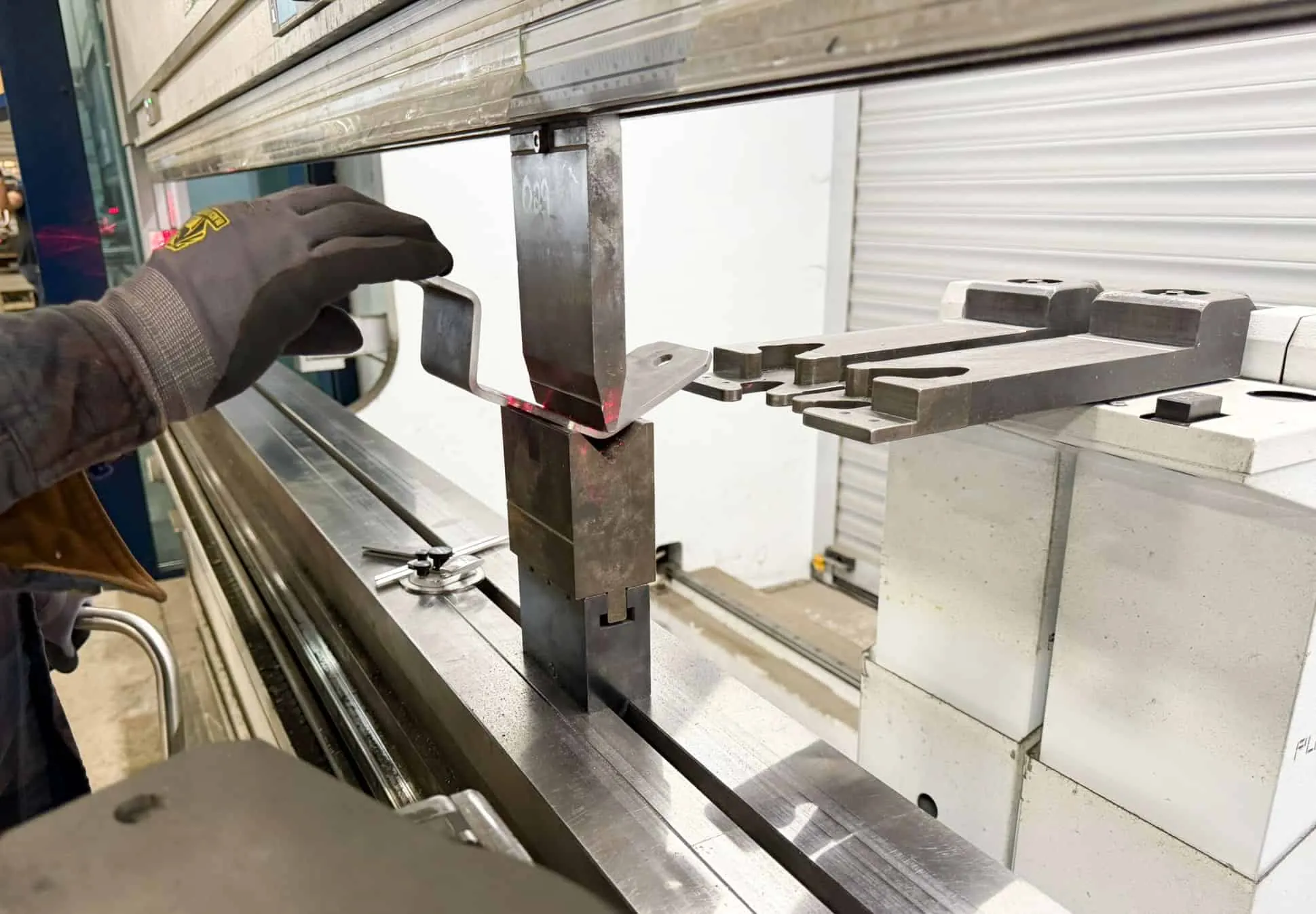
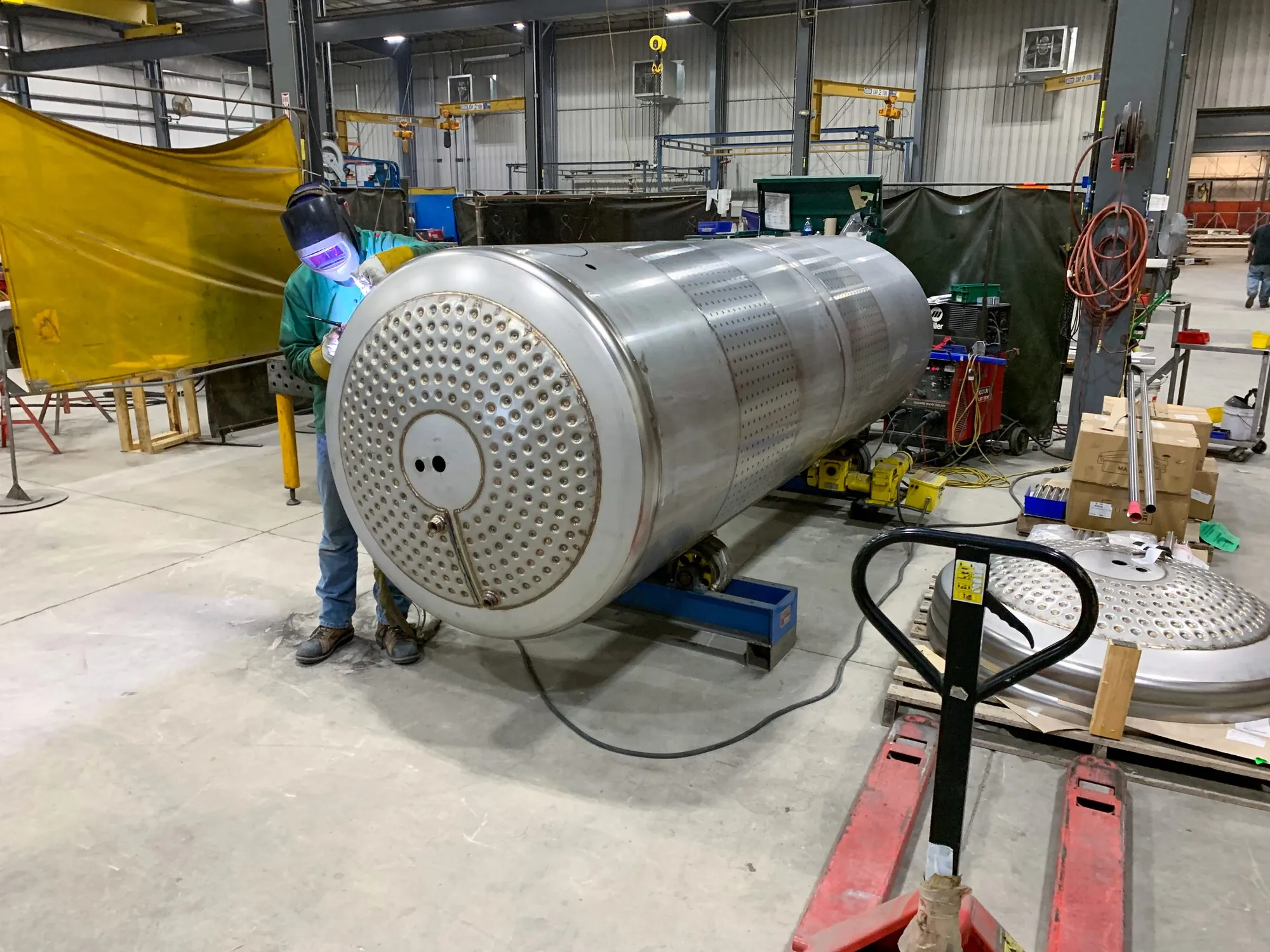
Process Tanks & Chutes
Storage chests, blow tanks, and material-handling chutes in heavy-gauge stainless or duplex, built to withstand abrasive stock flow and corrosive liquors without line-stop repairs.
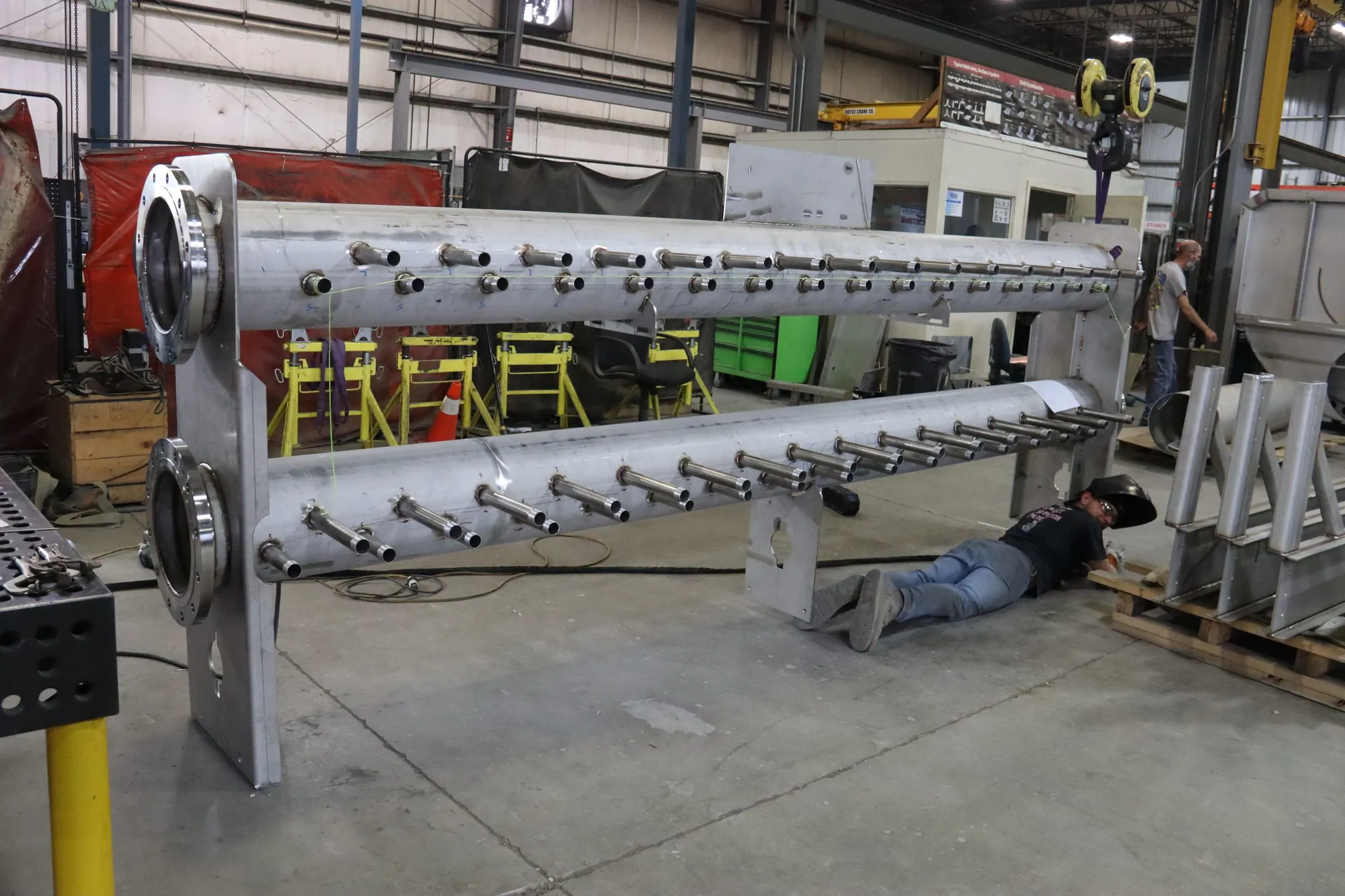
Header Manifolds & Process Piping
Header manifolds and process piping for mill liquor and stock service, welded in stainless or duplex to the alloy the spec calls for.
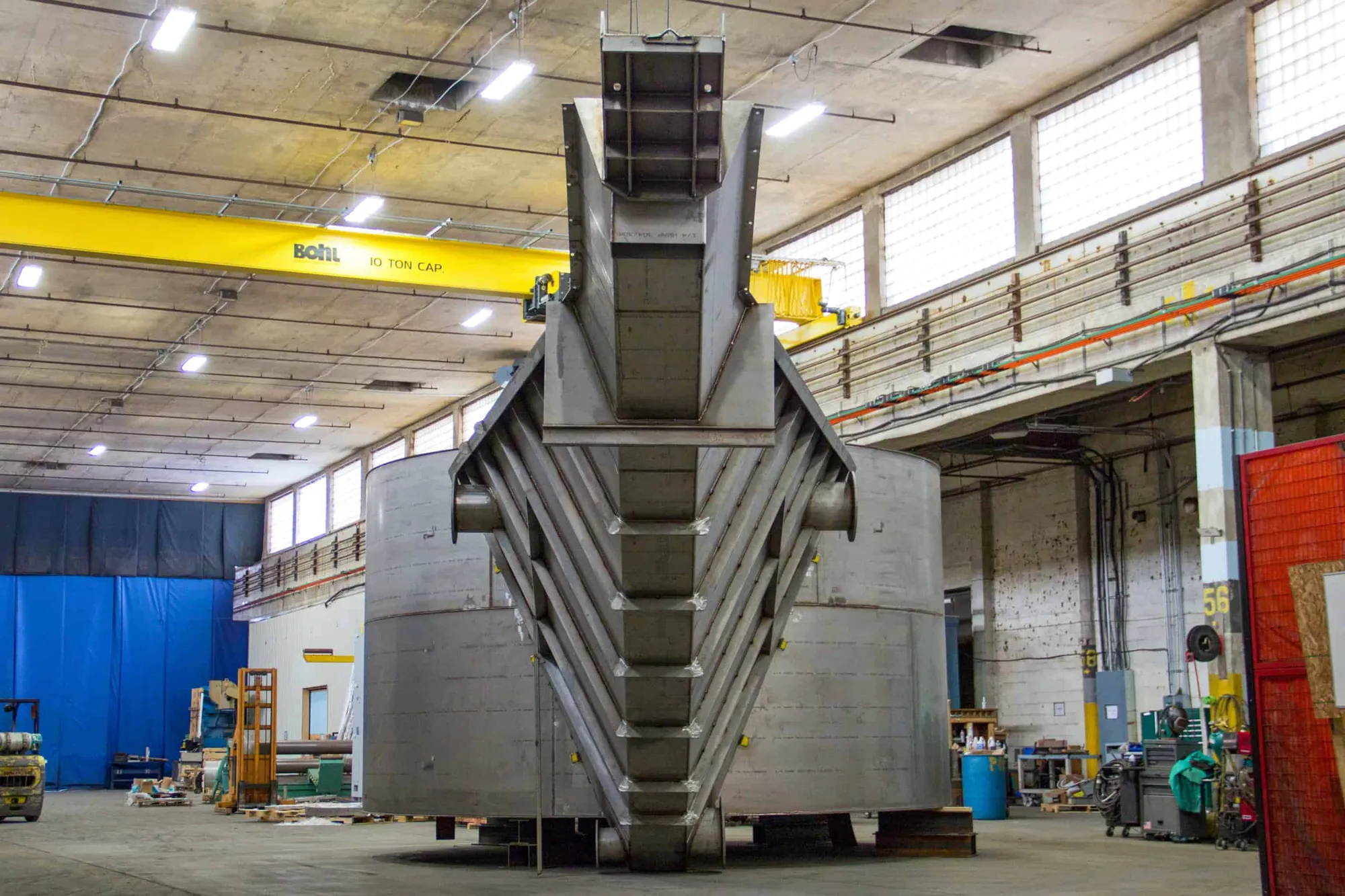
Structural Supports & Chutes
Braced chutes and structural assemblies for process areas where chemical splash, washdown, and mill atmosphere degrade carbon steel.
Fabricating Duplex and Stainless for Mill Service
When your spec calls duplex for bleach or recovery service, the fabrication has to preserve what the alloy offers. Duplex carries higher strength that allows thinner wall sections on large tanks, but it is unforgiving on heat input: hold the austenite-ferrite balance through every weld or you lose the corrosion resistance the grade was specified for. That balance, verified by ferrite measurement on production weldments, is the discipline mill equipment depends on, and it is what we control.
| Property | 316L | Duplex 2205 | Duplex 2507 |
|---|---|---|---|
| Yield strength | ~170 MPa | ~450 MPa | ~550 MPa |
| Chloride SCC resistance | Moderate | High | Very high |
| Pitting resistance (PREN) | ~25 | ~35 | ~43 |
| Cost vs. 316L | Baseline | Similar (lower Ni offsets higher Cr/Mo) | ~20% premium |
Welding Duplex for Mill Service
Duplex stainless is unforgiving on heat input. Excessive thermal cycling destroys the balanced microstructure, creating brittle sigma phase and depleted ferrite zones that corrode preferentially in service.
Northern maintains the critical austenite-ferrite balance through qualified procedures, matching filler, ferrite measurement on production weldments, and CWI oversight on every duplex project.
Qualified WPS per ASME BPVC Section IX. with controlled heat input and interpass temperature limits.
Matching filler metal. ER2209 for 2205, ER2594 for 2507.
Ferrite measurement on production weldments. not just test coupons, to verify microstructure throughout the fabrication run.
CWI oversight. on every duplex project.
Surface Restoration
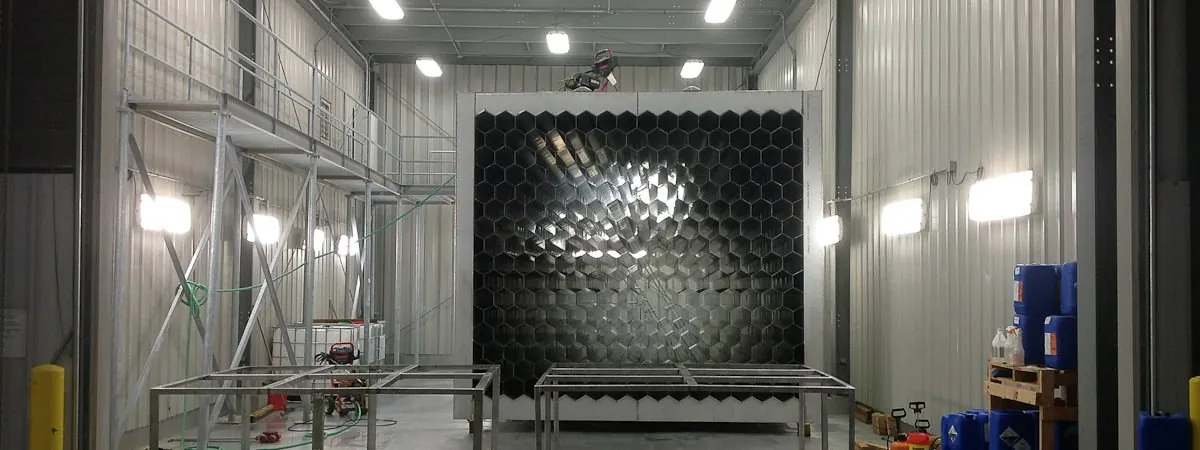
Post-weld pickling restores the chromium oxide passive layer disrupted by welding and forming. Our 55-foot spray booth handles large mill assemblies in one pass per ASTM A380/A967. The pickling chemistry is adjusted for duplex grades, which require different parameters than austenitic stainless.