This guide clarifies a common industry misconception: that a visually clean, bead-blasted stainless steel surface is a corrosion-resistant one. It details the metallurgical necessity of a mandatory two-stage finishing process, bead blasting followed by chemical pickling and passivation, to remove the invisible, corrosion-prone chromium-depleted zone created during welding. Adherence to this sequence, as mandated by Northern Manufacturing’s quality system, is presented as the only technically sound method to guarantee long-term asset integrity and mitigate customer risk.
For Northern Manufacturing’s finishing services: stainless steel bead blasting and pickling and passivation.
At a glance:
- A “clean look” after bead blasting does not equal a corrosion-resistant surface.
- The mandatory sequence is blasting, then pickling, then passivation.
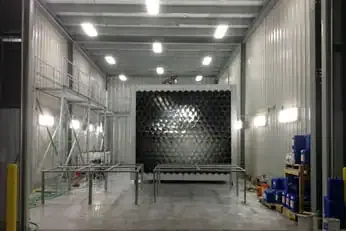
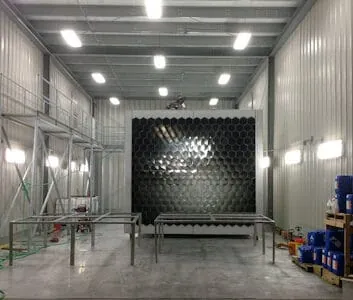
- Northern Manufacturing operates a dedicated, stainless-steel-only blast booth and a 55′ x 20′ x 20′ spray pickling booth.
- All finishing operations adhere to ASTM A380/A380M under an ISO 9001:2015 certified quality management system, with Certified Welding Inspectors (CWI) on staff.
Introduction: The Deception of a “Clean” Finish
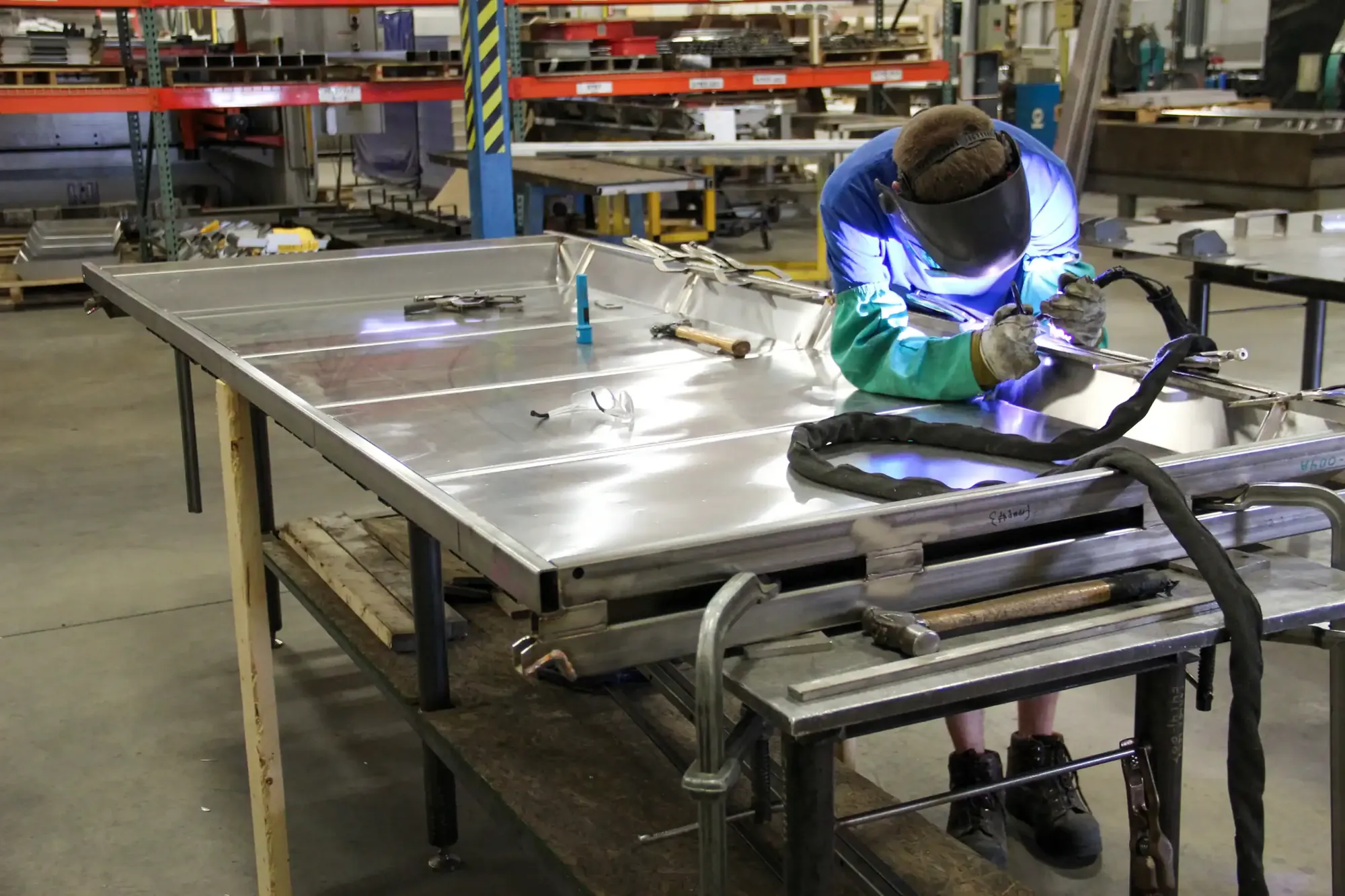
The remarkable performance of stainless steel stems from an invisible, self-repairing passive layer of chromium oxide on its surface. This microscopic film is the sole barrier protecting the underlying iron from corrosion. However, high-temperature stainless steel fabrication processes like welding severely compromise this protective layer.
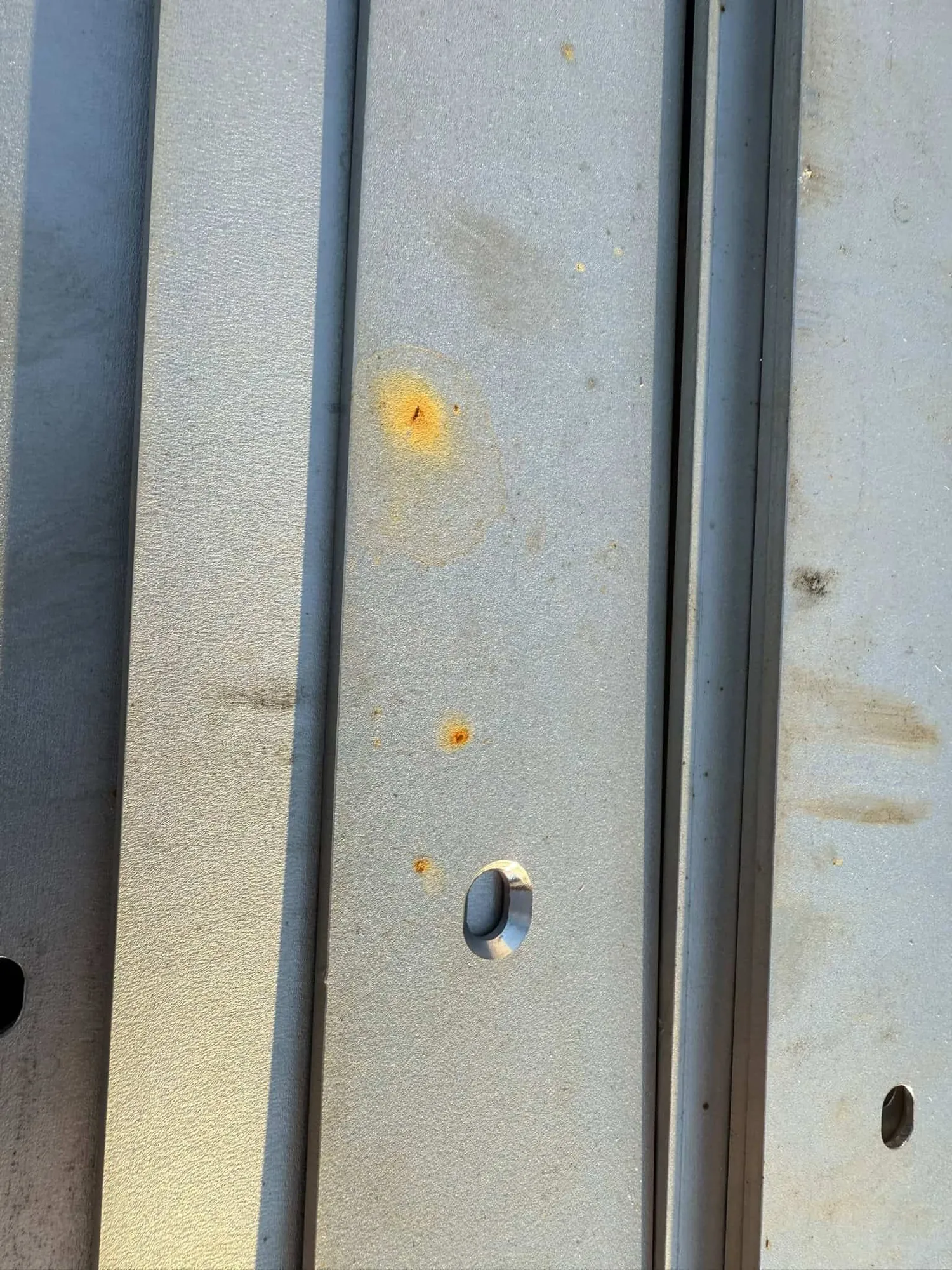
A common failure scenario begins when a component is bead-blasted to remove weld discoloration, achieving a uniform, aesthetically pleasing finish. The part looks perfect, yet it fails prematurely in service, with aggressive corrosion blooming precisely along the “clean” weld seam. This failure results from treating a complex metallurgical problem with a purely cosmetic solution. This article outlines the science behind this common pitfall and the disciplined process required to prevent it.
The Critical Flaw: How Welding Compromises Stainless Steel’s Integrity
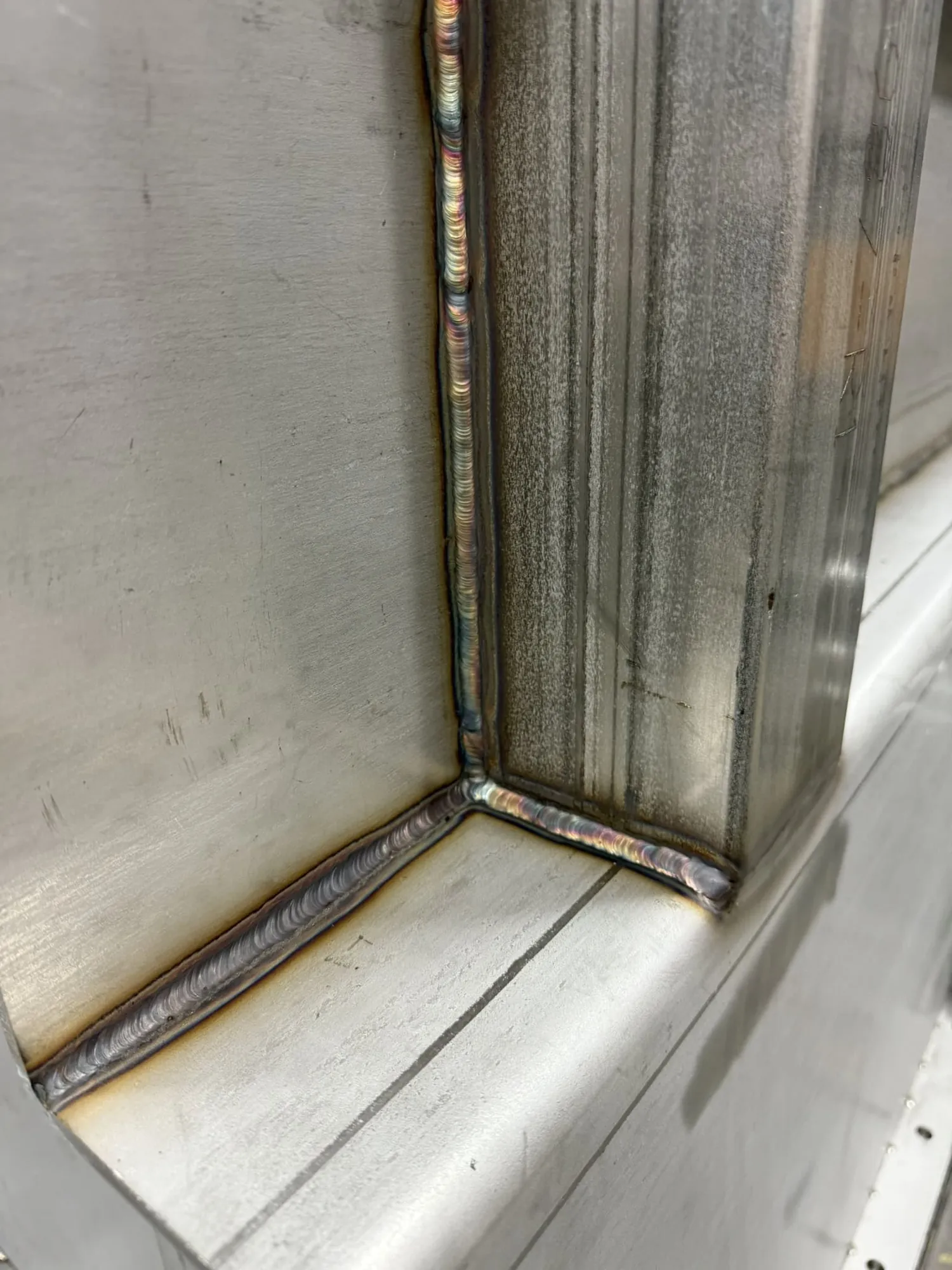
Heat Tint
The visible, colored oxide scale seen around a weld is known as heat tint or weld discoloration. This scale is thick, porous, and non-protective, and its presence is a clear indication of a compromised surface.
The Invisible Threat
Far more dangerous than the visible heat tint is the damage beneath it: a microscopic, underlying chromium-depleted zone. The intense heat of welding causes chromium atoms to rapidly migrate from the base metal to form the surface scale. This migration leaves behind a layer of steel where the chromium content has fallen well below the threshold required to form a protective passive film.
Electrochemical Risk
This chromium-depleted zone becomes electrochemically active (anodic) relative to the surrounding, fully-alloyed passive steel (the cathode). In the presence of an electrolyte, which can be as simple as humidity or condensation, a powerful corrosion cell is created. This cell drives an aggressive corrosion process that preferentially attacks the vulnerable depleted zone, guaranteeing failure even though the component looked perfectly finished.
The Cosmetic Trap: Why Bead Blasting Alone Is Detrimental
Bead blasting is a mechanical surface finishing process that uses propelled media to create a uniform matte texture. While useful for aesthetics, it is a detrimental choice when used as a final finishing step for three primary reasons:
- It Fails to Remove the Flaw: Bead blasting is a surface deformation process that removes a negligible amount of base metal. It is therefore completely ineffective at removing the underlying chromium-depleted layer. It merely hides the visible evidence of damage, leaving the metallurgical root cause of failure in place.
- It Introduces New Defects: The high-velocity impact of the blast media creates microscopic folds and crevices in the surface. These features are ideal sites for trapping moisture and corrosive agents like chlorides, which can initiate pitting and crevice corrosion.
- It Creates Contamination Risk: In non-specialized facilities, blasting can embed “free iron” particles from carbon steel jobs into the stainless surface. These foreign particles are not passive and will rust, acting as initiation sites for further corrosion.
The Mandated Sequence: A Two-Stage System for Metallurgical Integrity
Stage 1: Bead Blasting as a Controlled Pre-Treatment
At Northern Manufacturing, we frame blasting not as a final finish, but as a controlled mechanical pre-treatment to achieve a desired surface texture.
The Northern Advantage: We operate a dedicated, stainless-steel-only blast booth. This critical investment eliminates the primary risk of free-iron cross-contamination from the very start of the finishing process.
Stage 2: Pickling & Passivation for Full Restoration (ASTM A380)
Following blasting, a multi-step chemical restoration is mandatory.
- Pickling: This is an aggressive chemical process, typically using a mixture of nitric (HNO3HNO3) and hydrofluoric (HFH**F) acids, as recommended by industry standards. Its purpose is to surgically remove the compromised surface metal, including the chromium-depleted layer, embedded blast media, and any other contaminants.
- Passivation: This is a subsequent, milder process that uses an oxidizing acid (typically nitric acid) to help rapidly form a new, robust, and homogeneous passive layer on the metallurgically clean surface.
| Step | What It Does |
|---|---|
| Pickling | Aggressive acid step that removes the compromised surface metal, including the chromium-depleted layer and embedded blast media |
| Passivation | Milder oxidizing acid step that helps form a new, robust passive layer on the metallurgically clean surface |
Northern Manufacturing operates a 55′ x 20′ x 20′ spray pickling booth for large components and maintains strict adherence to ASTM A380/A380M for all finishing operations.
The Definitive Order
The process sequence must be Blasting THEN Pickling. To reverse the order would be to perform a perfect metallurgical restoration and then immediately re-damage and contaminate the surface with the blasting process, rendering the restoration useless.
One surface condition sits outside this sequence entirely: neither blasting nor pickling chemistry removes the glassy oxide deposits GMAW welding leaves on stainless beads.
The Northern Advantage: Mitigating Risk and Maximizing Asset ROI
Our disciplined, multi-stage finishing process directly translates into tangible customer benefits by ensuring the specified service life of the component, preventing costly downtime, and reducing long-term liability.
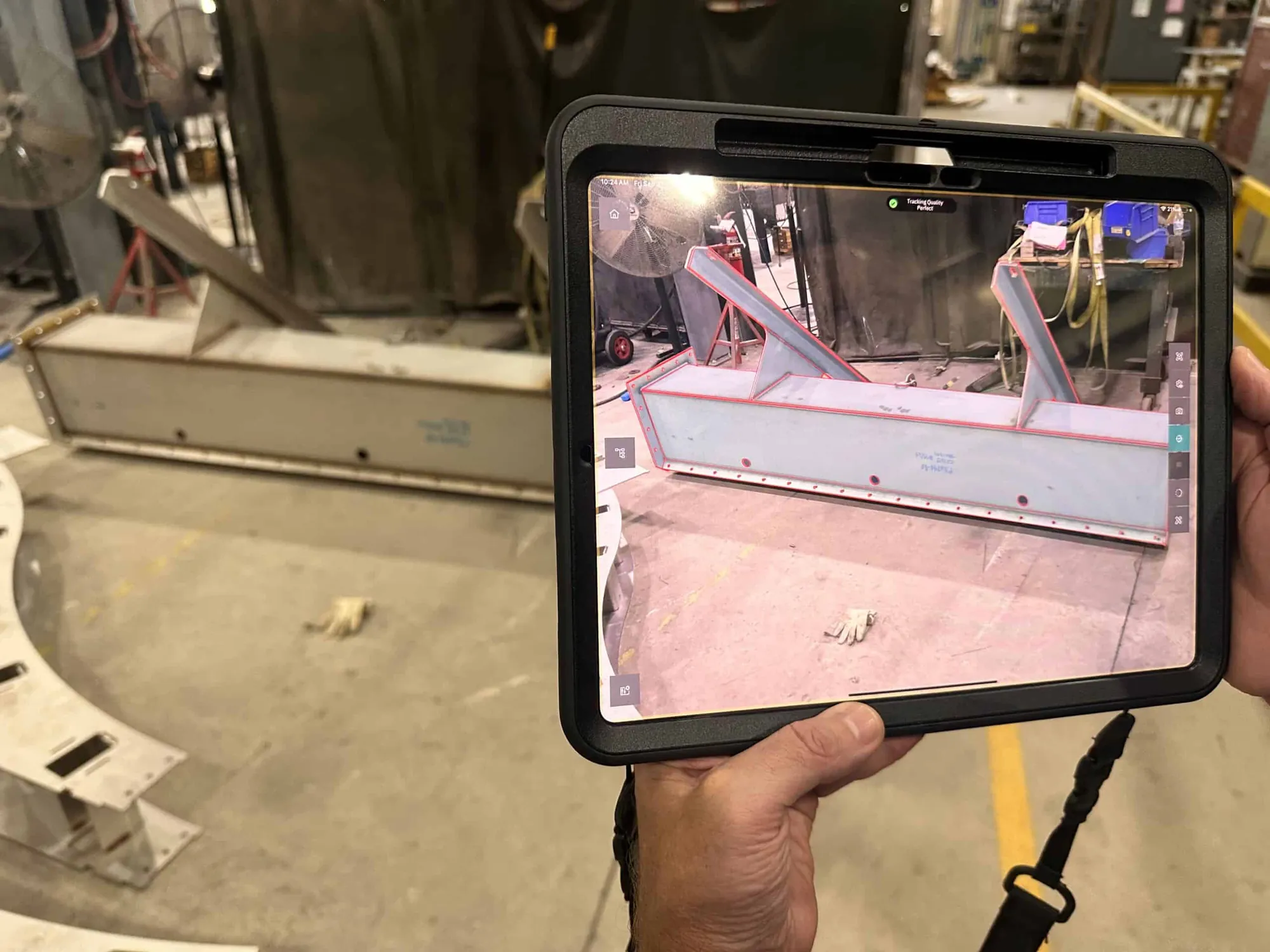
Our entire quality process is governed by our ISO 9001:2015 certified Quality Management System. Furthermore, our on-staff Certified Welding Inspectors (CWI) oversee the complete fabrication lifecycle, from initial weld procedures through final finishing, to ensure unwavering compliance and quality.
| Differentiator | Why It Matters |
|---|---|
| Dedicated, stainless-steel-only blast booth | Eliminates free-iron cross-contamination |
| 55′ x 20′ x 20′ spray pickling booth | Chemical restoration of large components in-house |
| ASTM A380/A380M adherence | Governs all finishing operations |
| ISO 9001:2015 certified QMS | Process discipline across the fabrication lifecycle |
| Certified Welding Inspectors (CWI) on staff | Oversight from weld procedures through final finishing |
Have a welded stainless component that needs finishing done right? Request a quote for in-house pickling and passivation per ASTM A380.
Conclusion: A Commitment to Integrity Over Appearance
- A “clean look” does not equal a corrosion-resistant surface.
- Blasting alone is insufficient and is actively harmful to the long-term performance of stainless steel.
- The mandatory sequence is 1) Blasting → 2) Pickling → 3) Passivation.
- Northern Manufacturing’s process discipline and adherence to standards like ASTM A380 guarantee that the corrosion resistance of your fabricated components is fully restored.
Frequently Asked Questions (FAQ)
Q: Is passivation the same as pickling?
A: No. Pickling is an aggressive cleaning and descaling step to remove damaged metal and heavy oxide scale. Passivation is a milder step performed after pickling on a clean surface to help build the protective chromium-oxide layer.
Q: Can I just specify passivation after blasting?
A: This is not recommended if the part has been welded. Passivation alone is not strong enough to remove the underlying chromium-depleted zone or embedded blast media. Pickling is required to remove those critical defects first.
Q: How does this process affect the final appearance?
A: The bead blasting step creates the uniform matte texture. The subsequent chemical pickling produces a metallically clean surface, which typically has a uniform grey or dull matte finish. The final appearance is a clean, uniform, non-reflective surface engineered for performance.
*Note: Industry standards such as ASTM A380 are subject to revision. Always consult the latest version of the standard for project-specific requirements. Northern Manufacturing’s quality department ensures all processes adhere to the most current, applicable standards.*