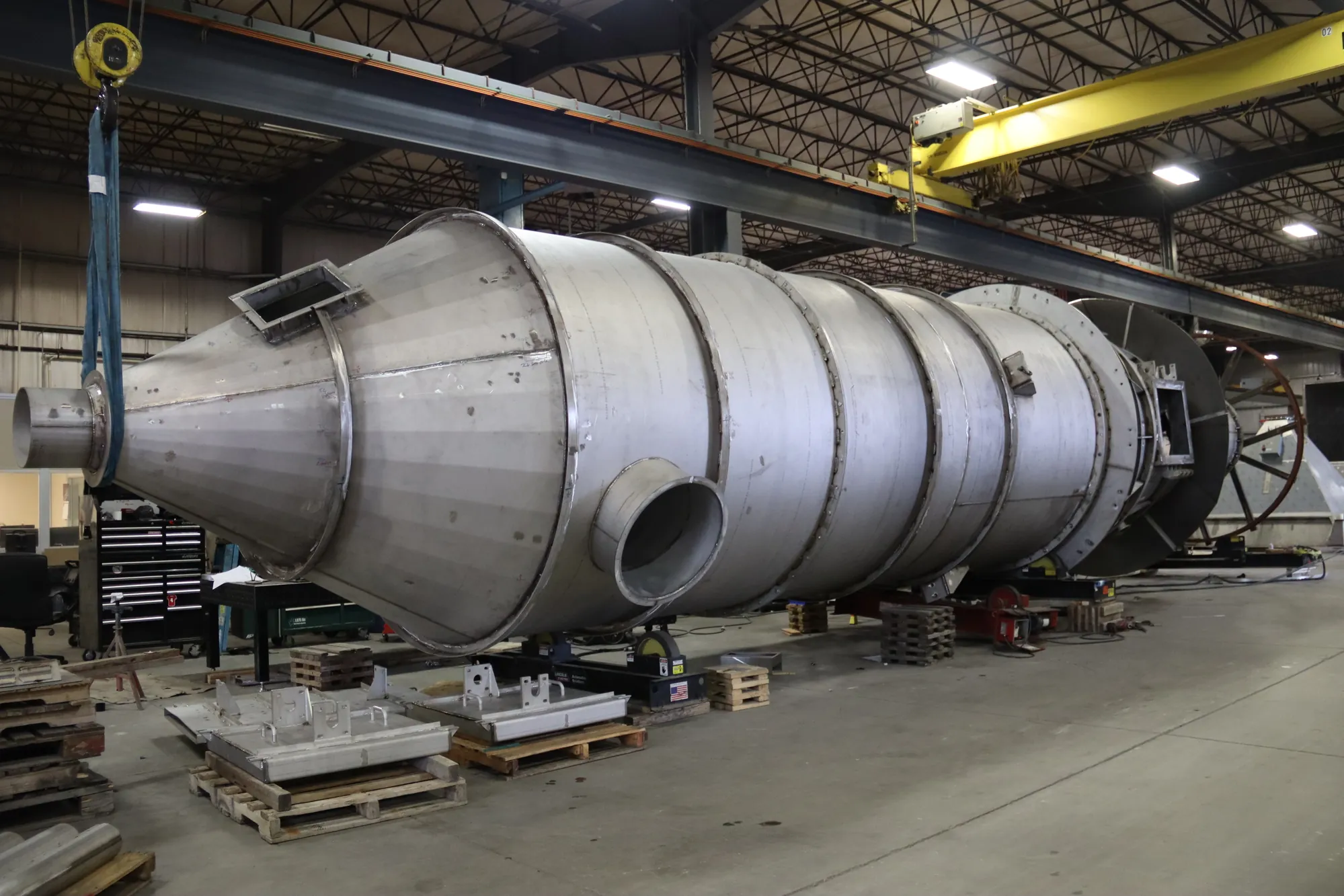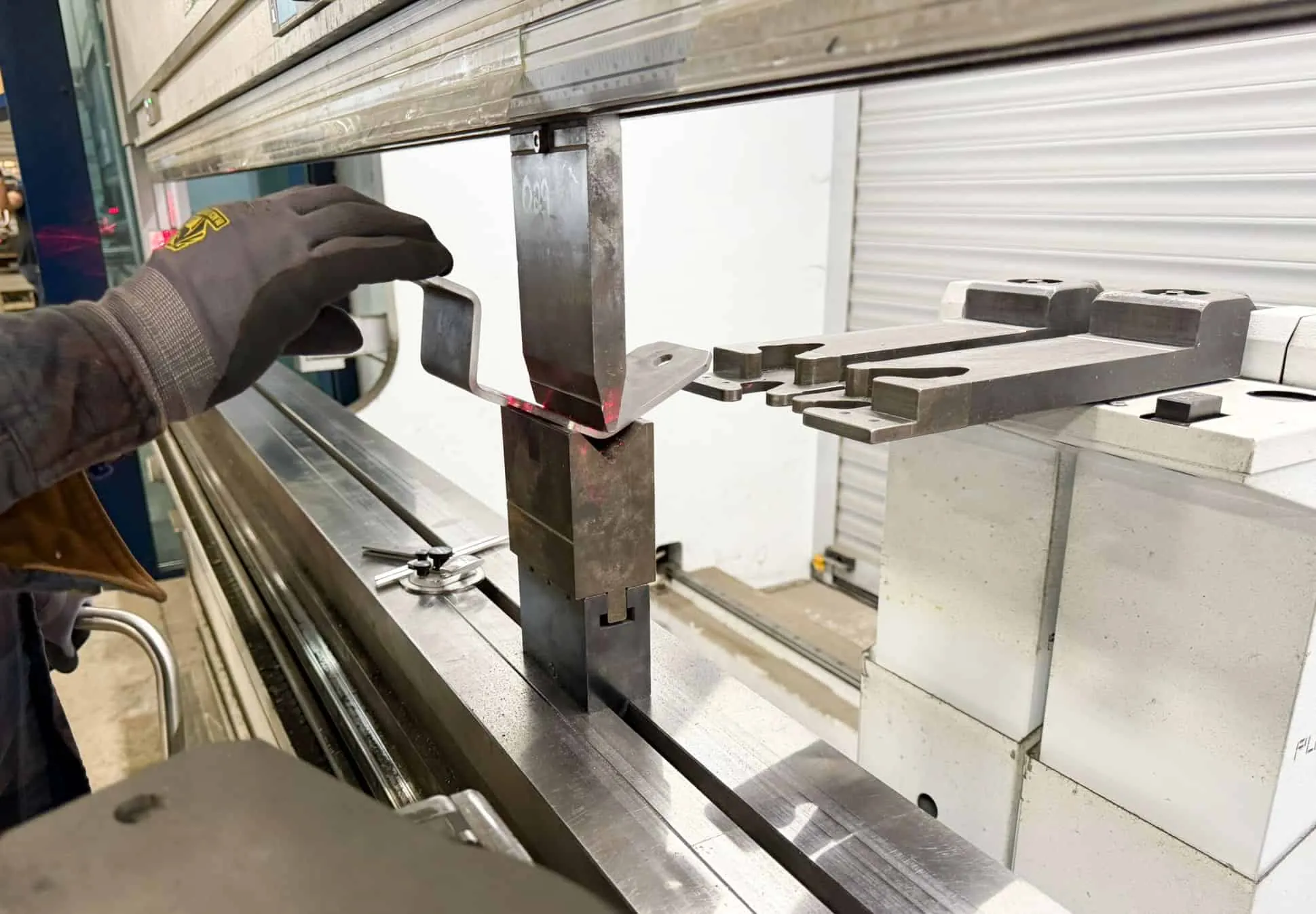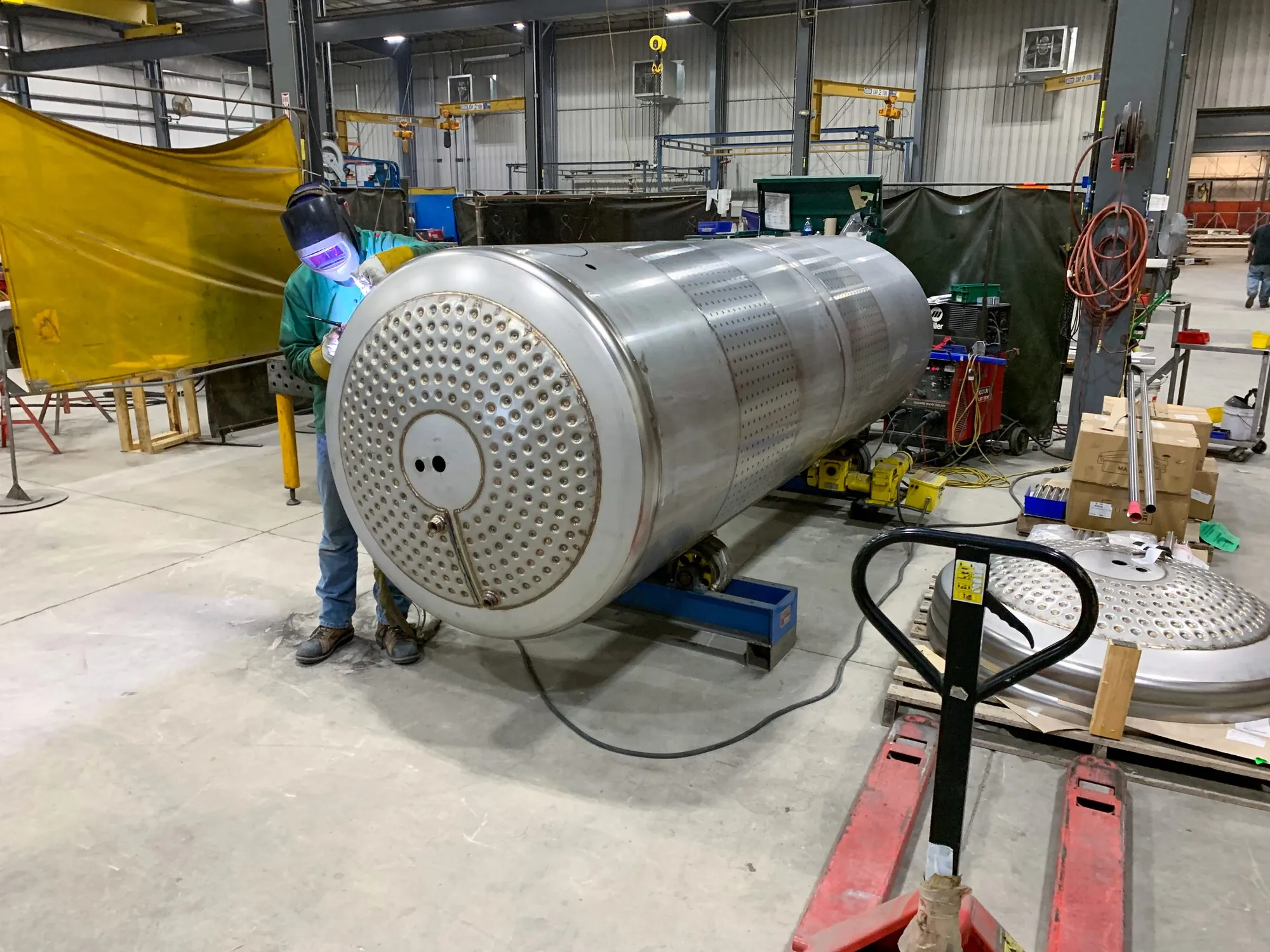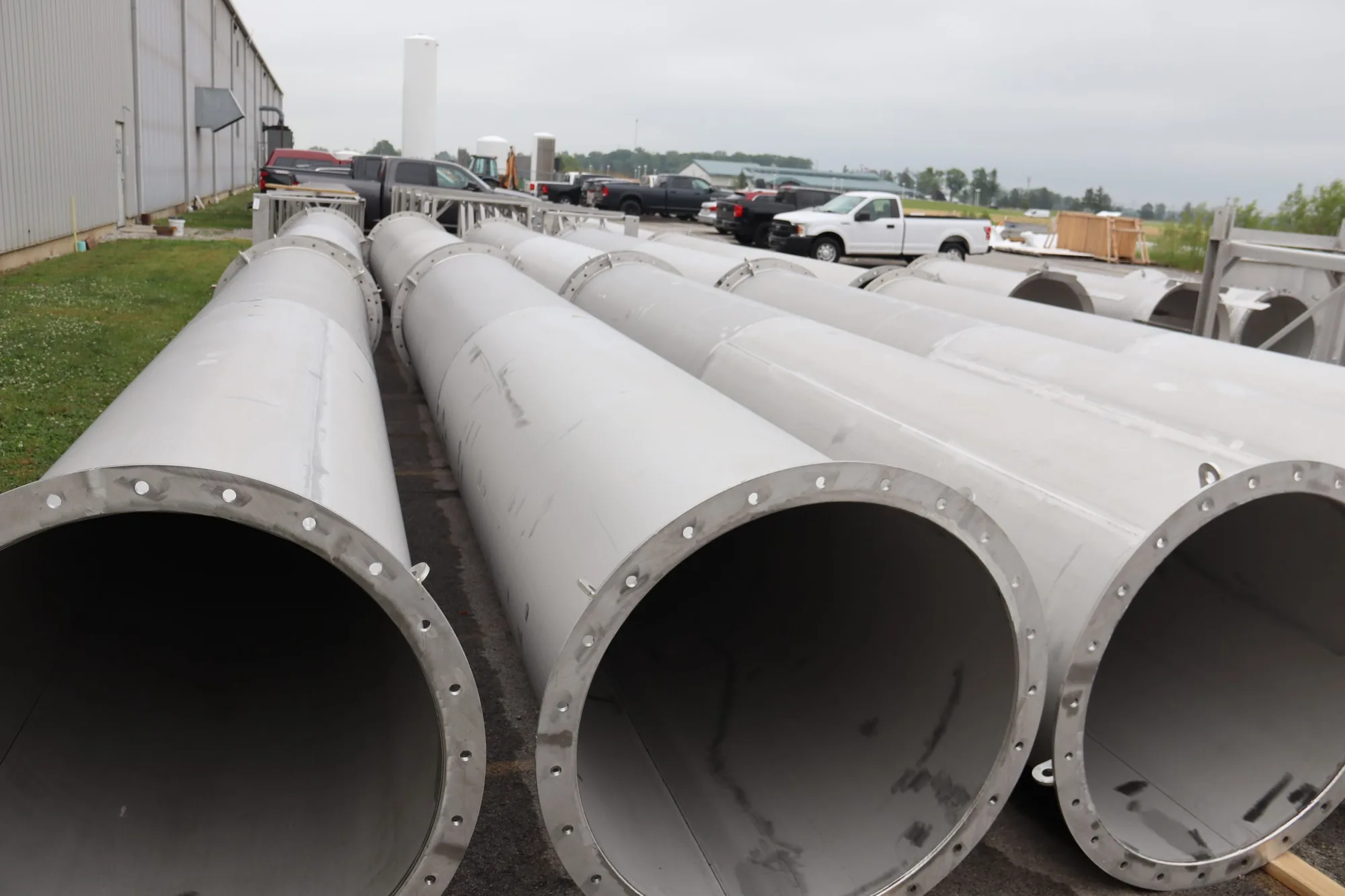
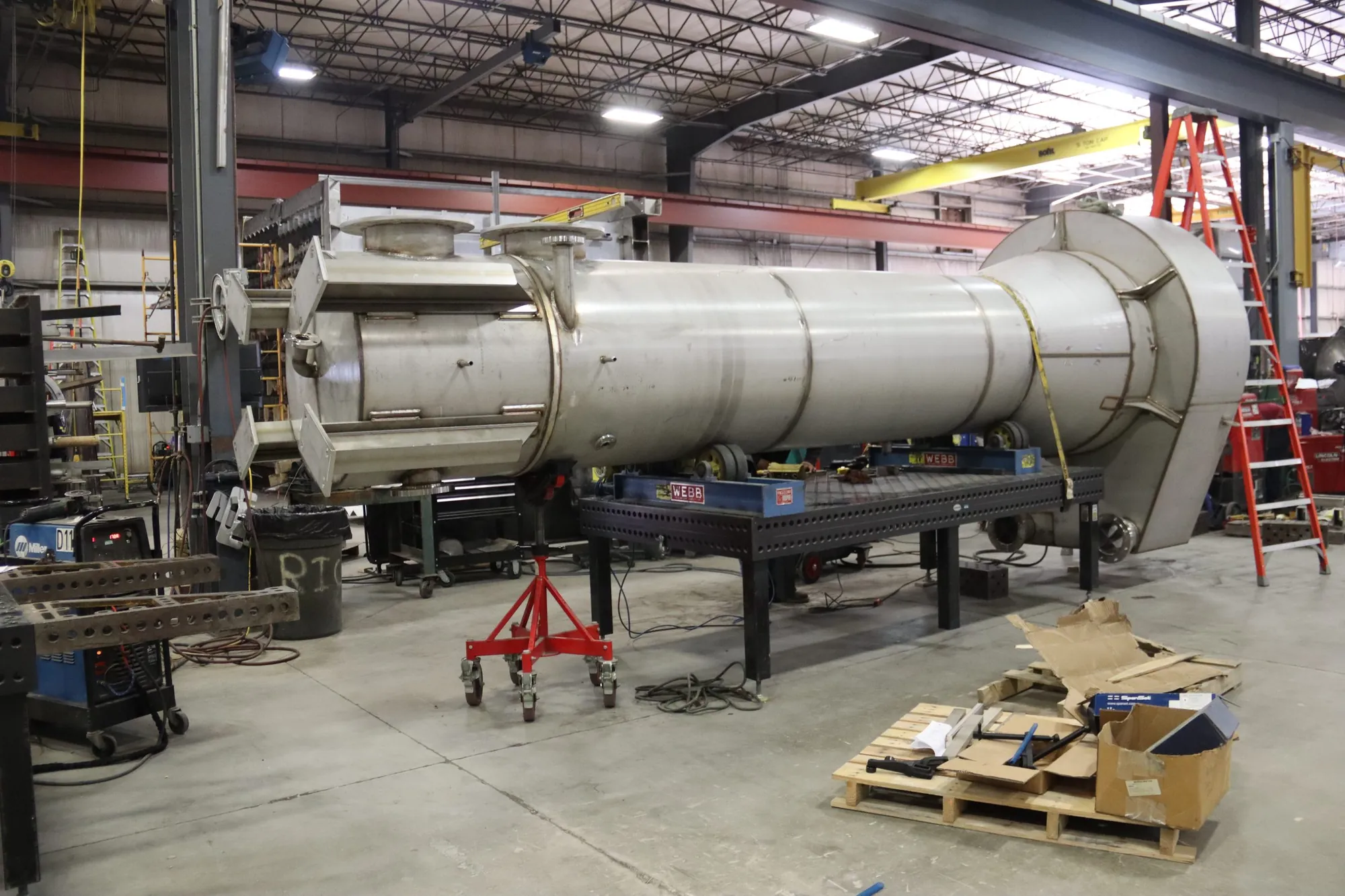
Scrubber, stack, and duct packages live in hostile airstreams: acid condensate, chlorides, abrasive particulate, and thermal cycling. We fabricate to the grade your spec calls at each point in the system and back every weld with a qualified procedure.
Northern Manufacturing fabricates industrial stainless steel ductwork, scrubber components, exhaust stacks, and SCR reactor housings for power generation, chemical processing, pulp and paper, mining, and wastewater treatment plants. Material selection runs from 304L and 316L through duplex 2205, AL-6XN, and Hastelloy C-276 for the gas streams that destroy standard grades. Welding procedures are qualified per ASME BPVC Section IX across austenitic, duplex, and nickel-alloy material groups, including dissimilar-metal transitions between them.
The work runs through a 160,000 sq ft indoor facility in Oak Harbor, Ohio, with 60+ AWS-certified welders across 78 welding stations. ISO 9001:2015 certified (AVU Registrations). A Certified Welding Inspector oversees the welding program, and assemblies finish with pickling and passivation per ASTM A380/A967 in our 55-foot spray booth.
What We Build for Air Handling and Pollution Control
FGD Absorber Ductwork and Components
Fabrications for flue gas desulfurization systems, where condensing acid chemistry sets the alloy choice.
SCR Reactor Housings and Ammonia Injection Grids
Structures that house and feed the catalyst systems converting NOx into nitrogen and water.
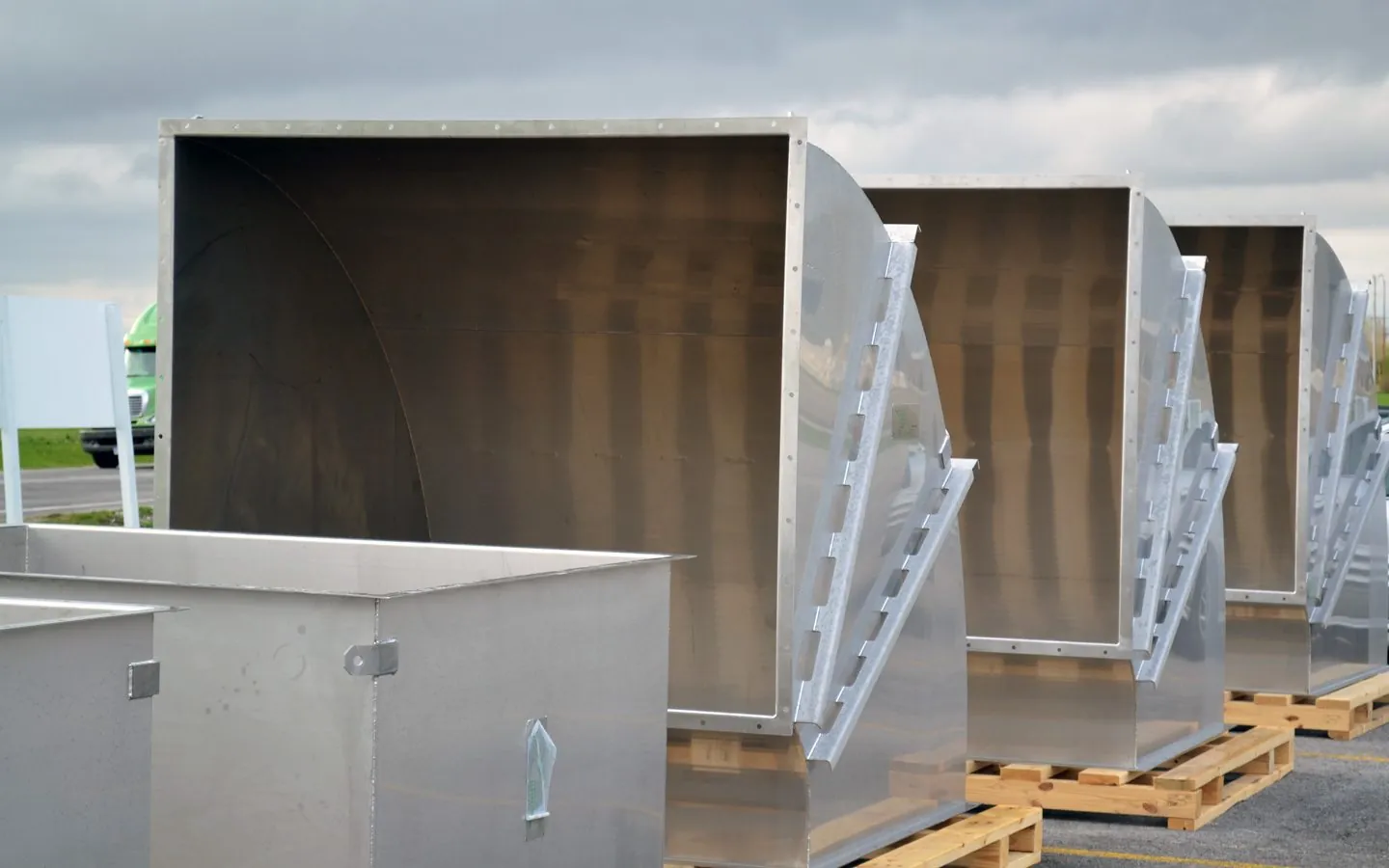
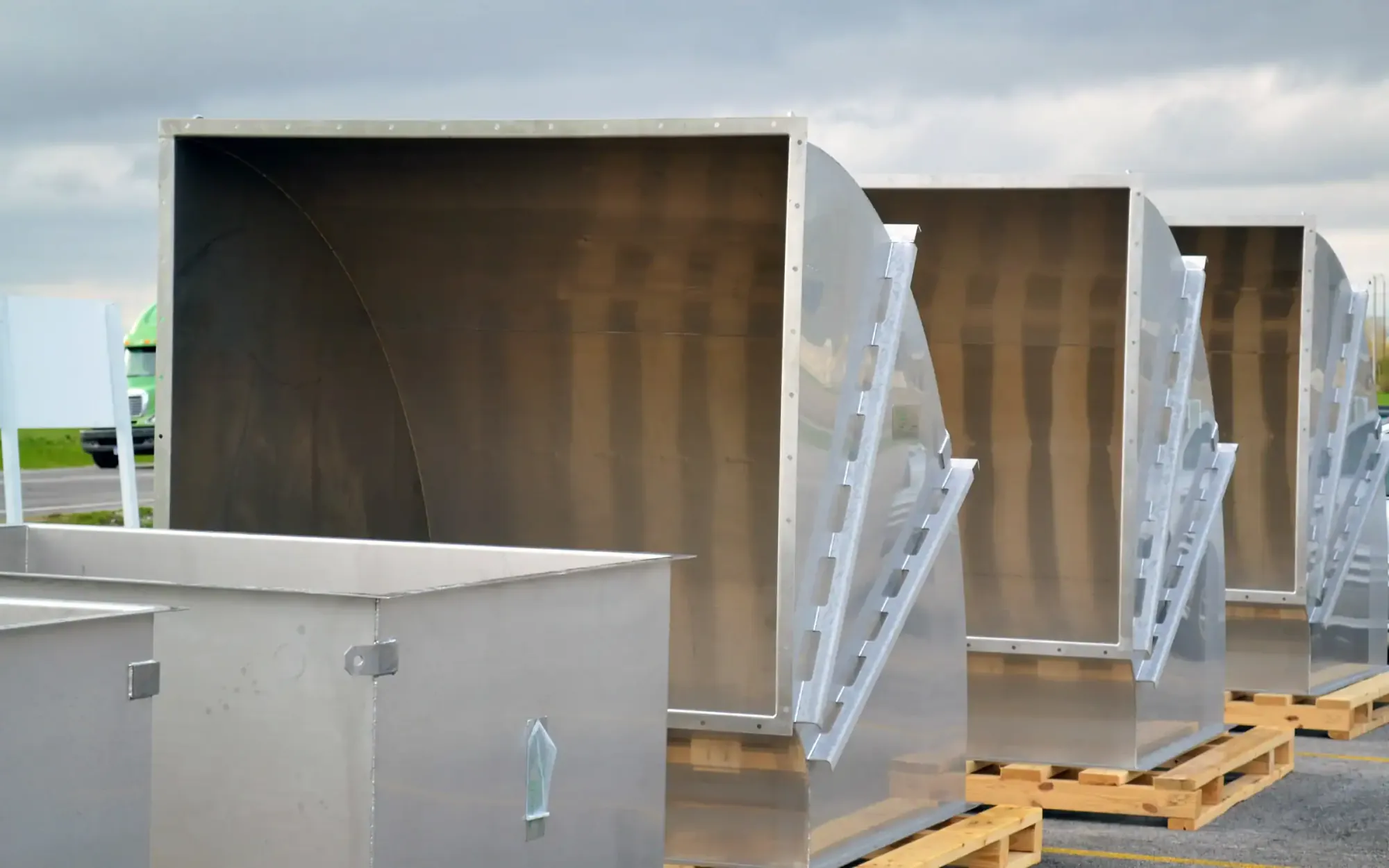
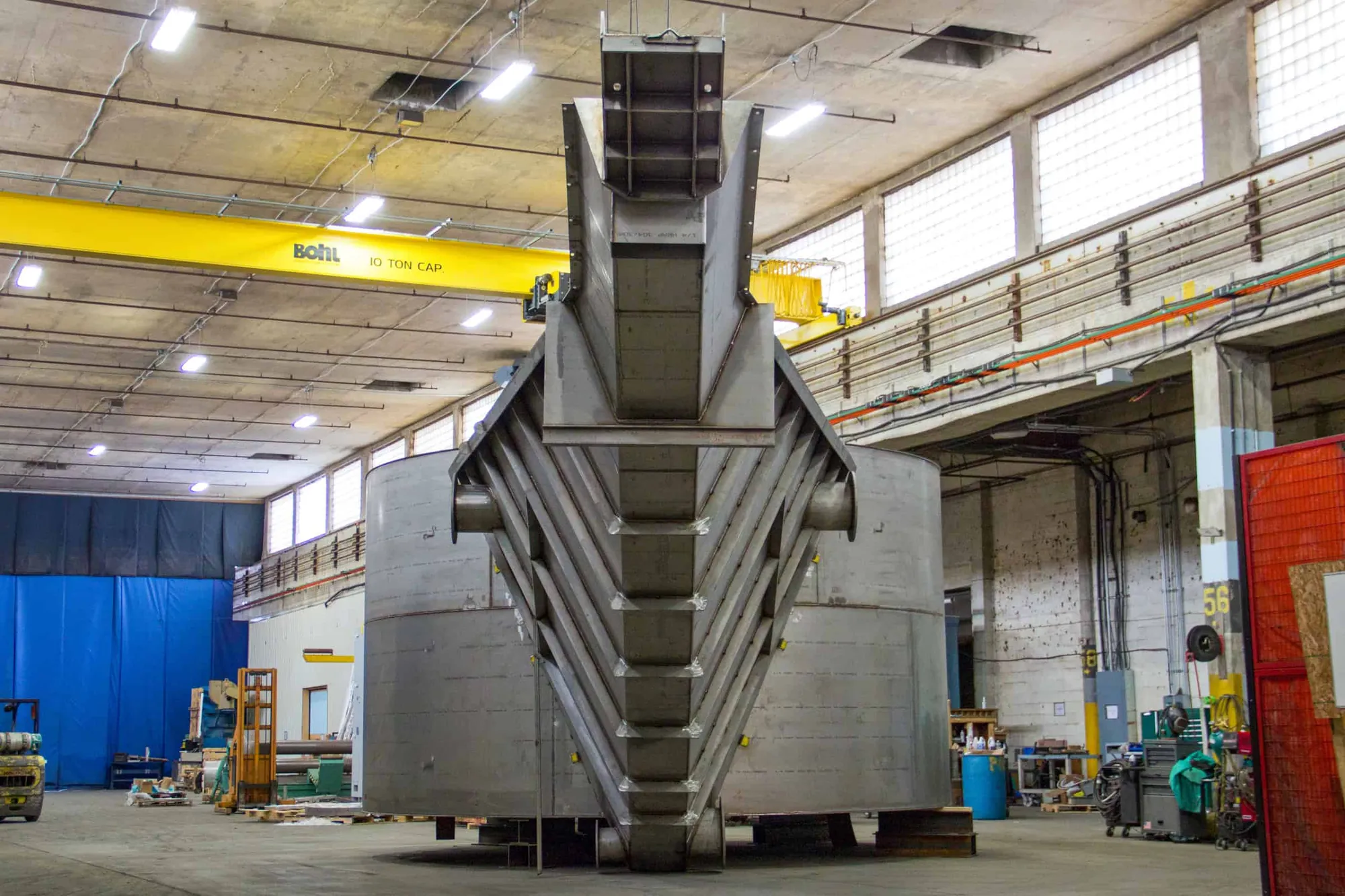
Large-Diameter Ductwork
High-volume duct runs, transitions, and elbows, with section breaks engineered around transport limits.
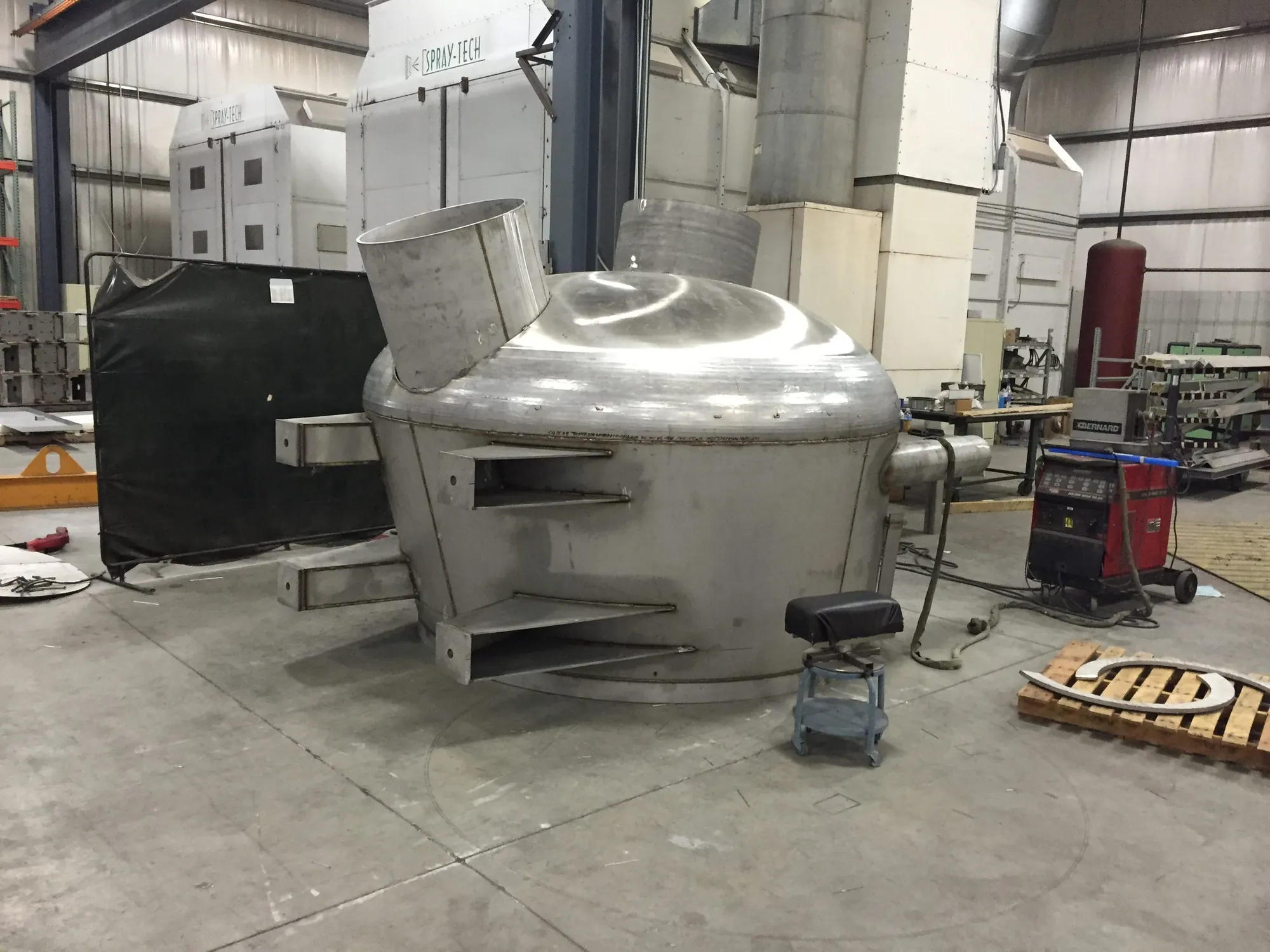
Cyclone Collectors and Baghouse Housings
Custom housings for dust capture and filtration systems.
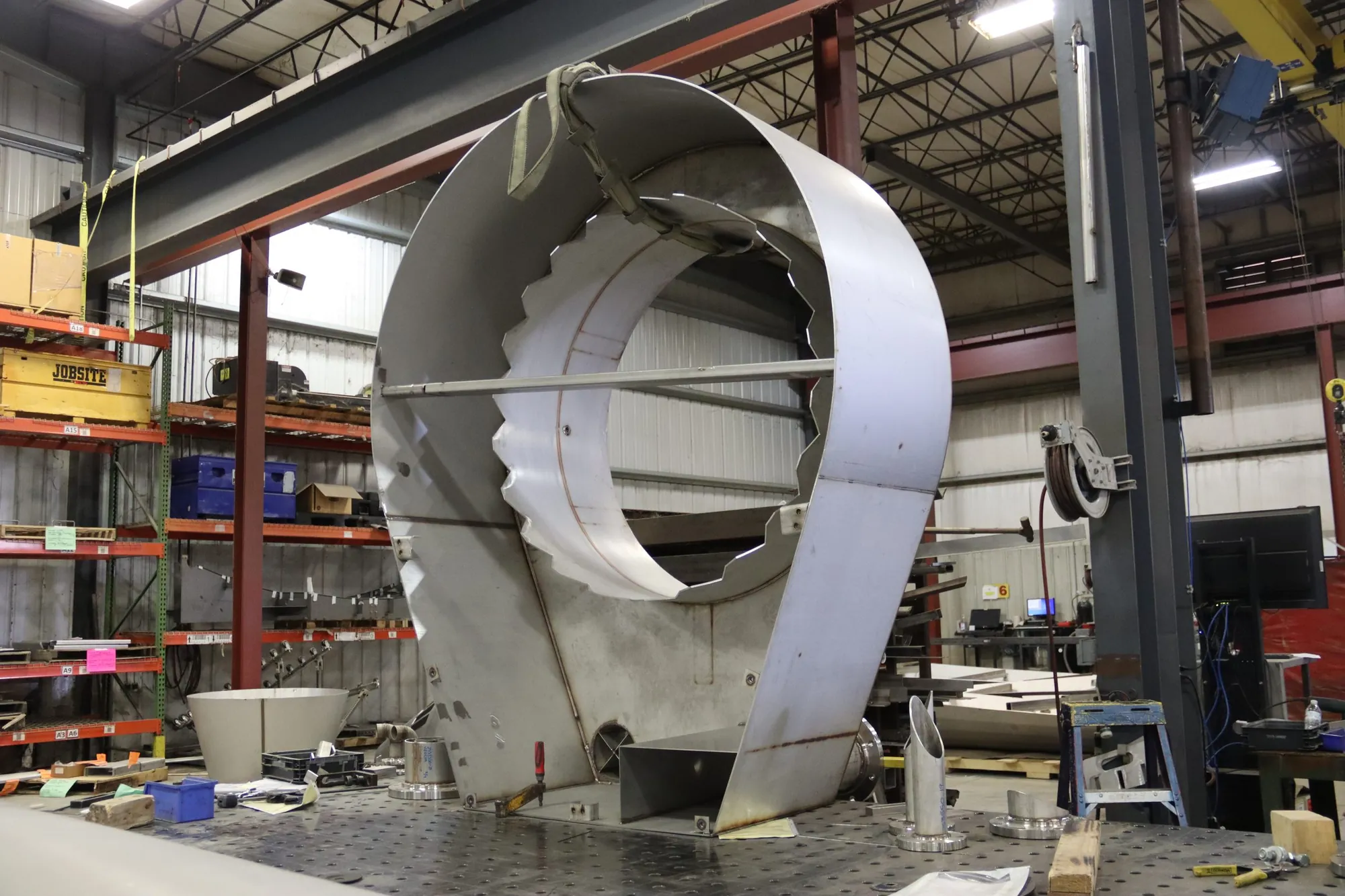
Fan Housings for Hot Service
Housings built to shield industrial fans from process heat and corrosive carryover.
Abrasion-Resistant Duct
Hardened carbon steel duct for particulate-heavy airstreams in mining and bulk material transport, fabricated separately from our stainless-only space.
Fabricating Duct for the Gas Stream
The cheapest duct is the one you only buy once. We fabricate to the grade your spec calls at each point in the system, welded and finished to survive the gas stream; and where the spec is still open, we will help your engineers match the grade to the conditions rather than default to one alloy everywhere.
| Service condition | Grade | Why |
|---|---|---|
| Dry particulate, ambient to warm air | 304L | The baseline workhorse where chemistry is mild |
| Condensing acids, washdown, moderate chlorides | 316L | Molybdenum addition resists pitting that takes out 304L |
| Chloride stress-corrosion-cracking risk | Duplex 2205 | SCC resistance plus roughly twice the yield strength of 316L |
| Warm, high-chloride scrubber zones | AL-6XN | Super-austenitic grade for chloride service where 316L pits |
| Aggressive mixed-acid or reducing-acid chemistry | Hastelloy C-276 / C-22 | Nickel alloys for the zones that consume everything else |
304L and 316L plate is stocked from 20 gauge through 1 inch in standard sizes; heavier plate, duplex, and the specialty grades are sourced through our distributor network, with the sourcing window confirmed during quoting.
Welding for Corrosive Service
A duct system is only as corrosion-resistant as its weld zones. Our procedures are qualified per ASME BPVC Section IX for austenitic stainless (P8), duplex 2205 (P10H), and nickel alloys including Hastelloy C-276 and C-22 (P43) and AL-6XN (P45), plus the dissimilar-metal combinations between them, so a 316L duct run can transition into an AL-6XN scrubber section under a qualified procedure instead of an improvised one.
Heat input is controlled to the WPS, filler is over-matched to the parent material (ER2209 on duplex 2205, for example), and ferrite measurement is available on duplex work. Weld integrity is verified per your drawing: visual, dye penetrant, and ultrasonic examination run in-house under a Certified Welding Inspector and ASNT SNT-TC-1A Level III oversight, with radiography (RT) coordinated through a qualified NDE partner. After welding, pickling per ASTM A380 strips heat tint and the chromium-depleted layer beneath it, and passivation per ASTM A967 restores the passive layer across the full assembly.
Built at Scale, Proven Before It Ships
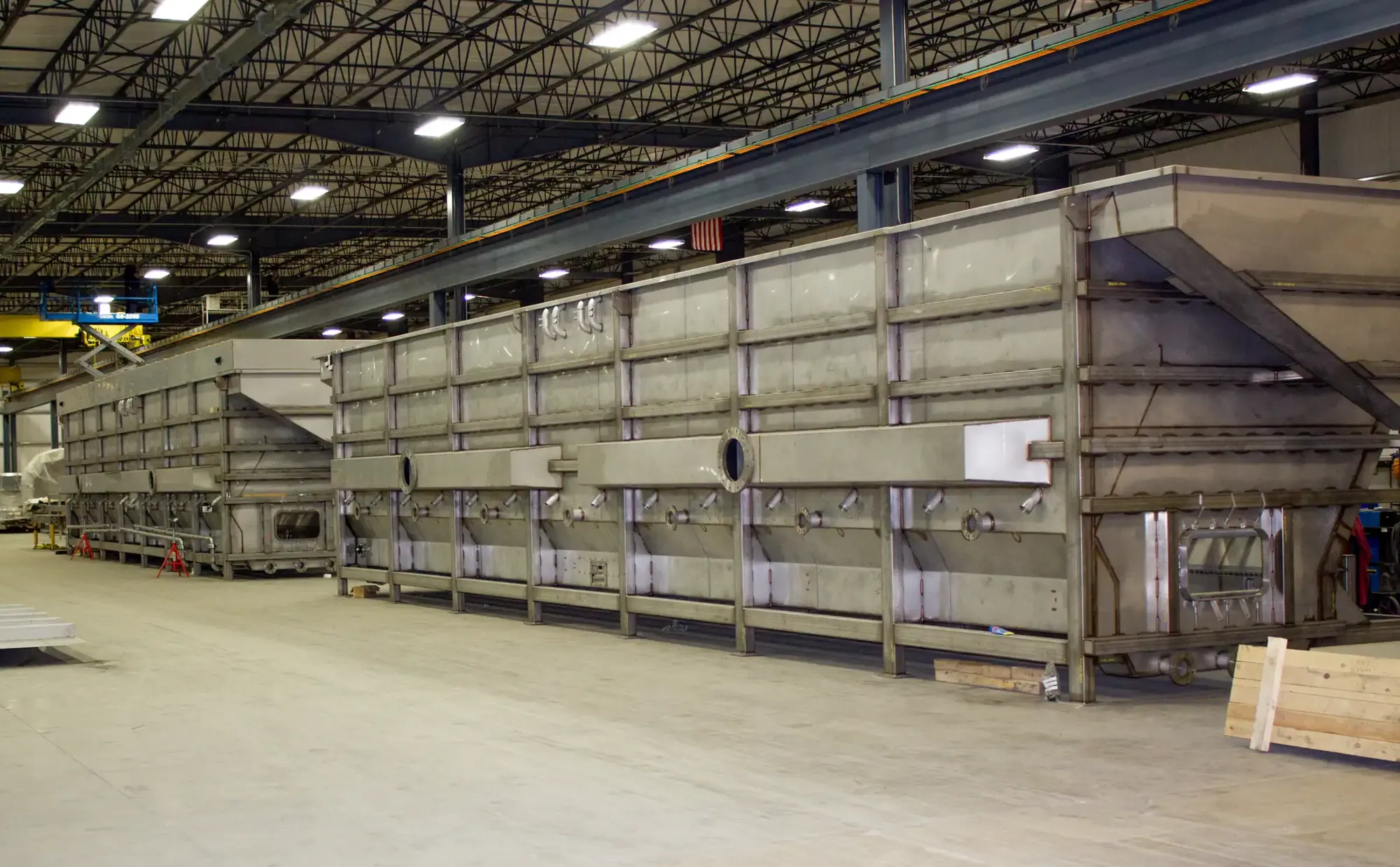
Duct packages are big, and the expensive failure mode is discovering misalignment at the site. Our 160,000 sq ft facility has the floor space to fit up complete duct runs, and where field fit-up risk matters we dry-fit mating sections against inspection drawings before release. Section breaks are planned around real transport constraints, so what leaves the dock is what bolts together at the plant.