Northern Manufacturing cuts stainless steel sheet and plate on two flat-bed laser cells in Oak Harbor, Ohio. The 12 kW Trumpf TruLaser 5040 Fiber cuts stainless from 20 gauge sheet through 1.25 inch plate. The 3,200 W Trumpf TruLaser 3060 runs production sheet work behind it. 304/304L and 316/316L are stocked from 20 gauge to 1 inch in sheets up to 60 x 144 inches, with heavy plate to 2 inches; duplex 2205 and AL-6XN come in sheet and plate per job. Every nest is programmed from your CAD by an 8-person engineering department working in SolidWorks and Inventor.
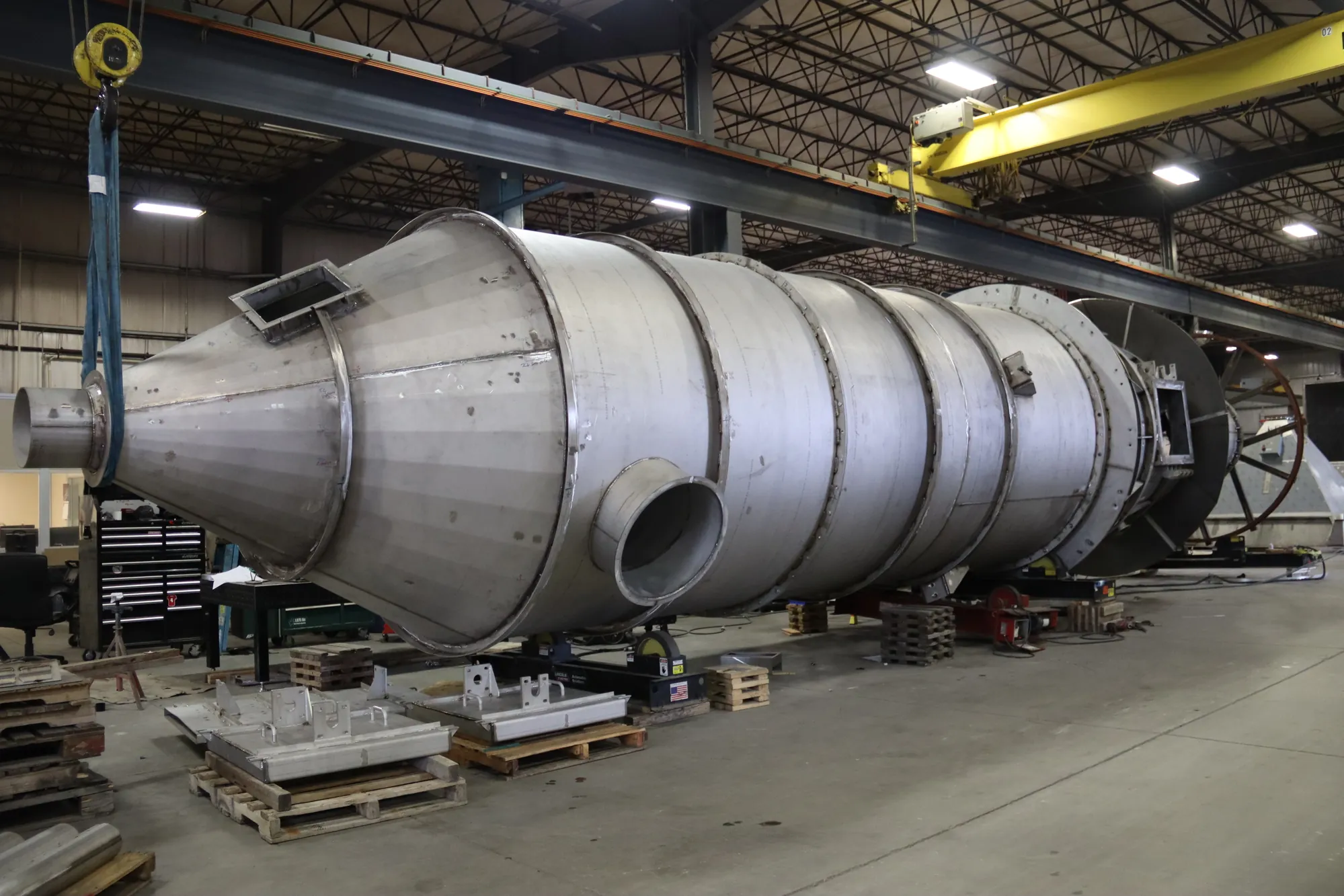
ISO 9001:2015 certified by AVU Registrations (IAS-accredited, certificate #00157-4). Laser cutting is the front end of a 160,000 sq ft fabrication facility: cut blanks move to press brakes, plate rolls, 78 welding bays, and a 55-foot pickling booth without leaving the building.
Built for Production Cutting Programs
This is contract cutting for manufacturers and OEMs. Send a package of parts with a BOM, and a stainless cutting estimator quotes the program against your finish, tolerance, and material specs. We are set up for recurring releases and blanket orders, with the heat-number traceability and material control a production supplier stands behind, rather than one-off prototype runs.
Two Flat-Bed Lasers, Built Around Stainless
The two flat-bed machines split the work by what the material wants. Fiber lasers emit at roughly 1 micron, a wavelength that reflective metals absorb instead of bouncing back, which is why heavy stainless, duplex, and high-nickel alloys run on the fiber cell. The CO2 machine carries production sheet work and keeps the schedule honest when the fiber cell is loaded with plate.
| Machine | Power | What it runs |
|---|---|---|
| Trumpf TruLaser 5040 Fiber | 12 kW fiber | Stainless 20 gauge through 1.25 in plate, duplex, nickel alloys, aluminum |
| Trumpf TruLaser 3060 | 3,200 W CO2 | Production stainless and carbon steel sheet |
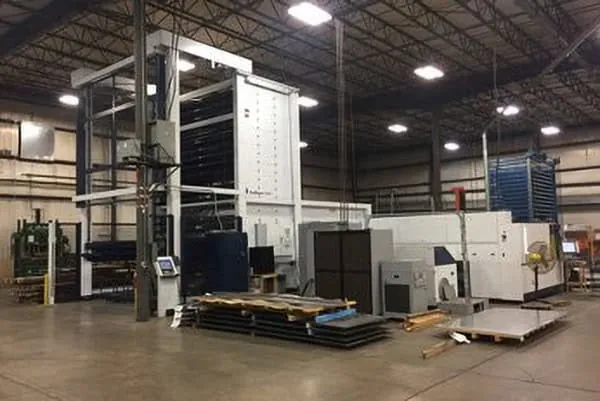
Flat-bed cutting is less than half the laser department. A Trumpf TruLaser Tube 7000 cuts tube, pipe, and structural sections, and two 5-axis cells, a Prima Optimo and a Trumpf TruLaser Cell 7040, handle 5-axis work on formed parts, five laser machines in total. The routing decision happens at quote review, against your geometry, not against whichever machine has open time.
The Edge Is Part of the Weld
On stainless, the cut edge is not a cosmetic detail. Oxide dragged into a weld pool becomes inclusions, and chromium consumed as surface oxide is chromium that no longer protects the joint. We cut stainless under high-pressure nitrogen, which displaces oxygen at the kerf and leaves a bright, oxide-free edge that goes to fit-up without grinding.
On heavy plate headed to welding, edge preparation comes off the cutting floor too. Bevel cuts put the weld prep into the blank before it reaches the weld department, feeding K-TIG and multi-pass joints without a separate machining stop. The weld starts on the right geometry because the blank arrived with it.
After welding, corrosion-critical assemblies finish with ASTM A380 pickling and ASTM A967 passivation in our 55-foot booth, restoring the passive layer along every weld and cut edge before the assembly ships.
Programmed From Your CAD
Eight engineers program nests directly from your native CAD in SolidWorks and Inventor, and they review the drawing before the job is priced. When a flat pattern can eliminate a weld, combine two parts, or shift a bend to save a setup, you hear about it at quote, not after the parts are cut.

Dimensions come off your print, not a house default. The tolerance block on the drawing governs cut parts, and downstream weldment tolerances run to ISO 13920 unless the drawing calls something tighter. Where a print is silent on a dimension that matters, we ask during quote review instead of guessing on the floor.
Typical cut tolerance is +/- 0.005 in. Tighter callouts are honored to the tolerance block on your print.
Material Stocked for Cutting
We buy stainless in volume for our own fabrication work, so your cut blanks come off plate we already stock, not a one-off mill order with a one-off markup. You get the stainless edge quality of a specialist and material pricing that reflects how much stainless moves through this building.
| Material | Forms | Range |
|---|---|---|
| 304/304L and 316/316L | Sheet and plate | 20 gauge to 1 in, sheets 48 x 96 to 60 x 144 in |
| 304/304L and 316/316L | Heavy plate | 1-1/4 to 2 in |
| 304/304L and 316/316L | Angle, tubing, pipe | Stocked for structural and frame work |
| Duplex 2205 and AL-6XN | Sheet, plate, tube | Ordered against the job |
Every sheet and plate is traced by heat number from its Material Test Report through the finished part, so the blank that comes off the table carries the same paper trail the finished weldment carries. Customer-supplied material runs the same way when it arrives with its mill certs.
Cut Blanks That Keep Moving
Most parts we cut never ship as blanks. They move to press brakes for forming, to rolls for cylinders and cones, through 78 welding bays, and into the pickling booth, all inside one building and one quality system. The cutting department programs each blank knowing where it goes next: bend allowances built into the flat pattern, weld prep on the edges that need it, part marking that survives forming.
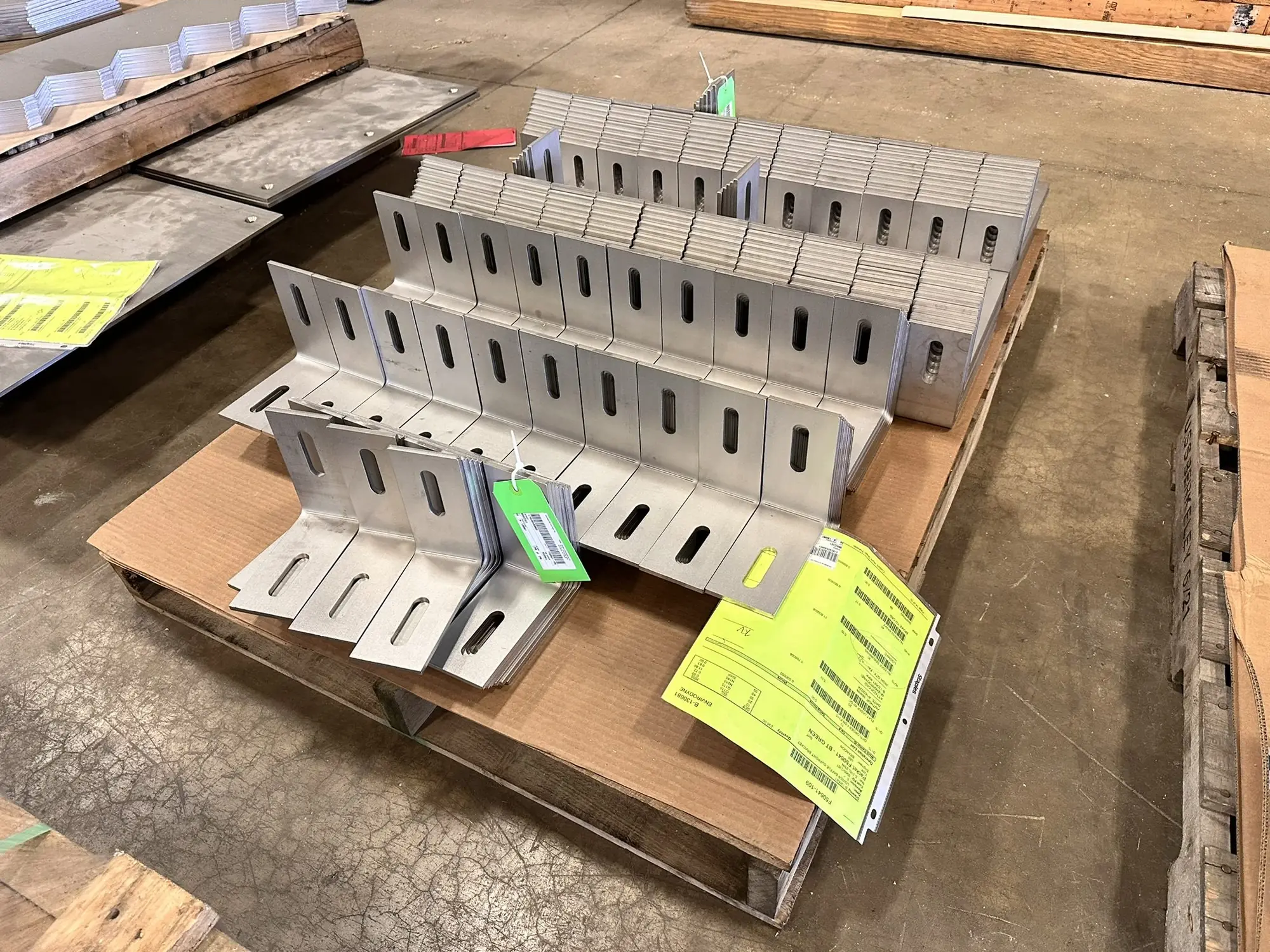
That continuity is the practical argument for cutting where you fabricate. A blank cut to the wrong bend allowance is scrap at the brake; a blank cut without weld prep is grinding time at the bay. When the same engineering group programs the laser, the brake, and the weld sequence, those handoffs are checked once, in CAD, before any material is committed.
Flat, Tube, or 5-Axis: Which Laser Fits
| Part geometry | Machine | The fit |
|---|---|---|
| Flat sheet and plate | TruLaser 5040 Fiber · TruLaser 3060 | Blanks, panels, gussets, flanges, base plates |
| Tube, pipe, structural | TruLaser Tube 7000 | Cut-to-length, copes, and penetrations |
| Formed parts, 3D contours | Prima Optimo 5-axis | Trimming and features after forming |
This page covers the flat work. Tube and structural sections run on the tube laser, and parts that have already been formed go to the 5-axis cell for compound-angle trimming that would otherwise mean manual grinding. One purchase order can carry all three: the quote review sorts your part list onto the right machines.
Send your parts package and BOM, and a stainless cutting estimator quotes it. Engineering reviews the package before pricing, so the quote reflects the smartest way to cut the job, not just the obvious way.