Northern Manufacturing
Quote
Menu
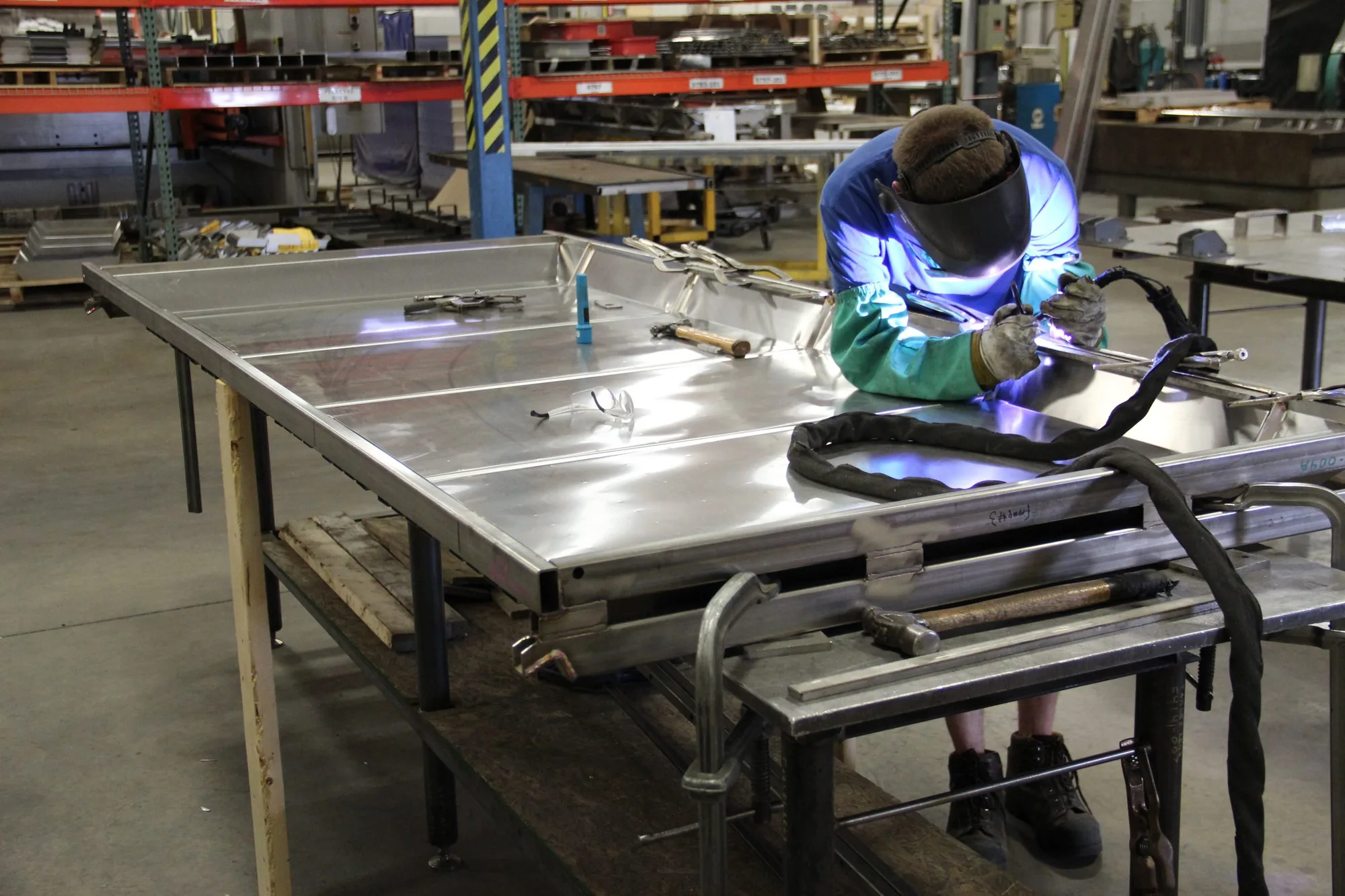
TIG welding a stainless steel panel assembly at Northern Manufacturing
Part of Stainless Fabrication

Stainless Steel Fabrication for Industrial Ovens, Furnaces and Thermal Processing Equipment

Oven panels, furnace internals, and thermal process tooling in 304L, 309S, and alloy 625, welded to hold flatness and keep their scaling resistance through the heat.

Qualified ISO 9001:2015 AWS D1.6 ASME BPVC Section IX
Docs available MTRs Weld maps WPS/PQR NDE PMI CoC
60 +

AWS-Certified Welders

78

Welding Stations

40,000 sq ft

Stainless-Only Space

1951

Fabricating Since

The Challenge

Keep the Metal Flat, and Keep It From Scaling

Thermal equipment fails two ways in fabrication: the panels come out of the shop out of plane, and the welds give back the scaling resistance the grade was chosen to provide. Both are fabrication problems, not materials-catalog problems.

Large stainless steel radiant-heat furnace panel with rib stiffeners staged on cribbing in the Northern Manufacturing shop

Sensitization and lost scaling resistance

A furnace runs its welds through the exact temperature range where chromium carbides precipitate at the grain boundaries, stealing the chromium that resists oxidation. We run ASME BPVC Section IX qualified procedures and control heat input to keep the heat-affected zone out of that range, and specify 309S or the stabilized grades where the service demands it.

Distortion and flatness across large panels

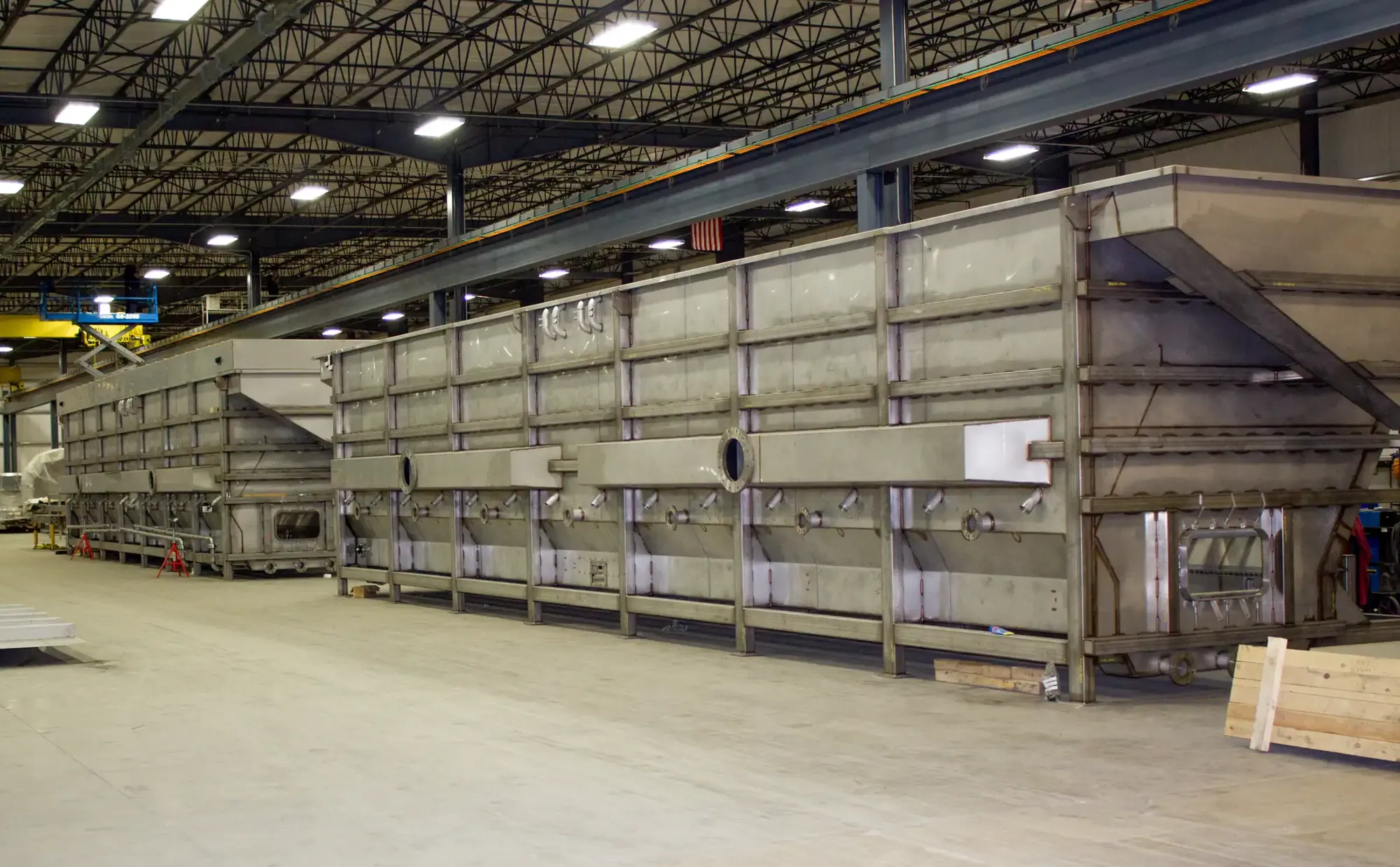
Oven wall, roof, and ceiling panels are thin sheet over long spans, and weld heat pulls them into oil-canning and bow. We hold flatness with controlled weld sequencing, back-stepping, and fixturing built for the panel, so the sections seal square at the frame instead of being fought into place in the field.

Iron contamination on high-alloy material

Carbon-steel grinding dust embedded in 309S or alloy 625 becomes a rust and pitting site the first time the part heats and cools. Fabrication runs in a 40,000 sq ft stainless-only space with dedicated tooling and abrasives, verified by PMI where the spec calls for it.

Stainless equipment for oven, dryer, heat-treat furnace, and glass-processing equipment builders: wall and roof panels, furnace nozzles and plenums, radiation shields, and precision thermal tooling in 304L, 309S, and alloy 625, welded with controlled heat input so the material keeps the scaling and oxidation resistance you specified it for. Built in a dedicated stainless-only production space in Oak Harbor, Ohio.

Northern Manufacturing fabricates custom stainless equipment for the companies that build industrial ovens, dryers, heat-treat furnaces, and glass-processing lines. Common work: oven wall, roof, and ceiling panels; furnace nozzles, plenums, and inner skins; radiation shields, shrouds, and recuperators; furnace trays and baskets; and the forming molds, rings, and fixtures for hot-process lines. Common grades: 304L for oven structure and trays, 309S for the radiant-heat sections that have to resist scaling, and alloy 625 where heat meets acid. All work runs through our 40,000 sq ft dedicated stainless-only production space in Oak Harbor, Ohio, where dedicated tooling keeps carbon contamination off high-alloy material.

60+ AWS-certified welders across 78 welding stations. ISO 9001:2015 certified (AVU Registrations). ASME BPVC Section IX qualified welding procedures for austenitic (P8) stainless, with heat input controlled to avoid sensitization in high-heat service. In-house pickling and passivation per ASTM A380/A967 in a 55-foot spray booth. CWI on staff.

Equipment We Build for Thermal Processing

Most of this work is for the OEMs that build the ovens, furnaces, and glass lines. What Northern regularly fabricates:
Stack of fabricated stainless steel oven wall panels with formed edges staged for shipment

Oven Wall, Roof & Ceiling Panels

Sheet-and-frame stainless panel assemblies for continuous ovens and dryers, held flat across long spans so the sections seal at assembly.
Row of 309S stainless steel furnace nozzle assemblies on a fixture table in the fabrication bay

Furnace Nozzles, Plenums & Inner Skins

Nozzles, plenums, inner skins, and hot-zone covers for high-temperature furnaces, built in 309S, the high-chromium grade that resists scaling under direct radiant heat.

Radiation Shields, Shrouds & Recuperators

Heat-treat furnace internals: radiation shields, shrouds, and recuperator sections built in grades matched to the furnace atmosphere and temperature.
Stainless steel furnace load trays and baskets stacked on a pallet in the Northern Manufacturing shop

Furnace Trays, Baskets & Fixtures

Load-bearing furnace trays, baskets, and handling fixtures that cycle hot and cold repeatedly, in 304 through the high-nickel grades for lines where heat meets corrosive chemistry.

Hot-Side Ductwork & Transitions

Duct, transitions, and exhaust sections for dryers and thermal systems, rolled and welded as full sections. See our stainless steel ductwork fabrication.
Curved stainless steel forming tooling and ring fixture on a work table

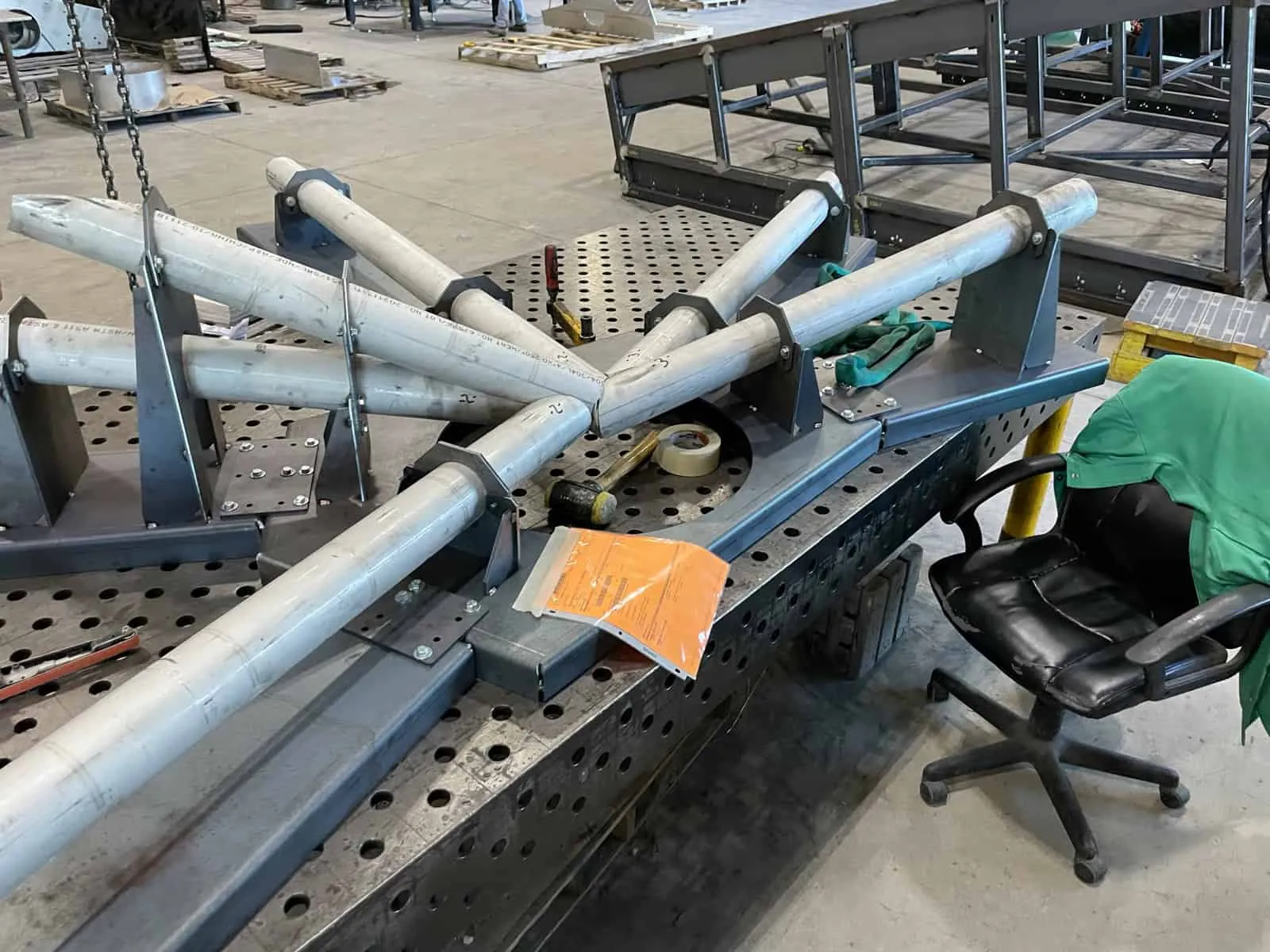
Thermal Process Tooling, Molds & Fixtures

Forming molds, rings, racks, and handling fixtures for glass-processing and other hot-process lines, built to the repeatable dimensional tolerance the tooling holds through thousands of heat cycles.

Stainless Grades for the Heat

Your spec calls the grade for the furnace atmosphere and the operating temperature, and we build to it; when the spec is open we will point you to a starting grade for the service, but the value we add is in the welding. Plain 304/304L covers oven structure and trays at moderate temperature. 309S carries the higher chromium and nickel that resists scaling and oxidation on the nozzles, plenums, and skins that see direct radiant heat. Alloy 625 goes where heat combines with acid attack, like handling hardware that rides hot acid lines. For the stabilized grades that resist sensitization in cyclic high-heat service (321 and 347) and the nickel-alloy metallurgy behind them, see our high-temperature alloy fabrication page.
Stacked 309S stainless steel plate blanks with heat-number material test tags at Northern Manufacturing
Grade Why it is specified Typical thermal application
304 / 304L Baseline austenitic for moderate-temperature oven structure Oven wall, roof, and ceiling panels; furnace trays and baskets
309S High chromium and nickel for scaling and oxidation resistance under radiant heat Furnace nozzles, plenums, inner skins, and hot-zone covers
Alloy 625 Nickel alloy holding strength where heat meets acid attack Handling hardware for hot acid lines and acid-condensate components
321 / 347 Titanium- and columbium-stabilized against sensitization after welding Cyclic high-heat furnace components (see high-temperature alloy)

Welding That Keeps the Grade Working

A thermal component lives or dies at the weld, because the furnace puts every joint through the temperatures that undo careless welding. Northern controls weld quality through ASME BPVC Section IX qualified procedures for austenitic (P8) stainless, with heat input controlled downward to keep the heat-affected zone out of the sensitization range.

On thin oven panels, distortion is managed before the first arc: controlled weld sequencing, back-stepping, and fixturing engineered for the part hold the panel flat so the sections seal square at assembly. On 309S and the nickel alloys, GTAW with stringer bead technique and interpass temperature limits protects the microstructure the grade depends on. For alloy 625 and the stabilized high-heat grades, the P43 nickel-alloy procedures and dissimilar-metal joints are detailed on our high-temperature alloy fabrication page.
Welder running a controlled GTAW pass on a 309S stainless furnace panel clamped to a fixture table

Heat-Tint Removal and Passivation

Finishing is matched to where the part runs. Corrosion-critical and acid-service components get the full restoration; furnace internals that live in dry oxidizing service and form their own protective scale are finished to the level your spec calls out, not over-processed.

01

Post-Weld Pickling & Passivation

Post-weld pickling strips heat tint and embedded iron that would otherwise seed corrosion, then passivation restores the passive layer per ASTM A380 and A967. Our 55-foot spray booth treats entire assemblies in one pass, with no sectioning and no re-welding after treatment.

02

Free-Iron Verification

Where the spec requires it, free-iron verification per ASTM A380 confirms clean high-alloy surfaces before the part ships, so contamination is prevented by the stainless-only space first and then verified by test.

03

As-Welded or Mill Finish

For furnace internals running in dry, high-temperature oxidizing service, an as-welded or mill finish is often the right call. We finish to the drawing rather than adding cost the service does not need.
Contamination Control on Expensive Material

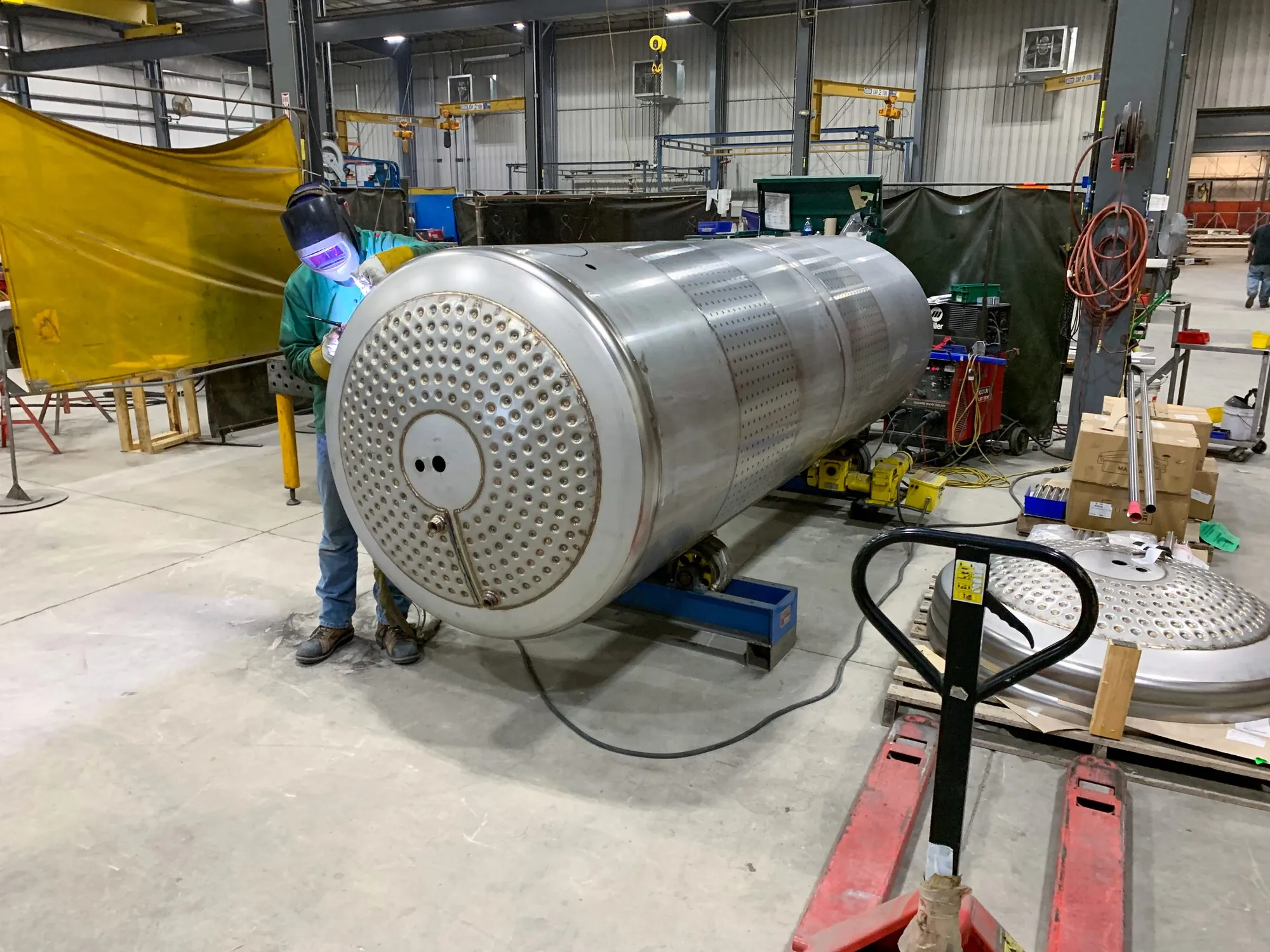
A 309S or alloy 625 fabrication contaminated by carbon-steel grinding dust is scrap you pay specialty-alloy prices for, and on thermal parts the damage shows up the first time the piece heats and cools. Thermal-processing work at Northern runs in our 40,000 sq ft dedicated stainless-only production space with dedicated tooling, abrasives, clamps, and work surfaces.

40,000 sq ft of dedicated stainless-only space.

PMI (positive material identification) verification by handheld XRF is available to confirm alloy composition from receiving through final assembly, so the material in the weld is provably the material on the MTR.

Quality Documentation

Documentation we can provide as your specification and purchase order require:

Material Test Reports (MTRs) traced by heat number from mill cert to final assembly
PMI records confirming alloy composition where specified
Pickling and passivation certification per ASTM A380/A967
Weld maps with WPS references for every joint, plus welder qualification records (WPS/PQR)
Dimensional inspection reports to your drawing tolerances
NDE reports (VT, PT, RT, UT as specified on your drawing)

Thermal Processing project

Proof on a real assembly for this industry.

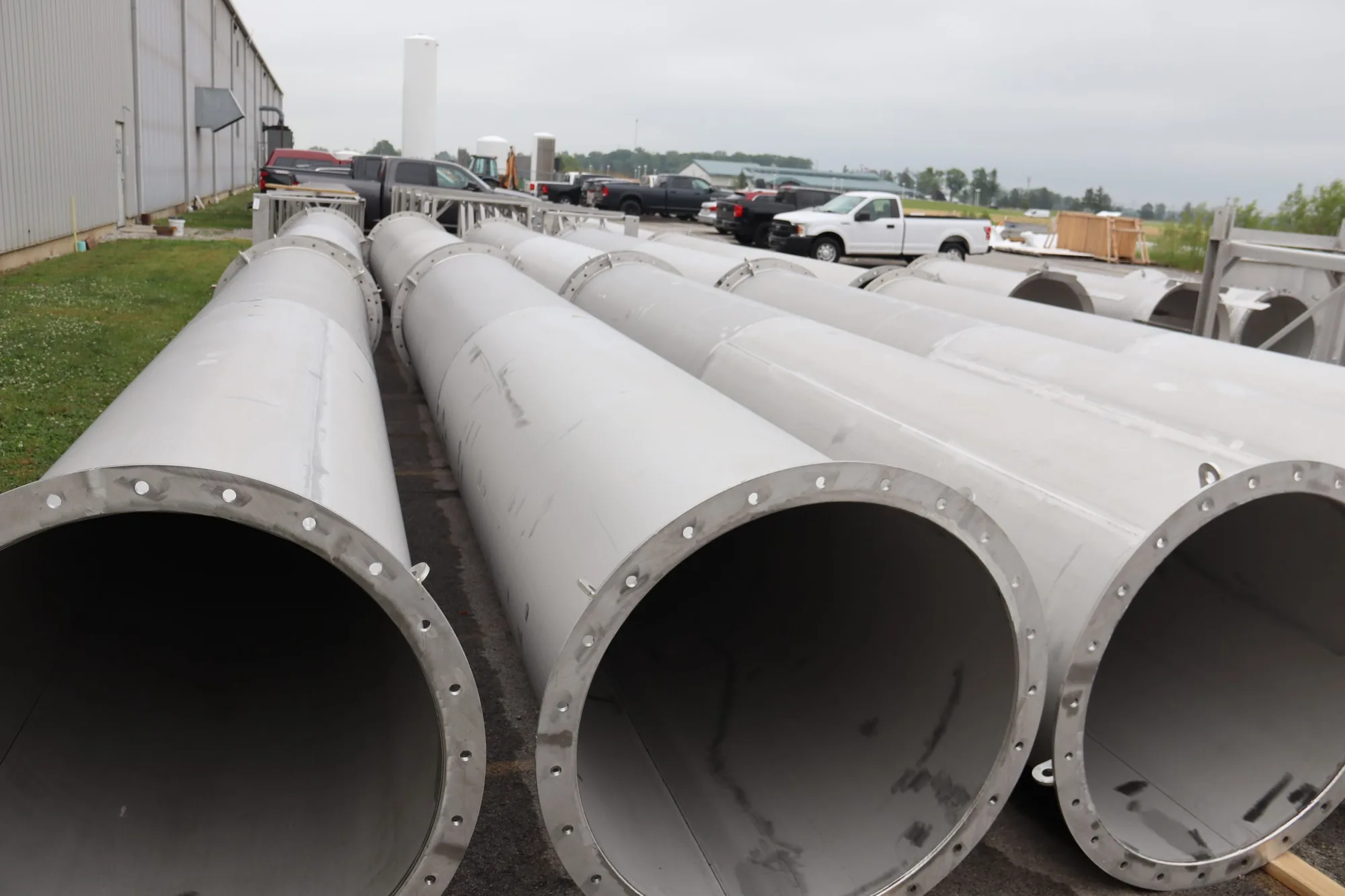
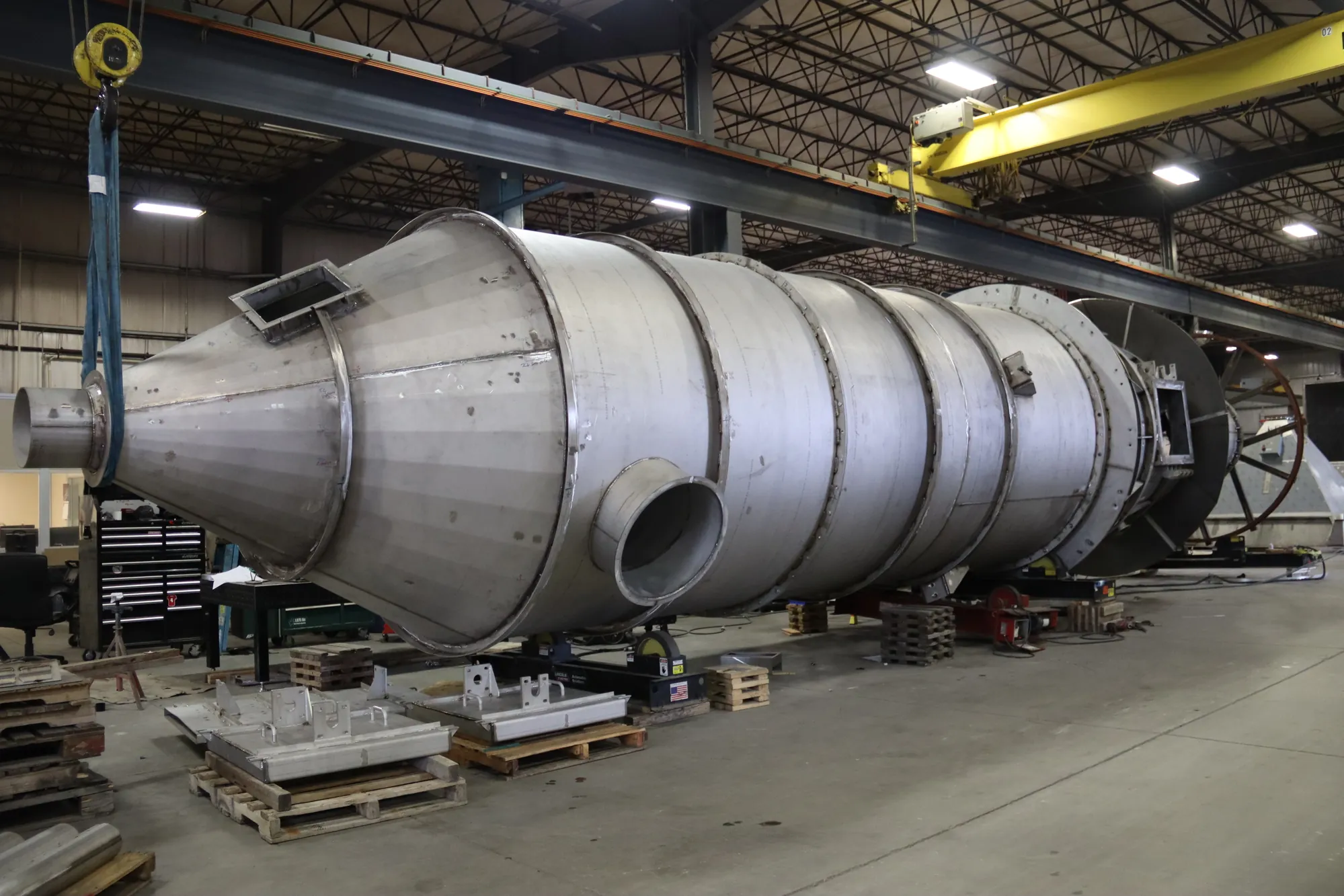
Massive lobed stainless steel power generation ductwork vessel with a conical end suspended in the Northern Manufacturing fabrication bay

Every section was dry-fit against its mating part in the shop and dropped onto the in-plant flanges on the first attempt, with no forced alignment and no field rework.

Thermal Processing

Large-diameter exhaust duct sections that mated on the first attempt

Power generation facility needed large-diameter stainless exhaust ductwork to mate to existing in-plant flanges during a scheduled outage, with zero tolerance for forced alignment on site.

304 Stainless Steel

Specifying stainless for an oven or furnace build?

Or call (419) 898-2821

Request a Quote

Capabilities behind this work

Every thermal processing project draws on specific fabrication processes. These are the ones we use most for this industry.

Frequently asked questions

What engineers and procurement managers ask us about thermal processing fabrication.

What grades do you run for oven and furnace equipment?

304 and 304L for oven structure, panels, and furnace trays at moderate temperature; 309S for the nozzles, plenums, and skins that see direct radiant heat and have to resist scaling; and alloy 625 where heat combines with acid attack, such as handling hardware on hot acid lines. For cyclic high-heat service we run the titanium- and columbium-stabilized grades (321, 347), and the nickel-alloy metallurgy is covered on our high-temperature alloy fabrication page. Your spec calls the grade; when the spec is open we advise a starting point for the service.

How do you keep large oven panels flat through fabrication?

Distortion on thin panels is controlled before the first arc strikes. We use controlled weld sequencing, back-stepping to spread heat, and fixturing engineered for the specific panel, so weld shrinkage does not pull the sheet into oil-canning or bow. Dimensional inspection against your drawing confirms the panels are flat and square before they ship, so the sections seal at assembly instead of being forced into place.

Why 309S for furnace hot-zone components?

309S carries roughly 23% chromium and 13% nickel, well above the levels in 304, which is what lets it resist scaling and oxidation under the sustained radiant heat inside a high-temperature furnace. The nozzles, plenums, and covers that face the heat are the parts where that scaling resistance matters, so the grade earns its cost there. We weld it with controlled heat input and stringer beads to keep the heat-affected zone from losing the chromium that does the work.

Can you build thermal process tooling to a repeatable tolerance?

Yes. Forming molds, rings, racks, and handling fixtures are built to the dimensional tolerance the tooling has to hold through thousands of heat cycles. We fixture and inspect against your drawing, and where the profile matters we cut and form to it rather than approximating. Send the tooling drawing and we will tell you how we would hold the geometry and what it takes to keep it stable in service.

How is this page different from your high-temperature alloy page?

This page is the equipment and industry view: the ovens, furnaces, dryers, and glass lines Northern builds parts for, and the parts themselves. The high-temperature alloy fabrication page is the material and metallurgy view: the stabilized grades (321, 347) and nickel alloys (Inconel 625, Hastelloy C-22, C-276), the P43 welding procedures, and the failure mechanisms like creep and creep-fatigue. Build-to-print thermal work usually touches both, so the two pages cross-link.

What documentation can you provide for a thermal-processing project?

As your specification and purchase order require, we provide material traceability with MTRs by heat number, weld maps with WPS references, welding procedure and welder qualification records (WPS/PQR), PMI verification of alloy composition, dimensional inspection reports, pickling and passivation certification per ASTM A380/A967, and NDE reports (VT, PT, RT, UT) as your drawing specifies, all under our ISO 9001:2015 quality system.

Send us a drawing. We'll tell you what it takes.

No commitment. Send the drawing and we will tell you the grade, the weld process, and what it takes to hold flatness through the heat.