When 316L pits in your service environment, the next question is not “which nickel alloy is best.” It is “which alloy matches my media, temperature, and chloride load, and what does that choice cost me in metal and in fabrication.” Hastelloy C-276 (UNS N10276), Hastelloy C-22 (UNS N06022), and AL-6XN (UNS N08367) each win a different corner of the corrosion map. Specify the wrong one and you either overpay for nickel you did not need or under-spec and seed a failure that shows up months into service.
This guide is a decision layer for the engineer writing the spec. It does not restate the metallurgy of each grade. For the grade-by-grade fabrication detail, certifications, and our qualified procedures, see the Hastelloy, AL-6XN & specialty alloy fabrication page. Here we answer the harder question: given your environment, how do you choose, and how does a fabricator prove the alloy survived the shop floor.
ISO 9001:2015 certified (cert #00157-4) | ASME BPVC Section IX qualified welding (P43 nickel alloys, P45 super-austenitic) | AWS D1.6 | CWI on staff | 60+ AWS-certified welders
Start With the Environment, Not the Datasheet
A corrosion alloy is selected against three variables: the media chemistry (reducing vs oxidizing), the temperature, and the chloride or halide concentration. The grade that wins depends on where your service sits across those axes. Cost tracks nickel and molybdenum content, so the discipline is choosing the lowest-alloy grade that still clears your environment with margin.
| Decision driver | Hastelloy C-276 (N10276) | Hastelloy C-22 (N06022) | AL-6XN (N08367) |
|---|---|---|---|
| Wins when | Strong reducing acids: HCl, sulfuric, wet chlorine, phosphoric | Mixed and shifting oxidizing-reducing service, hot oxidizing acids | High-chloride and seawater service where pitting and crevice attack drive the choice |
| Family | Nickel-molybdenum-chromium | Nickel-chromium-molybdenum | Super-austenitic stainless (6% moly class) |
| Relative alloy cost | Highest (high Ni + Mo) | Highest (high Ni + Mo) | Lower than the nickel alloys, above 316L |
| ASME IX P-number | P43 | P43 | P45 |
The pattern: if your media is dominated by reducing acids (hydrochloric, sulfuric, phosphoric, wet chlorine), C-276 is the workhorse. If your process swings between oxidizing and reducing conditions, or sees hot oxidizing acids and mixed-acid transitions, C-22 holds resistance across the swing where C-276 can lose ground in strongly oxidizing media. If your problem is chloride pitting and crevice corrosion (seawater, brine, high-chloride process water) rather than concentrated acid, AL-6XN gives you super-austenitic chloride resistance at a meaningfully lower alloy cost than a full nickel alloy.
When C-276 Wins
C-276 is the most versatile nickel-molybdenum-chromium alloy for severe chemical service. It resists a wide range of both oxidizing and reducing media, and it is the default for strong reducing acids and wet chlorine where stainless and super-austenitics fail. If your spec lives in concentrated HCl, sulfuric, or mixed reducing acids, C-276 is usually the safe call. The trade is cost: you pay for high nickel and molybdenum, so do not reach for it when a super-austenitic clears the environment.
When C-22 Wins
C-22 improves on C-276 in localized corrosion resistance and in oxidizing media. The higher chromium broadens its window across oxidizing-reducing transitions, which is exactly the condition that defeats a single-purpose alloy: a process that cycles between acid cleaning and oxidizing operation, or a flue-gas desulfurization scrubber that sees mixed acids and chlorides. When the environment will not sit still, C-22 buys you margin across the swing.
When AL-6XN Wins
AL-6XN is a super-austenitic stainless that bridges standard stainless and the nickel alloys. Its strength is chloride pitting and crevice-corrosion resistance, which makes it the value choice for seawater, brine, and high-chloride process water where the failure mode is pitting, not acid attack. You get a large fraction of nickel-alloy chloride performance at a lower alloy cost. The limit is concentrated reducing acids: that is C-276 territory, not AL-6XN’s. Read AL-6XN as “316L is pitting, but I do not have a strong-acid problem.”
The Alloy Only Performs If the Fabrication Holds
Choosing the grade is half the job. A corrosion alloy delivers its rated resistance only if the welds, the heat history, and the surface survive fabrication. This is where a spec gets won or lost, and where a fabricator earns the alloy cost. Four controls matter on every job.
Heat Input Control
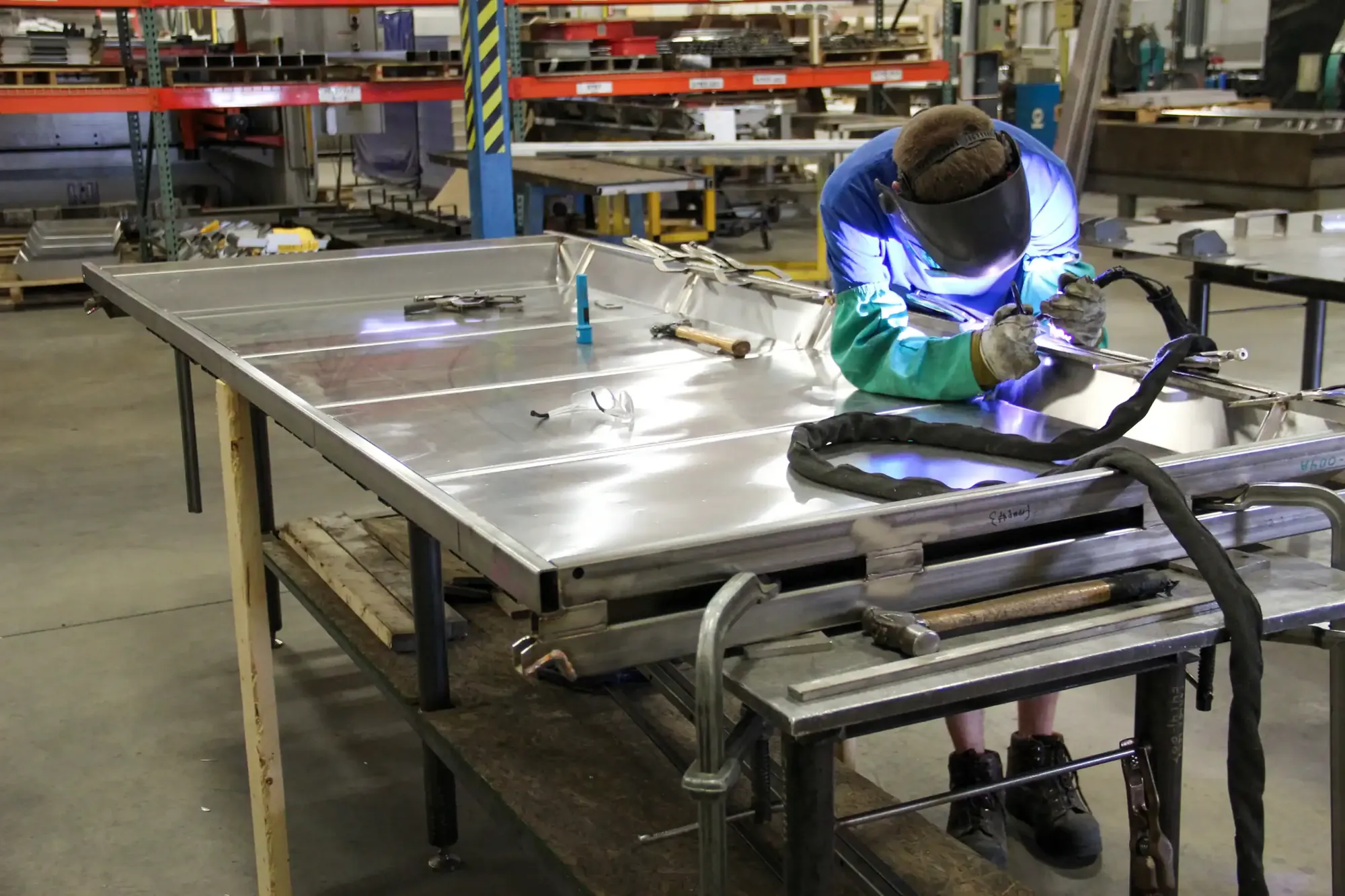
Nickel alloys are sluggish and prone to hot cracking and the precipitation of deleterious intermetallic phases when run hot. Excess heat in C-276 or C-22 forms second phases in the weld and heat-affected zone that strip corrosion resistance from exactly the alloy you paid a premium to get. AL-6XN carries strict interpass limits, typically lower than standard austenitic stainless, because super-austenitics sensitize if the thermal window is exceeded. Procedures qualified to ASME BPVC Section IX specify narrow heat-input and interpass ranges, and the discipline is holding them pass by pass, not just qualifying once.
Filler Matching
Each alloy needs a matched or over-alloyed filler to hold corrosion resistance across the joint. Welding C-276 base metal with the wrong consumable produces a weld that is the corrosion weak link of the assembly. The filler chemistry is part of the qualified procedure, and lot traceability on the filler is part of the record.
PMI Verification
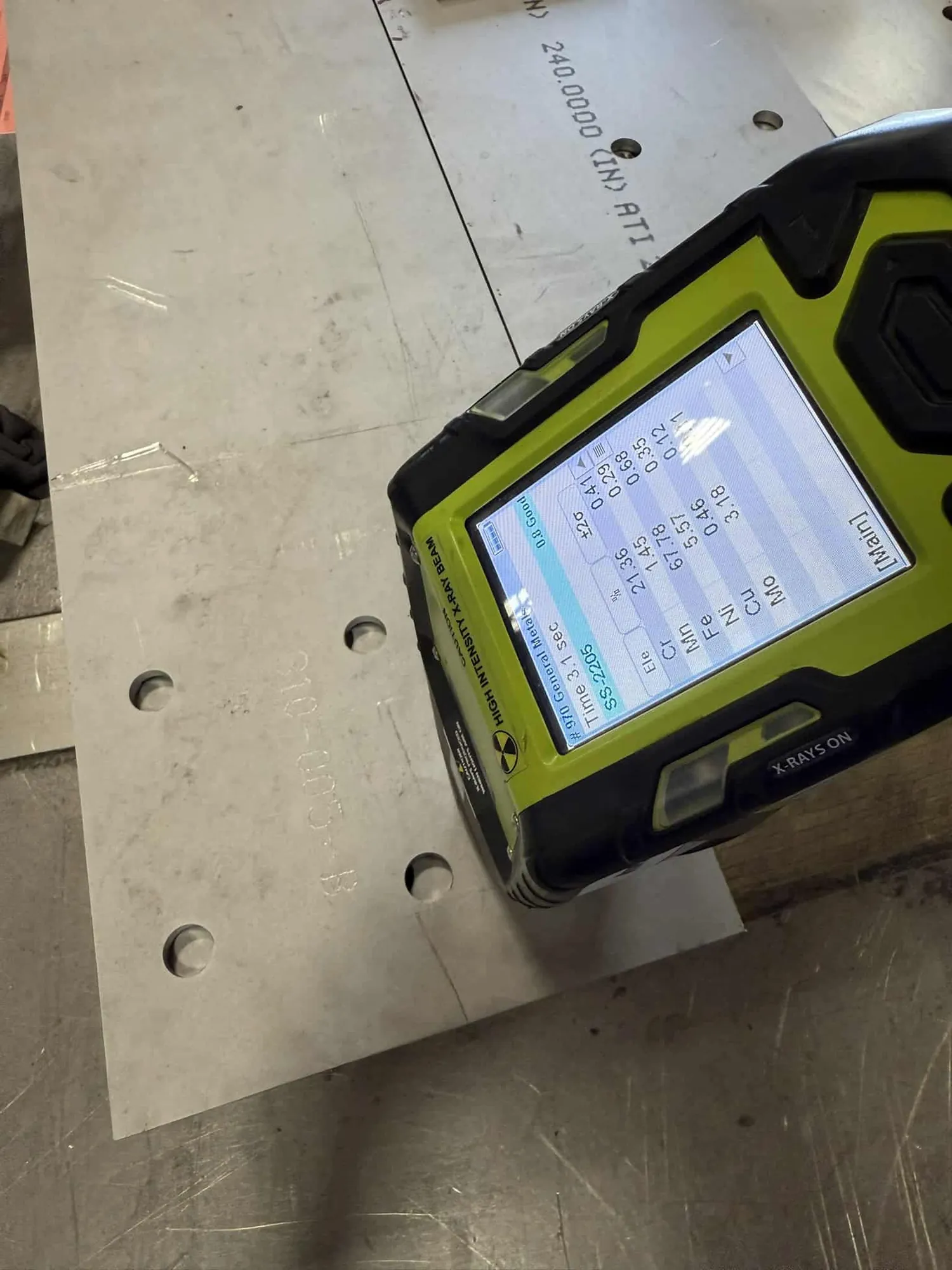
AL-6XN, C-276, and C-22 are mill-run grades that look identical to 304 and 316 on the rack, and misidentification is a real supply-chain risk. We run 100% Positive Material Identification by XRF on incoming material and on completed weldments, with filler chemistry confirmed before it reaches a weld. A handheld analyzer catches a mixed bundle before the metal ever reaches a fixture.
Free-Iron Control
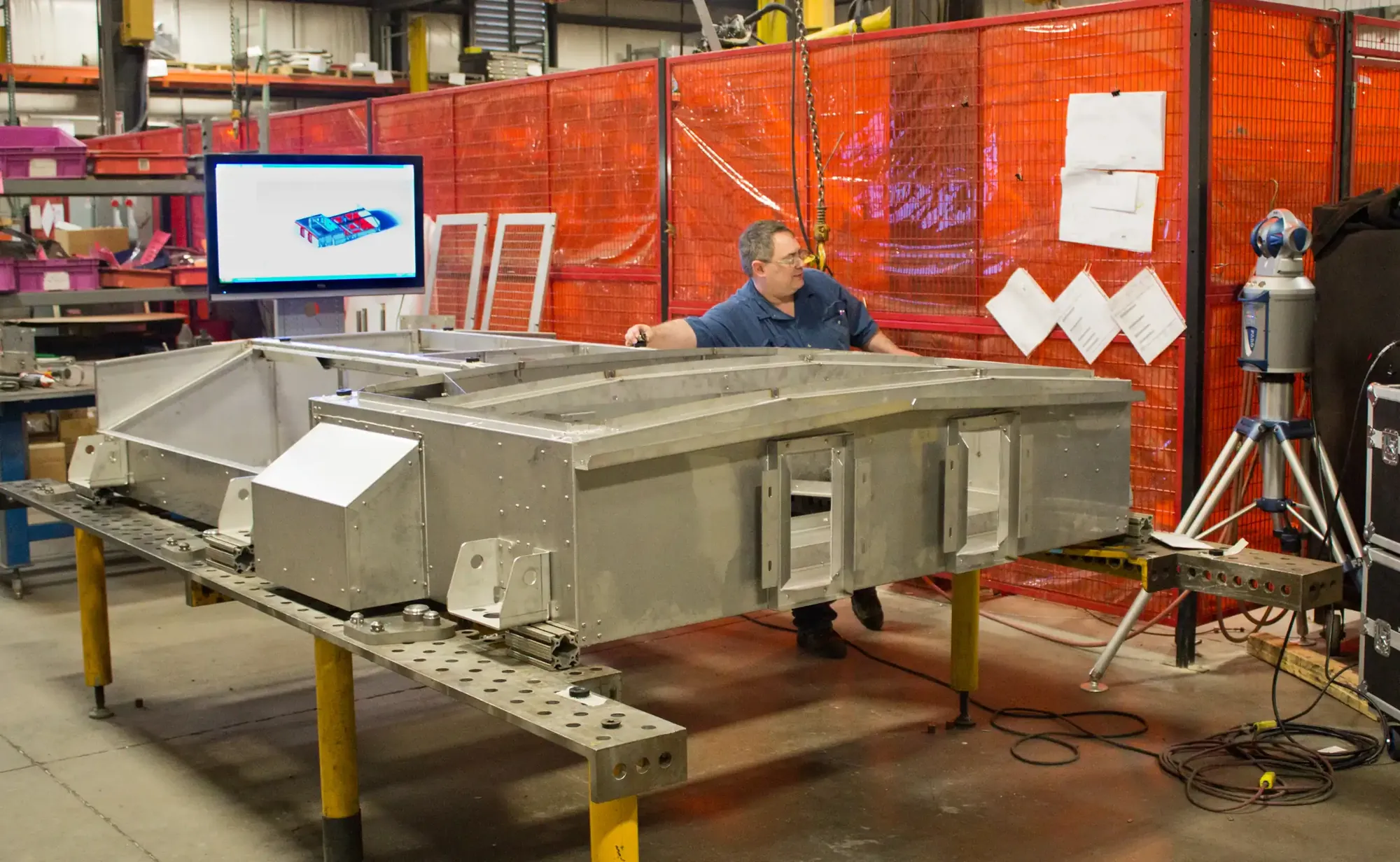
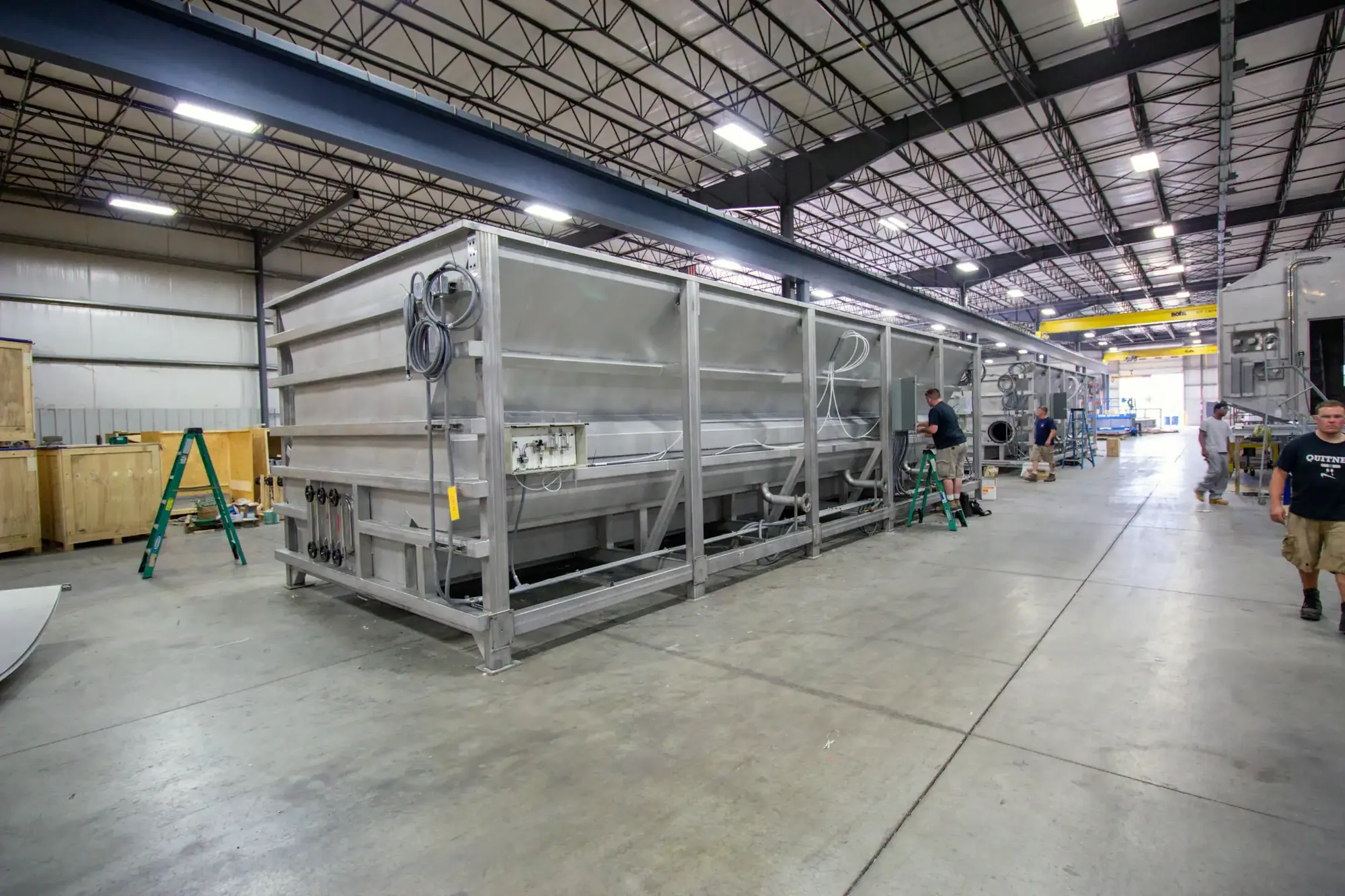
Carbon-steel tool contact embeds iron particles that pit on their own schedule and seed corrosion in the alloy around them, which defeats the entire reason you specified a corrosion grade. Nickel-alloy and super-austenitic work runs in our roughly 40,000 sq ft dedicated stainless-only production space, no carbon, so free iron cannot reach the passive surface. After welding, alloy-matched pickling and passivation per ASTM A380 and A967 removes embedded iron and restores the passive layer. A standard stainless pickle is not used on nickel alloys; the chemistry is matched to the alloy so it cleans without attacking the base metal.
How Northern Qualifies the Work
When you specify a corrosion alloy, the deliverable is not just a welded assembly. It is a documented chain that proves the alloy you specified is the alloy that shipped, welded to a qualified procedure, with its passive surface intact.
- Qualified procedures. C-276 and C-22 weld under WPS qualified to ASME BPVC Section IX P43; AL-6XN welds under P45. We also hold qualified dissimilar-metal procedures (P8 austenitic to P43, P8 to P45, P43 to P45) for transition joints between stainless and the corrosion alloys.
- Structural welding code. Stainless and super-austenitic structural welds qualify to AWS D1.6, the Structural Welding Code for stainless steel.
- Material traceability. Material Test Reports traced by heat number, confirmed at receiving by PMI, so the certificate on the paperwork matches the metal on the floor.
- Surface restoration with proof. Alloy-matched pickling and passivation per ASTM A380 and A967. When your specification or purchase order calls for it, we verify with the copper-sulfate test (ASTM A967 Practice D) on the finished surface. No copper plating confirms an iron-free, passivated surface.
- Inspection oversight. A Certified Welding Inspector (CWI) on staff and ASNT SNT-TC-1A Level III NDE capability in-house. Documentation (MTRs, PMI certificates, weld maps, NDE reports, copper-sulfate records) is provided as your specification and purchase order require.
A note on availability: C-276, C-22, and AL-6XN are specialty grades, not stocked steel. Send the media, the temperature, and the concentration with your inquiry, and our team will review the procedure selection before the job is priced.
A Quick Decision Path
Use this to narrow the field before a detailed corrosion analysis:
- Is the dominant attack chloride pitting or crevice corrosion, with no strong-acid problem? Start with AL-6XN. It carries super-austenitic chloride resistance at the lowest alloy cost of the three.
- Are you in strong reducing acids (HCl, sulfuric, phosphoric, wet chlorine)? C-276 is the default workhorse.
- Does the process swing between oxidizing and reducing, or see hot oxidizing acids and mixed-acid transitions? C-22 holds resistance across the swing where C-276 can lose ground.
- Still unsure, or near a boundary? Do not guess at the margin. Bring the full environment (media, concentration, temperature, cycling) to a corrosion-alloy review.
Specifying a corrosion alloy is a risk decision, and the cost of getting it wrong shows up in service, not on the bench. For our qualified procedures and fabrication capability across these grades, see Hastelloy, AL-6XN & specialty alloy fabrication. For the welding controls that preserve corrosion resistance, see welding services. For the surface restoration that finishes the job, see pickling and passivation.
Specifying a corrosion alloy? Send us the media, temperature, and concentration and our team will review the grade and the procedure before we price it.
Note: Material standards from ASTM, AWS, and ASME are subject to revision. Always consult the latest version of any standard, and confirm alloy selection against a project-specific corrosion analysis for your service environment. Northern Manufacturing builds to the grade and specification provided by the customer; alloy selection is the customer’s design decision, which we support with fabrication expertise and qualified procedures.